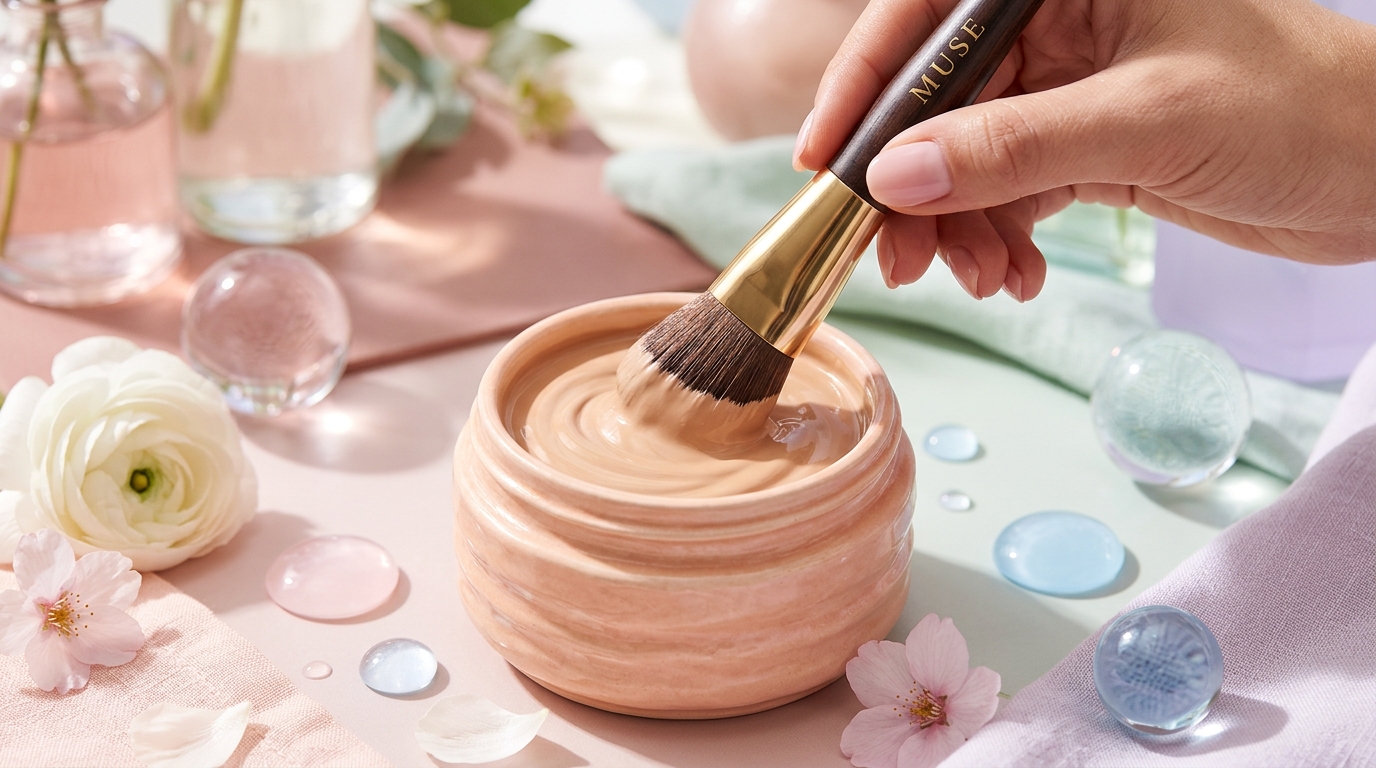
You know the look. You have applied your foundation carefully, blended it in, and checked the mirror — only to see it sitting in every dry patch, catching on every flake, and making your cheeks look like they belong to a completely different face than the rest of you.
This is the single most common complaint from people with dry skin, and it is also one of the most misunderstood. Foundation clinging to dry patches is not usually a sign that your foundation is bad. It is a sign that one of six specific things is happening — and each one has a fix.
Foundation clings to dry patches because dry, flaky skin catches pigment. The fix is not a new foundation — it is fixing the layer underneath. Hydrate the skin properly, use a hydrating primer, switch from a brush to a damp sponge, build in thin layers, and skip powder. Do those five things and the problem usually disappears entirely.
This guide walks through the six real causes — from skincare prep to formula choice to application technique — and the specific fix for each. By the end, you should be able to identify which one is causing your problem and correct it in a single morning routine.
The 6 causes of foundation clinging to dry patches: (1) Skin not hydrated underneath, (2) mattifying formula, (3) brush application disturbing flakes, (4) too much product in one layer, (5) powder setting, (6) product base mismatch (water vs silicone). The fix: hydrate, hydrate, damp sponge, thin layers, skip powder.
Key Takeaway
Foundation clings because the skin underneath is dry, flaky, or under-prepared — not because the foundation is defective. In 90% of cases, fixing the skin prep and switching from a brush to a damp sponge resolves the problem without changing the foundation at all.
Why Foundation Catches on Dry Patches
Before diving into the six causes, it helps to understand the mechanism. When you apply foundation to skin, the pigment sits on top of the surface. If that surface is smooth and even, the pigment sits evenly and reflects light naturally. If the surface is flaky or uneven, three things happen:
- The flakes themselves catch pigment. Foundation grabs onto the rough edges of the flakes and dries there, making them visible.
- The gaps between flakes create texture. Foundation does not blend across the gaps, so the surface looks patchy even where there are no visible flakes.
- Dry skin absorbs the water in the foundation. If the skin underneath is dehydrated, it pulls moisture out of the foundation faster, making it dry down unevenly.
Every one of the six causes below feeds into one of these three mechanisms. Fixing the cause eliminates the cling.
The 6 Causes (And How to Fix Each)
Skin is not hydrated enough underneath
This is the single most common cause — and the one most people skip. If the skin is not sufficiently hydrated before foundation goes on, it does not matter how good the foundation is. The foundation will sit on dry skin and catch on flakes.
Dry skin is not just "skin that isn't oily." It is skin that struggles to hold onto water, which means the surface texture is dry and stiff, and microscopic flakes accumulate on the surface. Foundation has nothing to grip except flakes.
Skipping moisturiser, or applying moisturiser and going straight to foundation without waiting, is the fastest way to make dry patches more visible.
The foundation formula is mattifying or oil-absorbing
Matte foundations are designed to absorb oil. On oily skin, this keeps shine under control. On dry skin, it absorbs what little moisture is there, which makes the skin look drier, emphasises flaking, and causes the foundation to dry down unevenly.
This is especially common with "long-wear" or "24-hour" foundations, which are formulated to lock in place by drying down fast. Fast drying means pigment sets on flakes before it has a chance to blend.
You can usually identify a mattifying formula by the finish claim on the bottle ("matte," "oil-control," "shine-free," "velvet") or by the presence of high concentrations of silica, kaolin, or talc in the ingredient list.
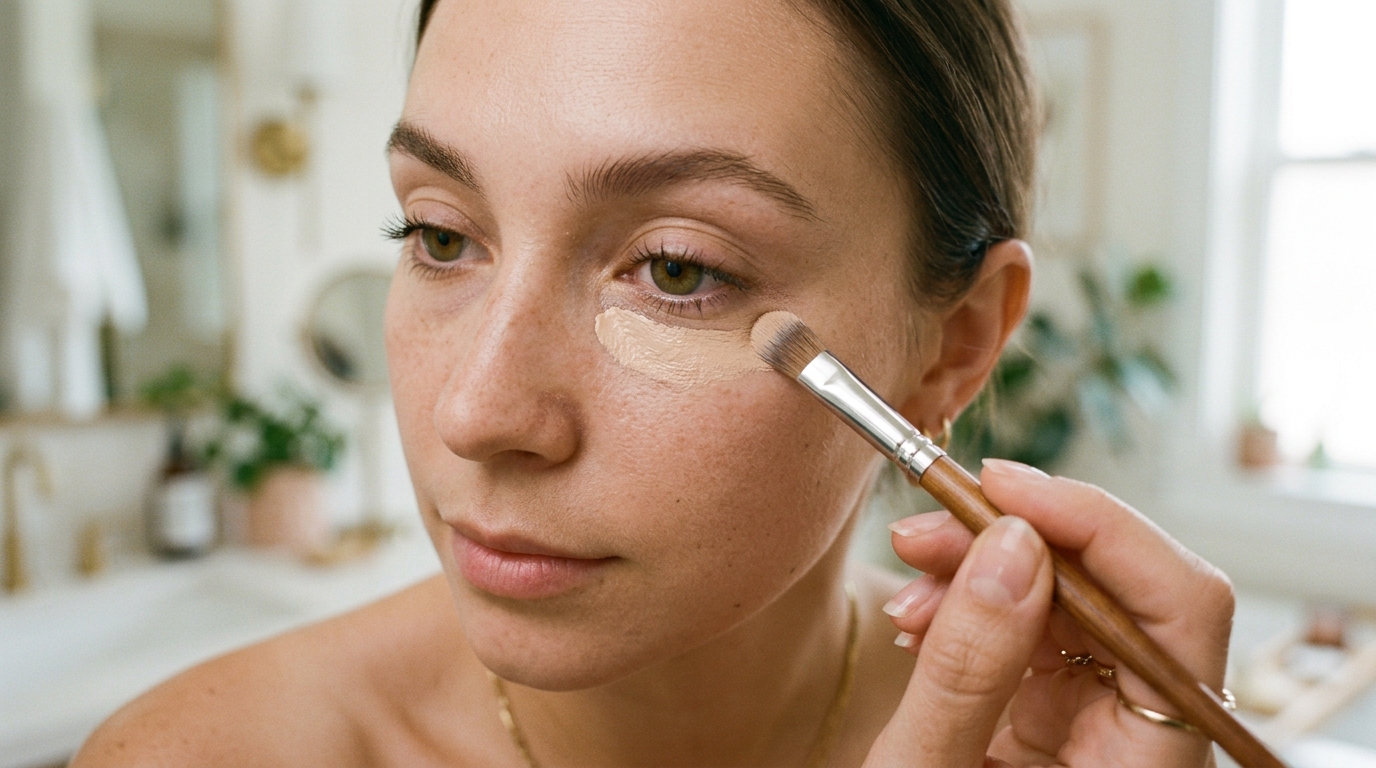
You're applying with a brush
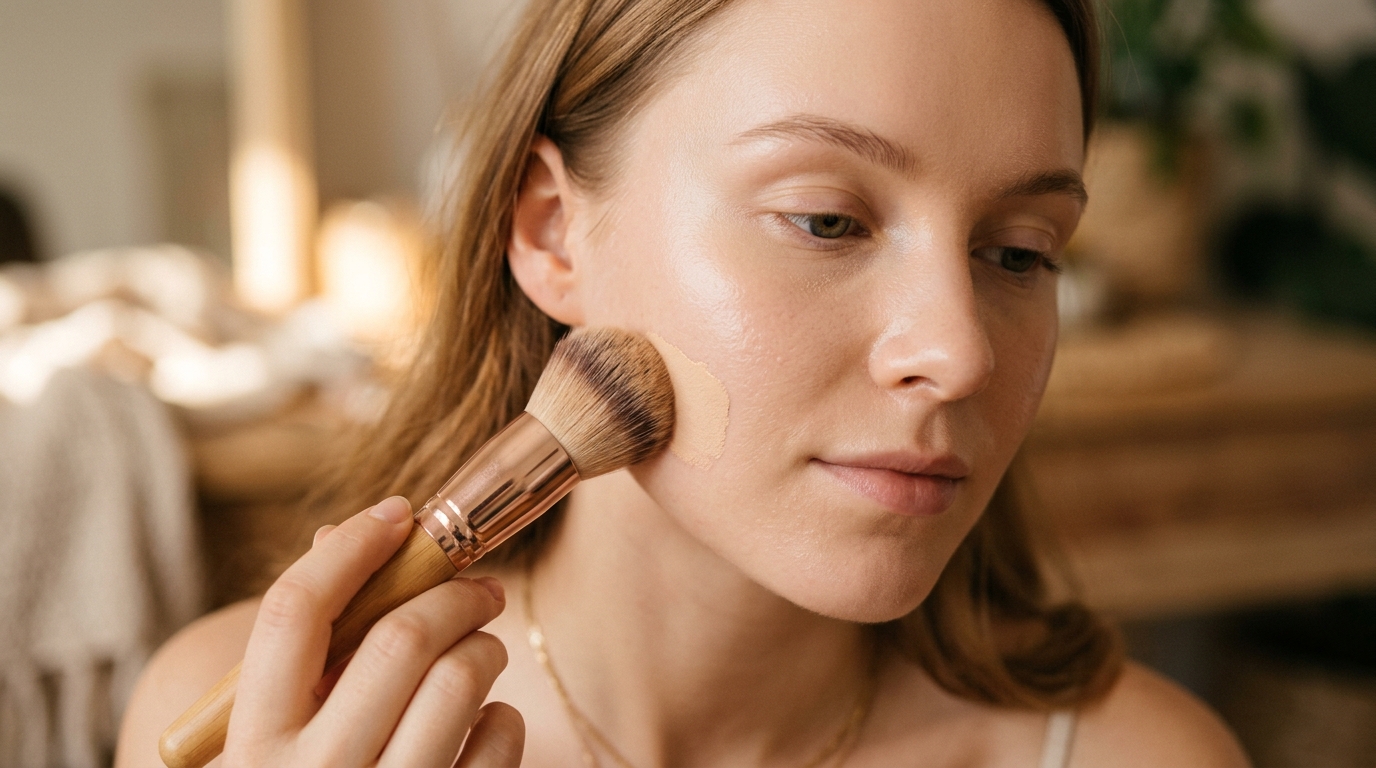
Brushes are wonderful for oily and combination skin, where the goal is to buff product into the pores for a smooth finish. On dry skin, a brush does the opposite — it drags across the surface, disturbing flakes and sweeping pigment into every dry patch.
Even a soft brush creates friction against flaky skin, which lifts the flakes and makes them more visible. The bristles also tend to deposit more product than necessary, which compounds the problem.
This is why so many people with dry skin notice that their foundation looks worse after using a brush than after using their fingers — the brush is actively making the dry patches worse.
Too much product in one application
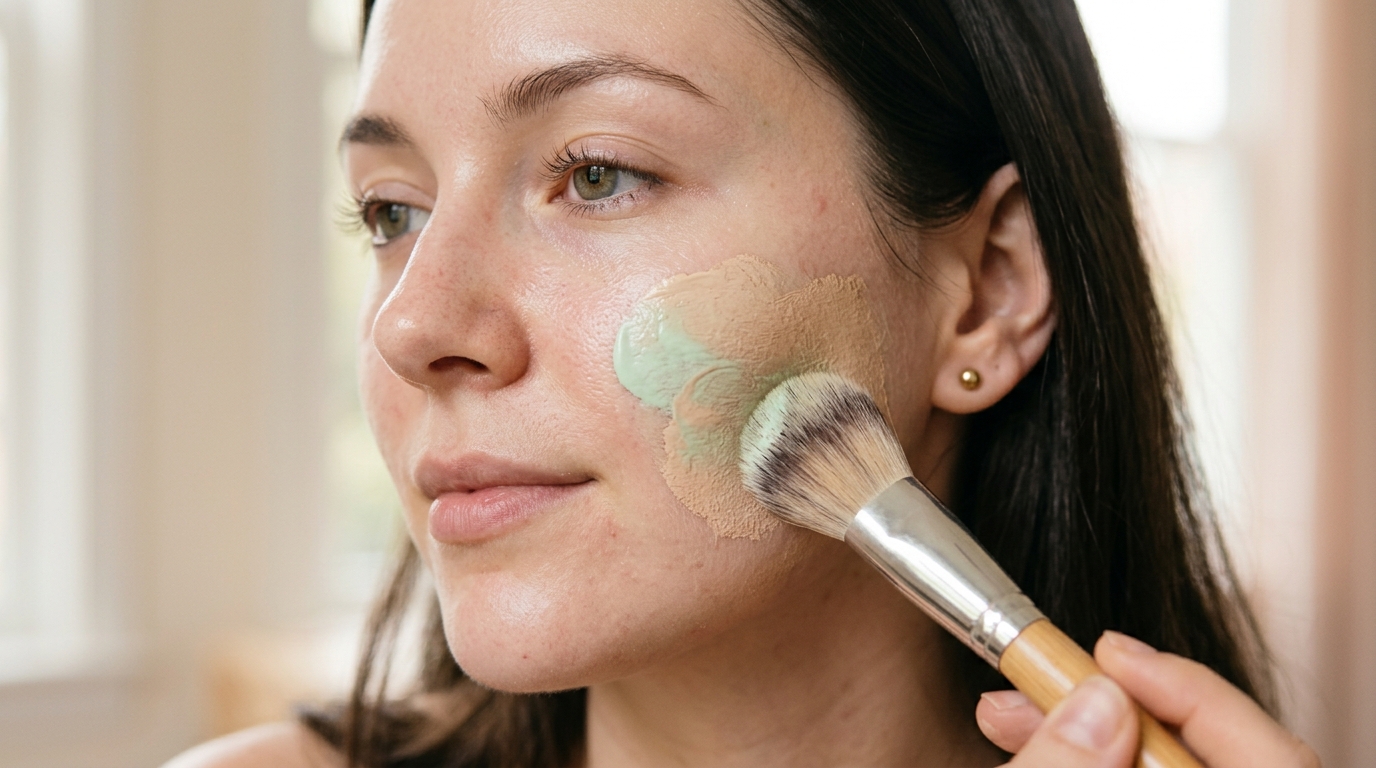
When you apply foundation in one heavy layer, the pigment dries unevenly. Some areas get more product than others, and those heavier areas crack or settle into flakes as the foundation sets.
This is especially true for full-coverage foundations and cream formulas, which have higher pigment density. On dry skin, a single heavy layer creates a visibly textured, cakey finish — even if the formula itself is hydrating.
Most people use two to three times more foundation than they need. A pea-sized amount is enough for the entire face when applied correctly.
You're setting with powder
Powder is the enemy of dry skin. It absorbs moisture, settles into flakes, and creates a flat, chalky finish. And because dry skin does not produce enough oil to "melt" powder into the skin, the powder sits visibly on the surface.
Even a light dusting of translucent powder over foundation on dry skin can turn a smooth finish into a patchy, cakey one within an hour. The powder dries out the top layer of the foundation film and reveals every flake underneath.
If you're using powder because you're worried about shine, understand that dry skin rarely gets truly shiny — it gets dry and dull. Powder won't fix that.
Base mismatch — water-based vs. silicone-based
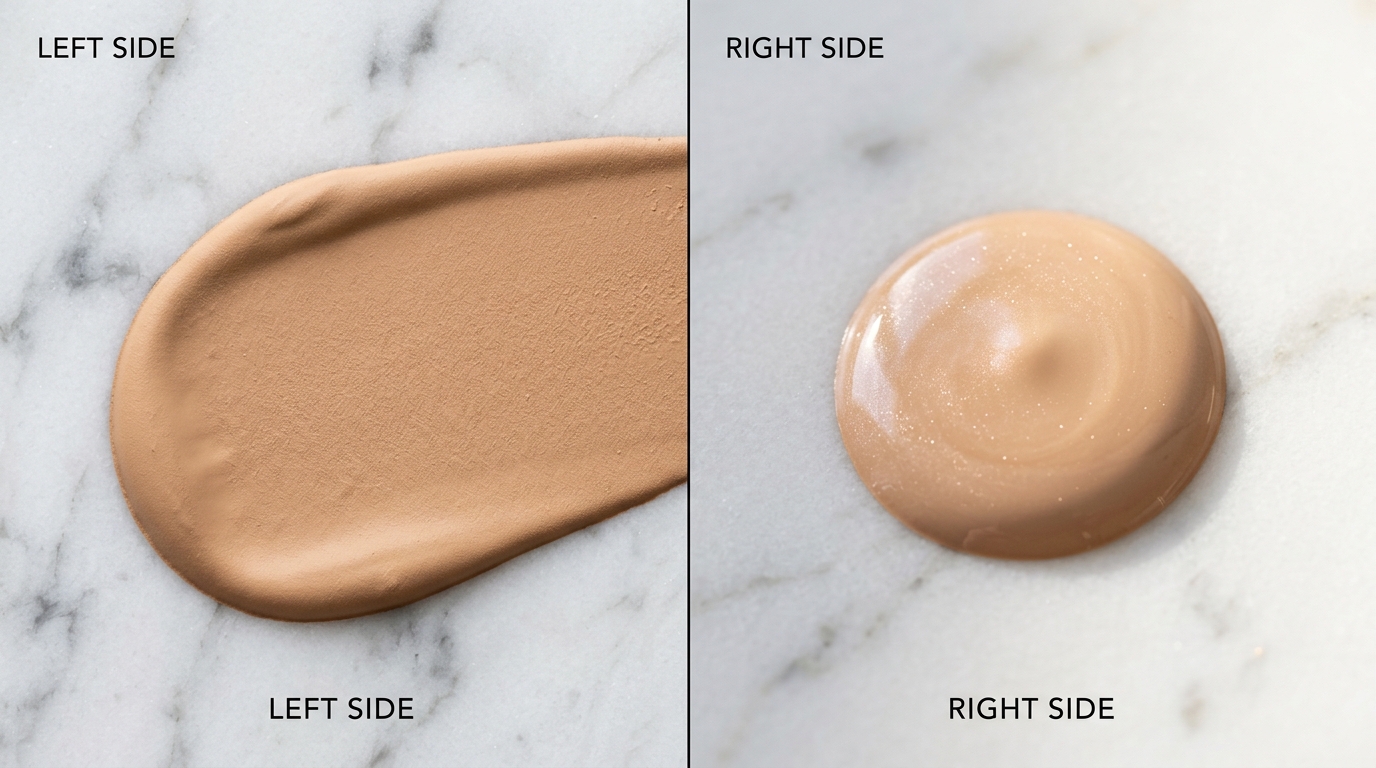
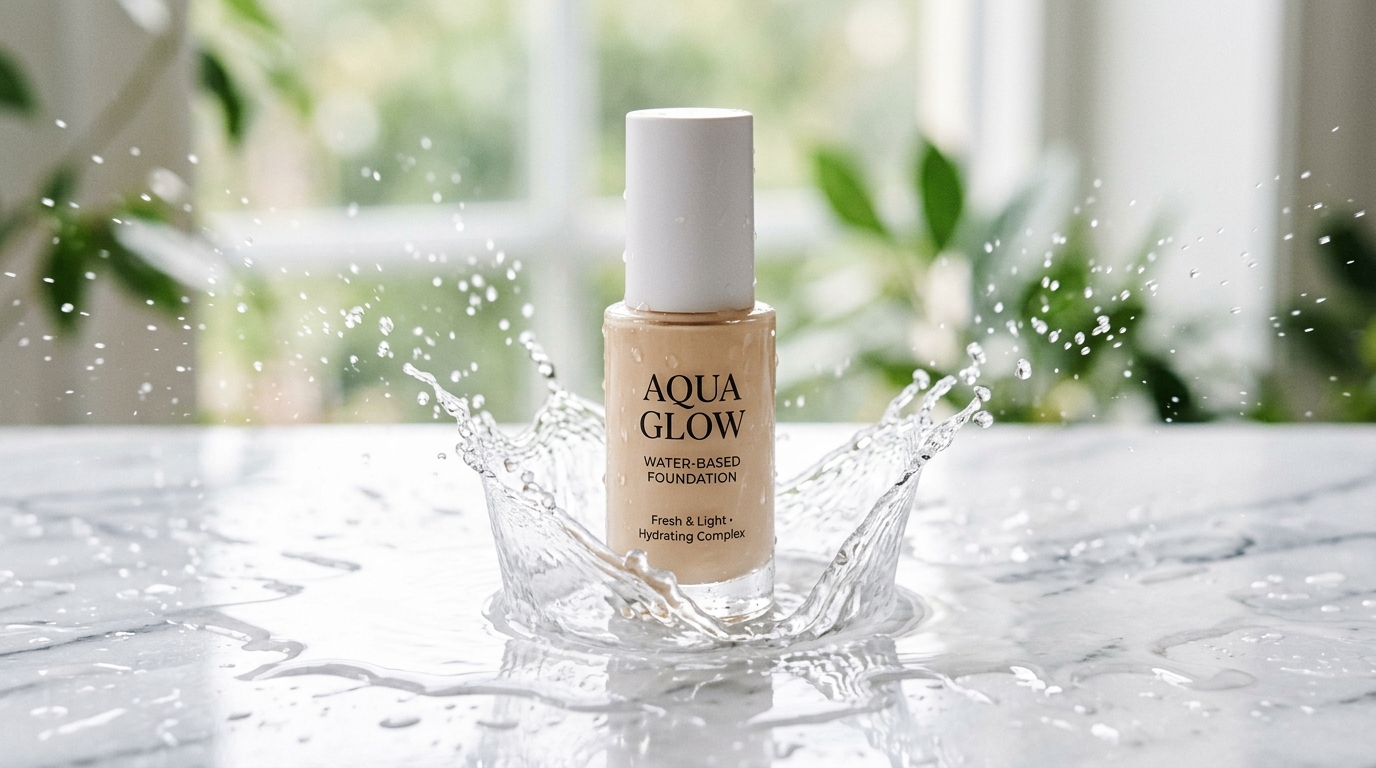
Water-based and silicone-based products do not always mix. If your moisturiser is water-based and your foundation is silicone-based (or vice versa), the two products can separate on the skin, creating patchiness and cling that looks like a dry-patch problem but is actually a formulation problem.
This is often mistaken for "foundation not sitting right on dry skin," when really the foundation is sliding over a layer that it cannot adhere to. The result is patchy, uneven coverage that concentrates in dry areas.
Pilling — when tiny balls of product form on the surface of the skin — is another sign of base mismatch. It looks like rubbery residue, usually around the jawline and hairline.
Quick Diagnosis: Which Cause Is Yours?
Use this table to identify which of the six causes is most likely responsible for your foundation clinging to dry patches.
| What You See | Most Likely Cause | Quick Fix |
|---|---|---|
| Foundation settles in every dry patch, all over the face | Cause 1: Skin not hydrated enough | Add serum + moisturiser, wait 5–10 min |
| Skin looks dull and textured after foundation dries | Cause 2: Mattifying formula | Switch to dewy or serum foundation |
| Flakes are more visible after foundation than before | Cause 3: Brush application | Switch to a damp sponge |
| Coverage looks cakey in some areas, thin in others | Cause 4: Too much product | Use pea-sized amount, build in thin layers |
| Patchiness appears within 1–2 hours of applying | Cause 5: Powder setting | Skip powder, use hydrating spray |
| Foundation separates or pills on the skin | Cause 6: Base mismatch | Match water-based with water-based |
The Mid-Day Fix (Without Making It Worse)
If foundation is already clinging and you're out of the house, there is exactly one thing you should do — and one thing you absolutely should not.
Do: Press a small amount of moisturiser into the area with a damp sponge. The moisturiser rehydrates the skin, softens the edges of the flakes, and blends the foundation underneath without lifting it. Focus on the specific areas where flaking is visible — typically the cheeks, around the nose, and around the mouth.
Do not: Add more foundation over the flakes. This is the most common mistake, and it always makes things worse. Adding more foundation over a dry patch does not cover it — it sits on top of the flakes and makes them even more visible. If you are tempted to "fix" the patch with more foundation, put the bottle down and reach for the moisturiser instead.
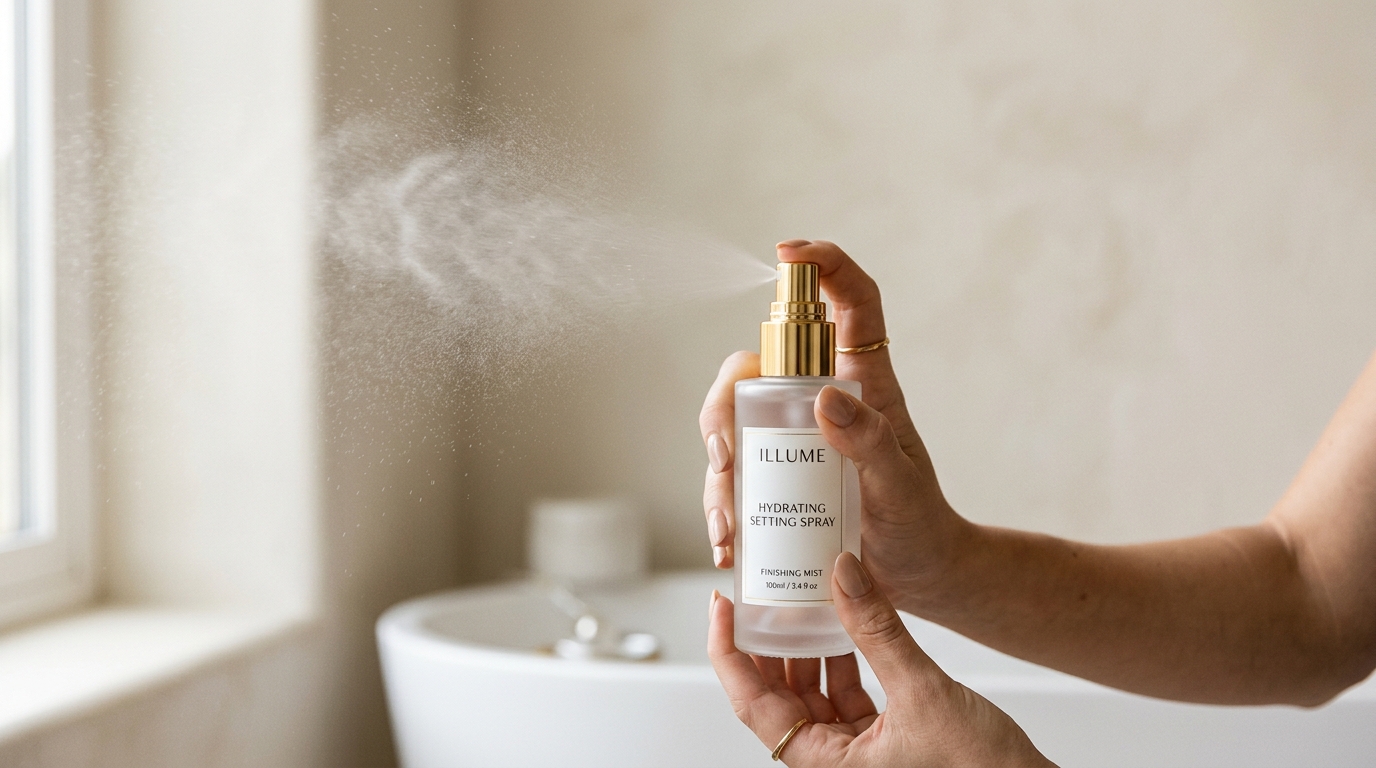
If you don't have moisturiser with you, a hydrating setting spray pressed gently into the area with a clean sponge can also work — but moisturiser is more effective.
Long-Term Prevention
Fixing foundation cling for a single day is one thing. Preventing it from happening at all is another. These are the habits that keep dry skin smooth under foundation over the long term:
- Consistent daily hydration. Even on days you don't wear makeup, use a hydrating serum and moisturiser. Dry skin gets worse when you neglect it, and the results show up under foundation.
- Gentle exfoliation at night. Exfoliating once or twice a week helps remove dead surface flakes that foundation catches on. Do it at night, not right before makeup, and use a gentle chemical exfoliant (lactic or mandelic acid) rather than a scrub.
- Consider a hydrating mask once a week. A sheet mask or hydrating overnight mask can restore moisture levels quickly and make the following week's foundation application noticeably smoother.
- Adjust seasonally. Dry skin needs richer products in winter and lighter ones in summer. Do not use the same routine year-round.
- Check your cleanser. Foaming cleansers strip moisture. If your skin feels tight after cleansing, switch to a cream or milk cleanser.
- Humidity matters. Indoor heating and air conditioning both dry out skin. A humidifier in the bedroom can make a significant difference to morning skin texture.
Do
- Hydrate before makeup — serum + rich moisturiser
- Wait 5–10 minutes after skincare before foundation
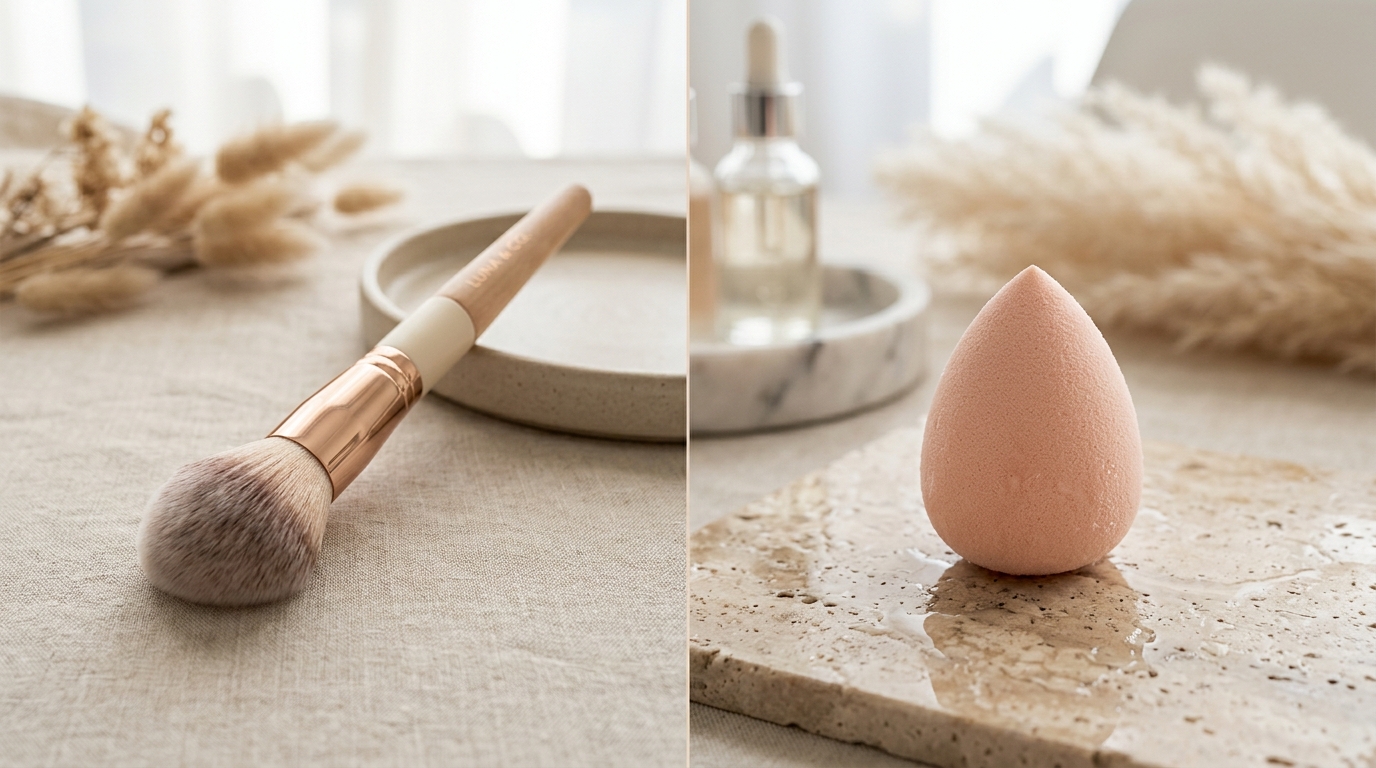
- Use a damp sponge and press, don't sweep
- Build in thin layers — pea-sized amount first
- Skip powder on dry areas
- Fix mid-day flakes with moisturiser
Don't
- Skip moisturiser because you're in a hurry
- Apply to damp skin right after skincare
- Use a brush across dry patches
- Layer on more foundation to fix flakes
- Set with powder — it dries out the finish
- Mix water-based with silicone-based products
When It's Not Actually Dry Skin
Occasionally, what looks like foundation clinging to dry patches is something else entirely. If the fixes above do not resolve the issue, consider these possibilities:
- Texture, not dryness. Some skin has natural texture — small bumps, visible pores, fine lines. Foundation settling into these features is not the same as clinging to dry flakes, and the fix is usually a smoothing primer rather than more moisturiser.
- Purging or breakouts. Small clogged pores can look like flakes when foundation settles over them. If the patches appear only in areas where you normally break out, this may be the cause.
- Product pilling. If the "flakes" appear shortly after application and look rubbery rather than dry, it is pilling from incompatible products — not dryness.
- An underlying skin concern. If your skin is persistently flaky, red, or uncomfortable even without makeup, it may be worth consulting a qualified professional. This is cosmetic guidance only and does not replace professional advice.
Frequently Asked Questions
Why does foundation cling to dry patches?
Foundation clings to dry patches because flaky skin texture catches pigment. When the skin underneath is dry, uneven, or flaky, foundation pigment settles into and around the flakes instead of sitting smoothly on top. This is usually caused by a combination of insufficient skincare prep, the wrong formula, the wrong tool, and skipping the wrong steps.
How do I stop foundation from catching on dry patches?
Fix the six most common causes: hydrate the skin before foundation (serum + rich moisturiser), wait 5–10 minutes, use a hydrating primer, switch from a brush to a damp sponge, apply in thin layers instead of one heavy application, and skip powder on dry areas. If flakes appear mid-day, press a small amount of moisturiser into the area — never add more foundation.
Is it my foundation or my skin causing the clinging?
It is usually a combination. A hydrating foundation applied on hydrated, prepped skin rarely clings. A matte or oil-control foundation applied on dry, unprepared skin almost always clings. Fixing the skin prep and technique will usually resolve the issue even without changing the foundation.
Does exfoliating help with foundation clinging to dry patches?
Gentle exfoliation can help remove dead surface flakes so foundation sits more smoothly. But exfoliating immediately before makeup can leave skin more sensitive and flaky — exfoliate the night before instead. Over-exfoliating can make dry skin worse, so limit it to one to three times per week.
What type of foundation is best for dry patches?
Serum, cream, or hydrating liquid foundations with glycerin or hyaluronic acid work best for dry patches. Avoid matte, long-wear, oil-control, and powder-to-liquid formulas, which absorb moisture and emphasise flaking.
Can I use a primer to stop foundation clinging?
Yes. A hydrating primer creates a smooth, moisturised canvas that helps foundation glide on evenly and prevents it from settling into dry patches. Avoid mattifying or pore-filling primers, which can make the problem worse.
Why does foundation cling to my nose and between my eyebrows?
These areas have thinner skin, more movement, and often collect flakes and dryness. They also tend to be where people apply the most foundation, which compounds the problem. Use less product on these areas, apply with a damp sponge, and skip powder.
How do I fix foundation that has already started clinging to dry patches?
Do not add more foundation — it will make it worse. Instead, press a small amount of moisturiser into the area with a damp sponge. The moisturiser rehydrates the skin and blends the foundation underneath without lifting it. This is the only reliable mid-day fix.
The Bottom Line
Foundation clinging to dry patches is frustrating, but it is almost never a sign that your foundation is bad or that your skin is hopeless. It is a sign that one of six specific things is happening — and every single one of them has a fix.
The fastest fix: Hydrate properly, wait 5–10 minutes, apply with a damp sponge, build in thin layers, and skip powder. Change nothing else and you will see the difference immediately.
The most common mistake: Adding more foundation over dry patches. Always fix flakes with moisturiser, never with more product.
The long-term fix: Consistent daily hydration, gentle exfoliation at night, and seasonal adjustment of your skincare routine. Dry skin that is well cared for rarely shows flakes under foundation.
For the complete application method, see our step-by-step guide to applying foundation on dry skin. For the best hydrating formulas across every price point, see our pillar guide: Best Foundation for Dry Skin.
References & Sources
- Vogue — expert application tips for foundation on dry skin.
- The Strategist — makeup artist interviews on preventing foundation cling.
- Paula's Choice — guidance on finishes and formulas for dry skin.
- Aggregated user troubleshooting from r/MakeupAddiction, r/dryskin, and r/SkincareAddiction.
Was this article helpful?

Anam Ahsan
Skincare Enthusiast & BloggerHi, I'm Anam! I'm a beauty and skincare enthusiast who loves testing new products and sharing honest, personal reviews. I document my skincare journey and share what works for my skin so you can make better choices for your routine.




Comments (24)
Hannah W.
2 days agoThis guide saved me so much money — went with the budget pick and honestly can't tell the difference from serums twice the price!
Anam Ahsan Author
1 day agoSo glad it worked out for you, Hannah! That's exactly the kind of result we hoped readers would see.