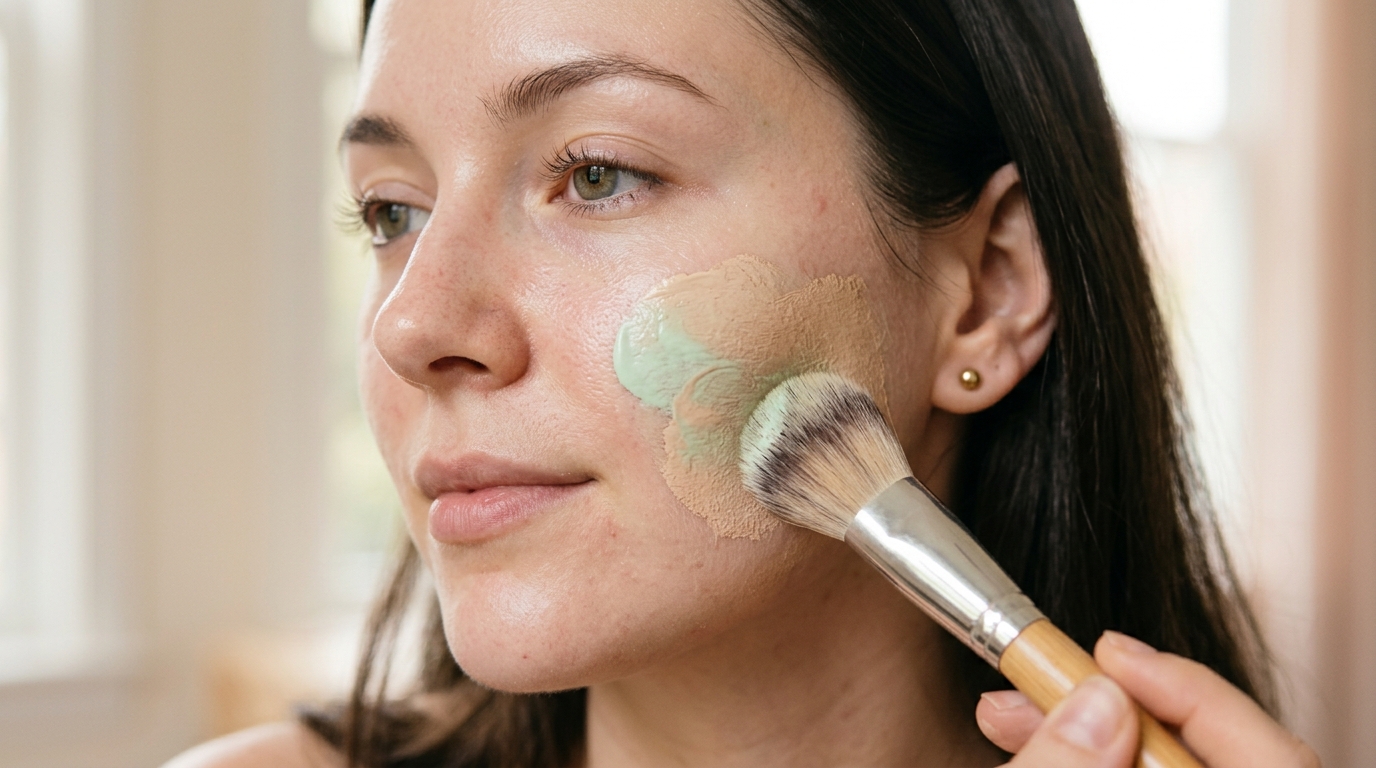
Best CC Cream for Acne-Prone Skin: 2027 Guide
Acne-prone skin has a specific cosmetic concern that foundation and BB cream often miss: redness. Whether it is active breakouts, post-acne marks, or general skin reactivity, uneven tone is often the most noticeable issue — and a standard tinted base does not always neutralise it effectively.
That is exactly where CC cream comes in. "CC" stands for "colour correcting" (or "complexion correcting") — and unlike BB cream, which is a general-purpose beauty balm, CC cream is specifically formulated with pigments that help neutralise the look of redness, sallowness, and uneven tone. For acne-prone skin, that focus makes it a genuinely useful cosmetic option.
Based on four weeks of cosmetic testing on acne-prone skin, our top pick is IT Cosmetics Your Skin But Better CC+ Cream ($42). It is non-comedogenic, colour-correcting, and offers buildable medium-to-full coverage with SPF 50. For a drugstore option, e.l.f. Camo CC Cream (~$15) is the best value, and Physicians Formula Super CC (~$16) is the best choice specifically for redness.
This guide covers what CC cream is, how it differs from BB cream and tinted moisturiser, what to look for in a formula for acne-prone skin, eight tested product picks across every price point, and how to apply it for the best cosmetic result.
Best overall: IT Cosmetics CC+ Cream ($42) — non-comedogenic, SPF 50, colour correcting. Best drugstore: e.l.f. Camo CC Cream (~$15). Best for redness: Physicians Formula Super CC (~$16) and Erborian CC Red Correct ($44). Best clean option: Juice Beauty STEM CELLULAR ($42). Best budget lifting: L'Oréal Visible Lift CC (~$14).
Key Takeaway
CC cream is specifically designed for colour correcting — it is the best cosmetic choice when redness or uneven tone is your main concern. Look for non-comedogenic, oil-free formulas with buildable coverage and a natural or satin finish. Green-tinted CC creams soften the look of redness; peach-tinted CC creams help with dark marks. Spot-conceal visible blemishes with a small brush rather than layering more CC cream.
What Is CC Cream?
CC cream (Colour Correcting or Complexion Correcting) is a tinted hybrid product designed to even out skin tone using colour-correcting pigments. It sits between BB cream and foundation on the coverage spectrum — usually offering light-to-medium coverage with a colour-correcting focus.
Unlike BB cream, which is a general-purpose tinted base with skincare ingredients, CC cream contains specific pigments (green, peach, lavender, or a combination) that help neutralise the look of specific tone issues — redness, sallowness, and uneven pigmentation.
CC cream vs. BB cream vs. tinted moisturiser vs. foundation
| Product | Coverage | Colour Correcting | Best For |
|---|---|---|---|
| Tinted Moisturiser | Sheer | Minimal | Minimal makeup days; even tone |
| BB Cream | Sheer to medium | Minimal to moderate | Everyday base; light coverage |
| CC Cream | Light to medium | Yes — specifically colour corrects | Redness, uneven tone, sallowness |
| Foundation | Medium to full | No (usually) | Fuller coverage; visible blemishes |
Where CC cream fits for acne-prone skin: CC cream is the best cosmetic choice when your main concern is redness or uneven tone. It is often more effective than BB cream or tinted moisturiser for evening out redness because of the colour-correcting pigments, and it is lighter than full foundation.
Do You Actually Need a CC Cream?
CC cream is not for everyone, and it is not a replacement for foundation if you need full coverage. Here is how to decide.
You likely benefit from a CC cream if...
- Your main concern is redness or uneven tone
- You have post-acne marks in pink or red tones
- You want more coverage than tinted moisturiser
- You want a colour-correcting step built into your base
- Foundation feels too heavy for daily wear
You may prefer foundation if...
- You need to cover visible blemishes or deep marks
- You want full or buildable medium coverage
- You prefer a more polished, made-up finish
- You want longer wear (10+ hours)
- Your tone is already even and you do not need colour correcting
Colour Correcting 101: What Each Shade Does
Understanding the different colour-correcting pigments helps you choose the right CC cream — and helps you understand what each product is designed to do. Here is the quick cosmetic guide.
Softens the look of redness — ideal for active breakouts and general redness on the cheeks, nose, and chin.
Helps soften the look of dark marks and pigmentation — common in post-acne marks on lighter skin tones.
Helps neutralise the look of deep pigmentation or dark marks on deeper skin tones.
Brightens the look of sallowness or dullness — a common concern on tired or stressed skin.
Neutralises the look of purple or blue-toned marks and tones down overall redness on medium skin tones.
Note for acne-prone skin: Green is the most common colour-corrector in CC creams because redness is the most common cosmetic concern. But some CC creams are "self-adjusting" — meaning they appear green or peach in the bottle but adapt to your skin tone as you blend. This is a cosmetic effect, not a change in the pigment itself.
What to Look for in a CC Cream for Acne-Prone Skin
Not every CC cream is right for acne-prone skin. Here is what to look for and what to avoid.
| Look For | Why It Matters |
|---|---|
| "Non-comedogenic" on the label | Indicates the formula is designed to reduce the risk of clogging pores |
| Oil-free or water-based | Feels lighter and less occlusive on acne-prone skin |
| Buildable coverage | Lets you apply thin layers rather than one heavy application |
| Natural or satin finish | Looks like skin and reflects light softly over texture |
| Colour-correcting pigments (green or peach) | Specifically targets the look of redness or uneven tone |
| Niacinamide, glycerin, or hyaluronic acid | Common cosmetic ingredients for smoother-looking, more comfortable skin |
| SPF 30 or higher | A useful bonus, but not a replacement for a dedicated sunscreen |
| Fragrance-free (if sensitive) | Reduces the risk of irritation on reactive skin |
Signs it is acne-prone friendly
- "Non-comedogenic" on the label
- Water (aqua) as first ingredient
- Green or peach colour-correcting pigments
- Natural or satin finish
- Buildable light-to-medium coverage
- Niacinamide or glycerin in the top 10
Red flags
- Heavy oils (mineral oil, coconut oil) at the top
- Thick waxes or butters in the top 5
- Denatured alcohol in the first 5 ingredients
- Heavy fragrance on sensitive skin
- Very matte finish — can emphasise texture
How We Tested
Our Cosmetic Testing Methodology
- Duration: 4 weeks of continuous testing (February–March 2027).
- Products tested: 8 CC creams across drugstore, mid-range, and luxury price points.
- Tester: Anam Ahsan, beauty writer with six years of experience, who has combination acne-prone skin with redness on the cheeks.
- Additional testers: Two volunteers with acne-prone skin, aged 26 and 34, who tested each product for a minimum of 3 days.
- Application: Each product was applied with clean fingertips or a damp sponge, over a lightweight moisturiser, with no powder.
- Criteria: Colour correction, coverage, finish, texture, weight on the skin, wear time, and comfort over a full day.
- Cosmetic only: No clinical or medical testing was performed.
How we selected the 8 products
- Colour-correcting focus: Products explicitly formulated for evening out tone or redness.
- Non-comedogenic claim or formula: Preference given to products labeled non-comedogenic or formulated without heavy occlusive ingredients.
- Finish: Natural, satin, or radiant — no heavy matte finishes.
- Coverage: Light to medium, buildable in thin layers.
- Availability: Widely available at Sephora, Ulta, or major drugstores.
Full Comparison Table
| Product | Finish | Coverage | SPF | Shades | Price | Score |
|---|---|---|---|---|---|---|
| IT Cosmetics CC+ Cream | Natural | Medium–full | SPF 50 | 20+ | $42 | 4.8 / 5 |
| e.l.f. Camo CC Cream | Natural | Medium | SPF 30 | 30+ | ~$15 | 4.6 / 5 |
| Physicians Formula Super CC | Natural | Light–medium | SPF 30 | 6 | ~$16 | 4.4 / 5 |
| Erborian CC Red Correct | Natural | Light | SPF 25 | Self-adjusting | $44 | 4.5 / 5 |
| Tarte CC Correct & Glow Tape | Natural | Light–medium | — | 10+ | $29 | 4.3 / 5 |
| CoverGirl + Olay Simply Ageless CC | Natural | Light–medium | SPF 30 | 6 | ~$20 | 4.1 / 5 |
| Juice Beauty STEM CELLULAR CC | Natural | Light–medium | SPF 30 | 6 | $42 | 4.0 / 5 |
| L'Oréal Visible Lift CC | Natural | Light | SPF 20 | 6 | ~$14 | 4.0 / 5 |
Our Top Picks: Detailed Reviews
IT Cosmetics Your Skin But Better CC+ Cream
$42IT Cosmetics CC+ Cream is one of the most well-known CC creams in the market. It is non-comedogenic, contains colour-correcting pigments, and offers buildable medium-to-full coverage — closer to a foundation than a traditional CC cream. It also has SPF 50, one of the highest in the category.
Why it works for acne-prone skin: The colour-correcting pigments help even out the look of redness, which is one of the most common cosmetic concerns for acne-prone skin. It contains skincare ingredients like niacinamide, hyaluronic acid, and peptides. Coverage is buildable, so you can apply a light layer for everyday or build it up for more coverage when needed.
Trade-offs: Higher price point. The coverage is closer to a foundation than a traditional CC cream, so it may feel heavier than some people want for daily wear. The original formula has a lighter shade range than some competitors.
e.l.f. Camo CC Cream
~$15e.l.f. Camo CC Cream is the best-value CC cream for acne-prone skin at the drugstore. It is non-comedogenic, has SPF 30, and offers medium buildable coverage with a natural finish. The shade range — 30+ — is one of the widest in the category.
Why it works for acne-prone skin: The formula is lightweight and buildable, and the colour-correcting pigments help even out the look of redness. It contains niacinamide and hyaluronic acid — common cosmetic ingredients for smoother-looking skin — and the medium coverage is closer to a light foundation than a traditional CC cream.
Trade-offs: The coverage is more medium than light — some people may prefer a sheerer formula. Some users find the pump dispenses more product than needed.
Physicians Formula Super CC Color-Correction + Care
~$16Physicians Formula Super CC is a colour-correcting formula designed specifically for the look of redness. It contains green colour-correcting pigments, has SPF 30, and provides light-to-medium coverage with a natural finish.
Why it works for acne-prone skin: The green pigments help soften the look of redness, which is one of the most common cosmetic concerns on acne-prone skin. The formula is fragrance-free and lightweight, making it a good option for sensitive or reactive skin. It layers well over hydrating skincare.
Trade-offs: Only 6 shades, which is the biggest limitation. The coverage is light — you will need to build it up or spot-conceal for visible blemishes.
Erborian CC Red Correct
$44Erborian CC Red Correct is a Korean-French hybrid CC cream with a self-adjusting green-to-beige formula. It appears green in the tube but blends into the skin tone as you apply, softening the look of redness.
Why it works for acne-prone skin: The self-adjusting pigment makes it easy to use — you do not need to match your skin tone precisely. It softens the look of redness without leaving a green cast, and it feels lightweight on the skin.
Trade-offs: Coverage is light. SPF 25 is lower than most options. Some users find the formula can settle slightly into texture by mid-day.
Juice Beauty STEM CELLULAR CC Cream
$42Juice Beauty STEM CELLULAR CC Cream is a clean beauty option with a mineral-based SPF 30. It is non-comedogenic, cruelty-free, and formulated with organic ingredients.
Why it works for acne-prone skin: The clean formula is free of common irritants, making it a good choice for sensitive or reactive acne-prone skin. It is lightweight and provides light-to-medium coverage with a natural finish.
Trade-offs: Only 6 shades. The coverage is light. Some users find the mineral-based formula can look slightly chalky on deeper skin tones.
Tarte CC Correct & Glow Tape
$29Tarte CC Correct is a colour-correcting formula that is vegan, non-comedogenic, and designed for uneven tone and redness. It is a lightweight formula that can be worn alone or under foundation.
Why it works for acne-prone skin: The non-comedogenic formula is a good choice for acne-prone skin. It contains colour-correcting pigments to even out the look of redness and uneven tone, and the coverage is buildable from light to medium.
Trade-offs: Not labeled with SPF. The coverage can be built up, but layering too much product may look heavy on textured skin.
CoverGirl + Olay Simply Ageless CC Cream
~$20CoverGirl + Olay Simply Ageless CC Cream is a collaborative formula that combines CoverGirl's cosmetic expertise with Olay's skincare ingredients. It has SPF 30 and provides hydrating light-to-medium coverage.
Why it works for acne-prone skin: The hydrating formula feels comfortable on the skin and helps prevent foundation from clinging to dry patches. It contains skincare ingredients like niacinamide, which is a common cosmetic ingredient for smoother-looking skin.
Trade-offs: Only 6 shades. The formula is designed for mature skin, so it may feel heavier than younger users prefer. No non-comedogenic claim.
L'Oréal Paris Visible Lift CC Cream
~$14L'Oréal Visible Lift CC Cream is one of the most affordable CC creams in our testing. It has SPF 20, provides light coverage with a natural finish, and is designed to help even out the look of tone.
Why it works for acne-prone skin: The formula is lightweight and easy to apply. It evens out the look of redness and tone without feeling heavy, and it layers well over hydrating skincare.
Trade-offs: Only 6 shades. SPF 20 is lower than most options. Coverage is very light — you will need to spot-conceal visible blemishes.
How to Apply CC Cream on Acne-Prone Skin
Application is similar to BB cream, but a few techniques make the colour-correcting effect work better.
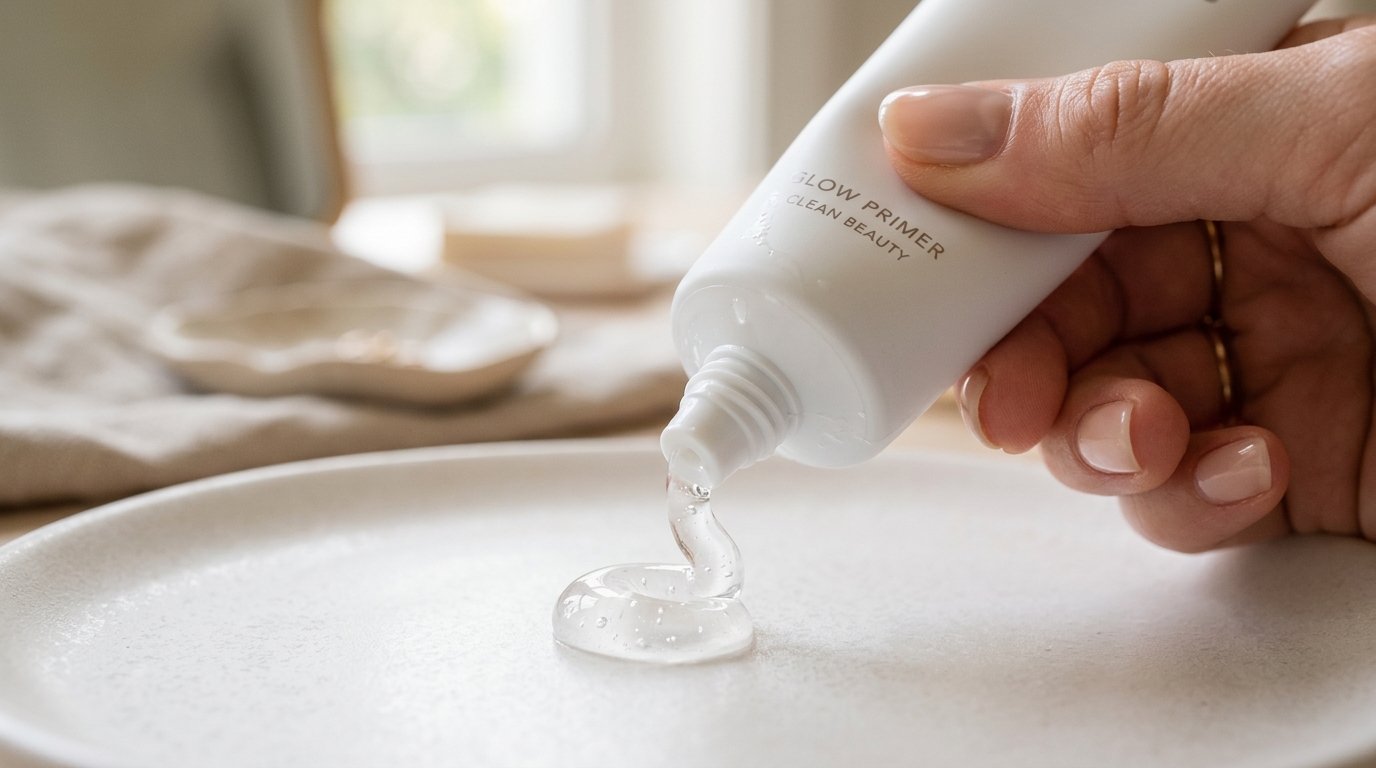
Prep with lightweight moisturiser and SPF
Cleanse and apply a lightweight moisturiser, then your usual sunscreen. Wait 5 minutes for everything to absorb.
Even if your CC cream has SPF, do not rely on it as your primary sun protection — most people do not apply enough product to reach the labelled SPF.
Apply a small amount to the areas that need correction
CC cream is designed to be applied where you need colour correction — usually the cheeks, nose, and chin for redness. Start with a small amount on those areas and blend outward.
If your whole face has uneven tone, you can apply it all over. But for many people, focused application works better — it uses less product and looks more natural.
Press and blend with fingertips or a damp sponge
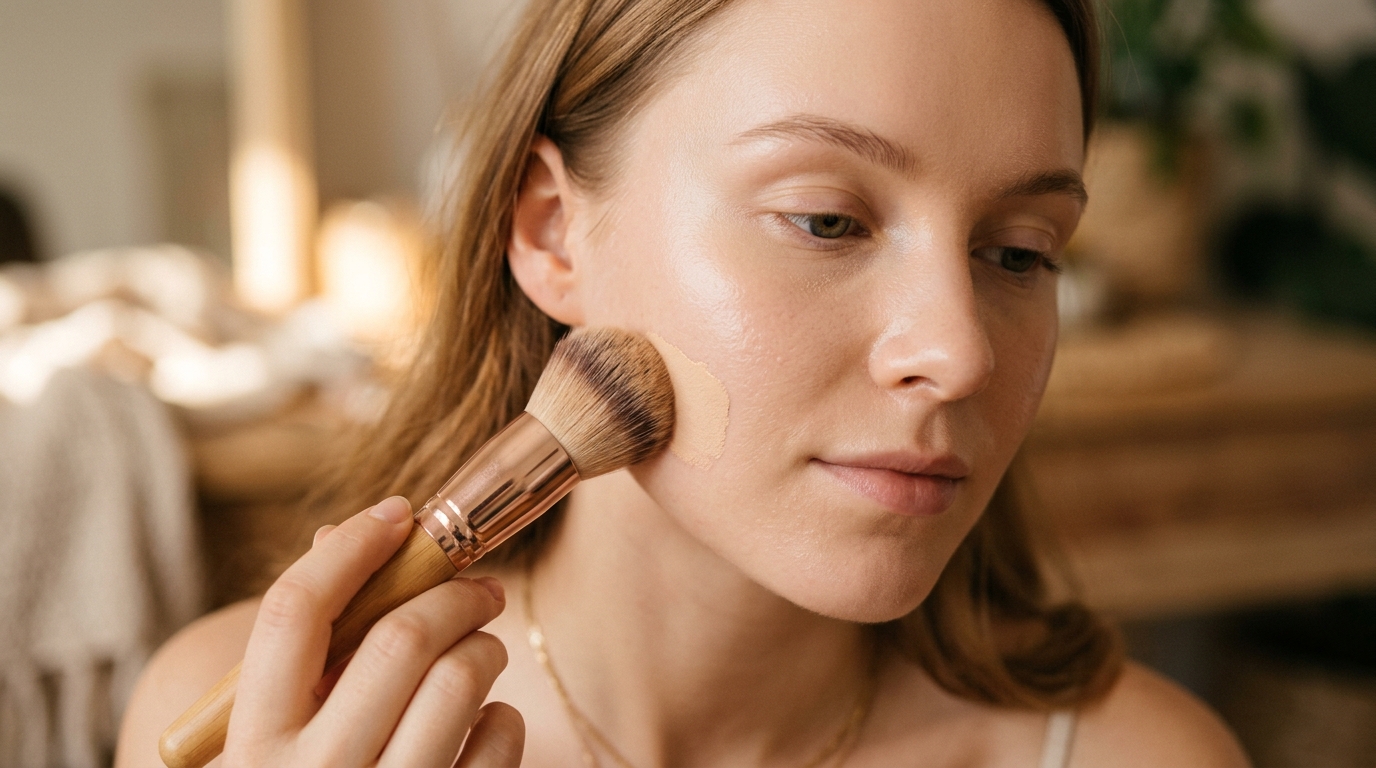
Press the CC cream into the skin using clean fingertips or a damp makeup sponge. Do not sweep — press and blend gently outward.
If you use a self-adjusting CC cream, keep blending until the green or peach tint settles into your skin tone.
Build coverage only where needed
If your redness or uneven tone is significant, add a second thin layer only to those areas. Do not layer it all over — this is what causes caking.
Spot-conceal visible blemishes
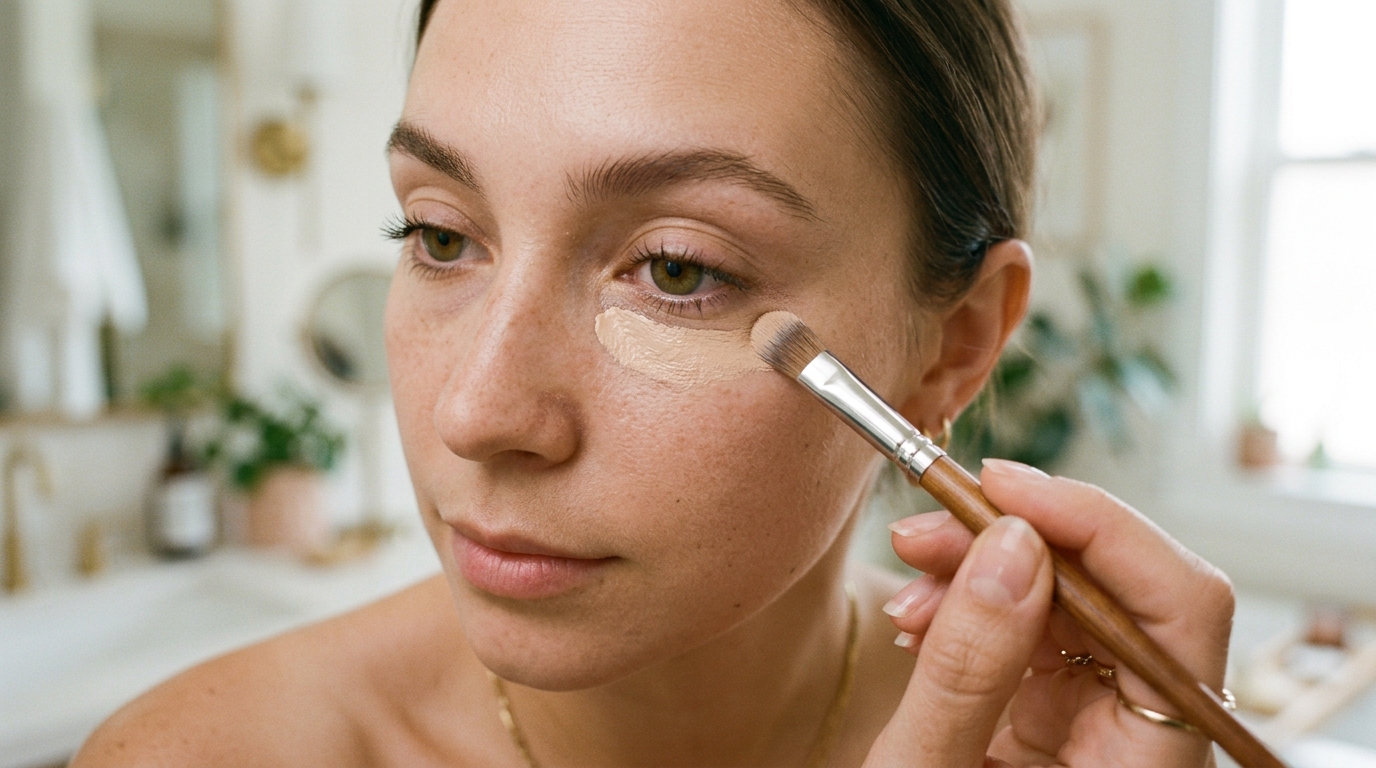
For visible blemishes or marks that still show through, use a small flat concealer brush to press a tiny amount of concealer directly onto the spot. Do not add more CC cream — this will only make the mark look more obvious.
Set only where needed
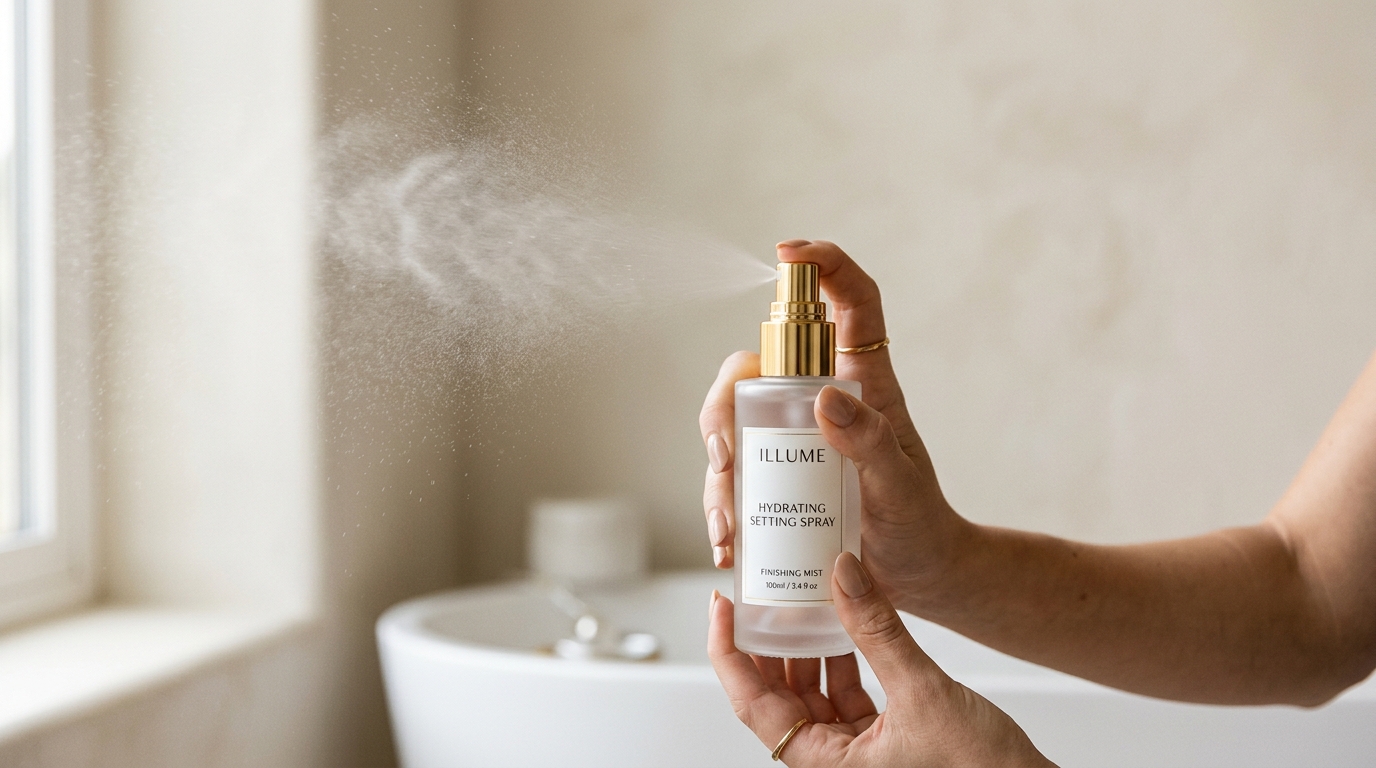
Skip powder on textured areas. If your T-zone gets oily, use a small amount of finely milled powder only on the forehead, nose, and chin. Otherwise, set the entire face with a hydrating setting spray.
CC Cream vs. BB Cream for Acne-Prone Skin
Both have a place in an acne-prone skin routine — it depends on the cosmetic goal for that day.
| Feature | CC Cream | BB Cream |
|---|---|---|
| Primary purpose | Colour correcting — evens out redness and tone | General-purpose beauty balm — light coverage |
| Coverage | Light to medium | Sheer to medium |
| Best for | Redness, uneven tone, post-acne marks | Everyday base, mild redness, light coverage |
| Skincare ingredients | Often includes colour-correcting pigments plus skincare | Usually skincare-focused |
| Best for oily skin | Green or peach tint helps even out shine and redness | Works well with oil-free formulas |
Practical advice: Keep both in rotation. Use CC cream on days when redness or uneven tone is your main concern. Use BB cream on days when your tone is already even and you just want light coverage. Some people also layer CC cream under BB cream or foundation for a colour-correcting base.
Common Mistakes to Avoid
- Applying green CC cream all over the face. Green is designed to correct redness — it works best applied only to the red areas. All over, it can make foundation look grey.
- Expecting CC cream to look like foundation. CC cream is a colour-correcting base, not a full foundation. For visible blemishes, use spot concealer.
- Relying on CC cream as your only sunscreen. Most people do not apply enough product to reach the labelled SPF. Use a dedicated sunscreen underneath.
- Layering too much product. Thin layers only. If you need more coverage, spot-conceal rather than layering more CC cream.
- Powdering the whole face. Powder can emphasise texture and cancel out the subtle colour-correcting effect. Set only the T-zone with a small amount if needed.
- Skipping nightly removal. CC cream needs the same thorough removal as foundation. Double cleanse every night.
- Ignoring the shade match. Even self-adjusting CC creams can look off if the base shade is wrong. Match your neck, not your wrist.
- Not patch testing new formulas. If you are trying a new CC cream with colour-correcting pigments, test it on a small area first to see how it reacts with your skin tone.
Frequently Asked Questions
What is the best CC cream for acne-prone skin?
Based on our four-week cosmetic testing, IT Cosmetics Your Skin But Better CC+ Cream ($42) is our top pick for acne-prone skin. It is non-comedogenic, colour-correcting, and offers buildable coverage with SPF 50. For a drugstore option, e.l.f. Camo CC Cream (~$15) is the best value, and Physicians Formula Super CC (~$16) is a good choice specifically for redness.
What is CC cream and is it good for acne-prone skin?
CC stands for 'colour correcting' or 'complexion correcting.' CC creams are tinted hybrid products that combine light coverage with colour-correcting pigments, skincare ingredients, and often SPF. They are a good cosmetic option for acne-prone skin because they help even out the look of redness and uneven tone without the weight of a full foundation, especially when the formula is non-comedogenic.
Does CC cream clog pores?
Some CC creams can contribute to clogged pores if the formula contains heavy oils or occlusive ingredients. Choosing a non-comedogenic, oil-free CC cream reduces this risk. Removing it thoroughly every night with the double cleanse method is equally important. Not every CC cream is non-comedogenic, so always check the label.
What should I look for in a CC cream for acne-prone skin?
Look for formulas labeled non-comedogenic and oil-free. Green-tinted CC creams help soften the look of redness, which is common in acne-prone skin. Water-based gel or lotion textures feel lighter than heavy creams. Skincare ingredients like niacinamide and glycerin are a bonus. Avoid heavy fragrance and thick oils in the top five ingredients.
Is CC cream better than BB cream for acne-prone skin?
It depends on your cosmetic concern. CC cream is specifically designed for colour correcting — it is best if redness or uneven tone is your main concern. BB cream is more of a general purpose 'beauty balm' — good for a natural base with light coverage. Many people with acne-prone skin use CC cream because redness is one of the most common cosmetic concerns, and the colour-correcting pigments help even out tone.
Can CC cream replace foundation?
For light-to-medium coverage days, yes. CC cream evens out tone and softens the look of redness without the weight of a full foundation. For visible blemishes and marks, foundation or a spot concealer gives more coverage. Many people use CC cream as their base on most days and switch to foundation when they want more coverage.
What is the best CC cream for redness from acne?
Green-tinted CC creams are designed to neutralise the look of redness. Physicians Formula Super CC Color-Correction (~$16) and Erborian CC Red Correct ($44) are our top picks for redness. Apply a small amount only on the red areas — usually the cheeks, nose, and chin — rather than all over the face.
How do I apply CC cream on acne-prone skin?
Apply a small amount with clean fingertips or a damp makeup sponge, pressing it into the skin in thin layers. Start at the centre of the face and work outward. Focus the CC cream on areas with redness or uneven tone. Spot-conceal any visible blemishes with a small brush if you want extra coverage. Set with a hydrating spray — usually no powder required.
What is the best drugstore CC cream for acne-prone skin?
e.l.f. Camo CC Cream (~$15) is our top drugstore pick for acne-prone skin. It is non-comedogenic, has SPF 30, and offers medium buildable coverage with a natural finish. For redness specifically, Physicians Formula Super CC (~$16) is a strong alternative.
Should I use CC cream with SPF?
You can, but do not rely on the SPF in a CC cream as your primary sun protection. Most people do not apply enough product to reach the labelled SPF. Use a dedicated sunscreen underneath your CC cream if sun protection matters for your routine — which it should if you are using any acne-focused skincare.
The Bottom Line
CC cream is the best cosmetic option when redness or uneven tone is your main concern. The colour-correcting pigments help even out the look of tone in a way that standard foundation or BB cream does not — and when the formula is non-comedogenic, it is a comfortable choice for acne-prone skin.
If you want the best overall: IT Cosmetics CC+ Cream ($42) — non-comedogenic, SPF 50, colour correcting, buildable coverage.
If you want the best drugstore option: e.l.f. Camo CC Cream (~$15) — non-comedogenic, SPF 30, wide shade range.
If redness is your main concern: Physicians Formula Super CC (~$16) or Erborian CC Red Correct ($44).
If you want a clean formula: Juice Beauty STEM CELLULAR ($42) — organic, non-comedogenic, SPF 30.
If you want a multi-tasker: Tarte CC Correct & Glow Tape ($29) — works alone or under foundation.
If you want the best budget option: L'Oréal Visible Lift CC (~$14) — lightweight, natural finish.
Remember to prep with SPF first — do not rely on the SPF in the CC cream alone. Apply CC cream where you need colour correction most — usually the cheeks, nose, and chin. Spot-conceal any visible blemishes with a small brush. And remove it thoroughly every night with the double cleanse method.
For the full breakdown of non-comedogenic foundations across every price point, see our pillar guide: Best Foundation for Acne-Prone Skin. For the lighter BB cream alternative, see our BB cream guide. For the very lightest option, see our tinted moisturiser guide.
References & Sources
- Allure — best CC creams for redness and uneven tone.
- The Strategist — makeup artist interviews on colour-correcting products.
- Paula's Choice — guidance on CC cream ingredients for acne-prone skin.
- Vogue — application tips for colour-correcting makeup.
- Aggregated user reviews from Sephora, Ulta, Target, and Reddit (r/MakeupAddiction, r/SkincareAddiction, r/Acne).
Was this article helpful?

Anam Ahsan
Skincare Enthusiast & BloggerHi, I'm Anam! I'm a beauty and skincare enthusiast who loves testing new products and sharing honest, personal reviews. I document my skincare journey and share what works for my skin so you can make better choices for your routine.
Comments (24)
Hannah W.
2 days agoThis guide saved me so much money — went with the budget pick and honestly can't tell the difference from serums twice the price!
Anam Ahsan Author
1 day agoSo glad it worked out for you, Hannah! That's exactly the kind of result we hoped readers would see.