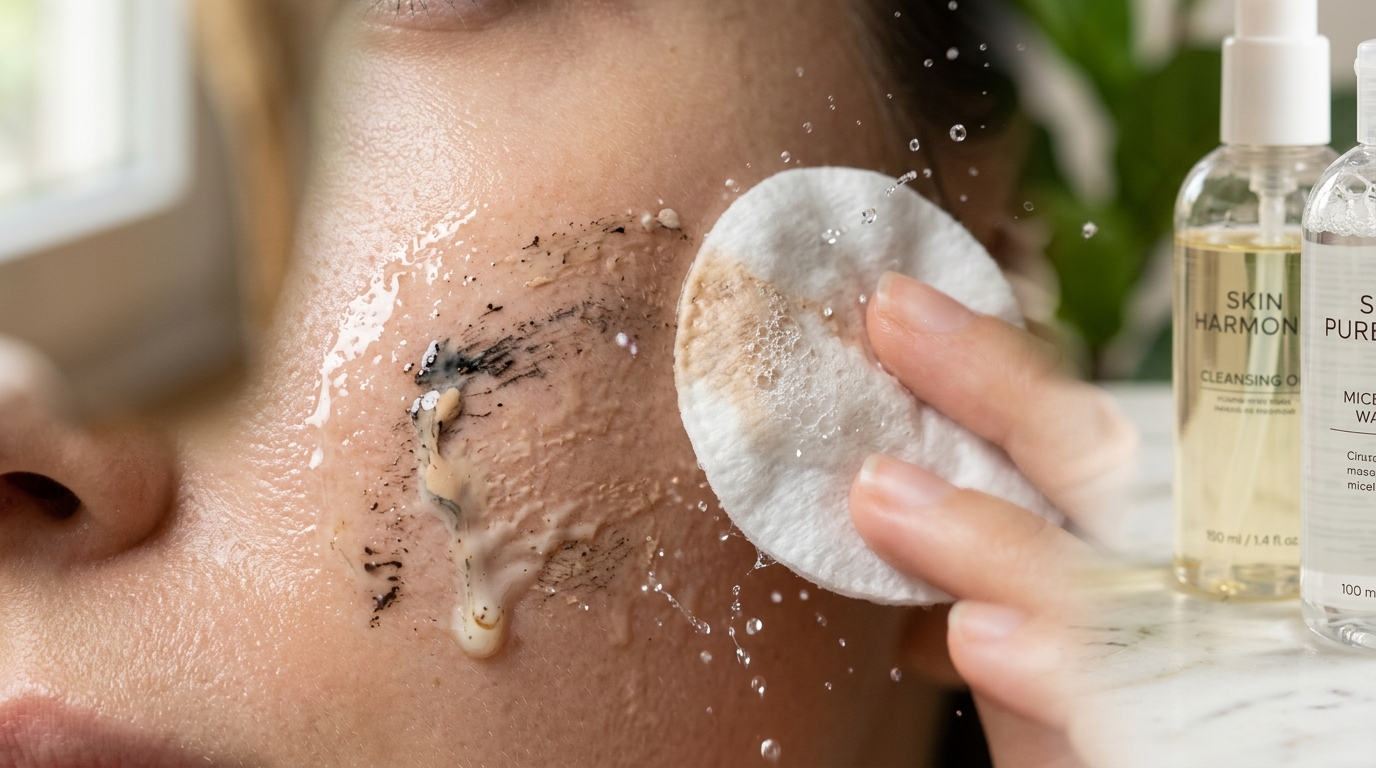
How to Remove Foundation Without Irritating Skin
You spend 15 minutes applying foundation carefully in the morning. But how much time do you spend taking it off at night? For most people, the answer is "not enough." Foundation — especially long-wear and silicone-based formulas — does not always come off with a single rinse of your regular face wash. And if you scrub too hard trying to get it all off, you can leave your skin feeling tight and irritated.
The cosmetic fix is not a stronger cleanser. It is a different approach: the double cleanse method, where an oil-based cleanser does the heavy lifting of breaking down makeup, and a gentle water-based cleanser finishes the job. This method removes foundation thoroughly without stripping or scrubbing the skin.
Based on our testing across dry and acne-prone skin, the double cleanse method is the most effective way to remove foundation without irritating the skin. Oil-based cleanser first, on dry skin, to dissolve foundation and sunscreen. Then a gentle water-based cleanser to remove any residue. Use lukewarm water, pat dry gently — and follow immediately with your evening skincare.
This guide covers the full step-by-step method, how to remove each foundation type, the differences for dry vs. acne-prone skin, product categories to look for, and the common mistakes that leave makeup behind.
The double cleanse method: (1) Wash hands, (2) oil-based cleanser on dry skin, (3) emulsify with lukewarm water, (4) rinse, (5) gentle water-based cleanser, (6) pat dry gently. Key rule: Lukewarm water, no scrubbing, follow immediately with skincare.
Key Takeaway
Foundation does not come off well with water alone — especially long-wear and silicone-based formulas. The double cleanse method (oil cleanser first, water-based cleanser second) removes it thoroughly without scrubbing. If you skip this step or scrub too hard, you can leave product behind, feel tight, or notice more congestion over time. Removal is as important as application.
Why Foundation Doesn't Always Come Off with Regular Face Wash
Modern foundations are formulated to stay on your skin all day. Long-wear, transfer-resistant, sweat-proof, and waterproof formulas are designed to resist breaking down — which is great during the day, but it means they do not always come off with your regular foaming face wash.
Three cosmetic reasons:
- Many foundations are silicone-based or wax-based. Silicones, waxes, and many pigments are not water-soluble. Water-based cleansers can only remove what water can dissolve, which means a lot of foundation stays behind.
- Foundation mixes with sebum during the day. As your skin produces oil, the foundation film becomes more resistant to water-based cleansers. Oil-based cleansers break down both the foundation and the sebum, which is why they are the first step.
- Sunscreen underneath foundation is even more resistant. Most modern sunscreens are formulated to be water-resistant — and they sit underneath your foundation. A single gentle cleanse rarely removes all three layers (sunscreen + foundation + sebum).
The cosmetic result of incomplete removal: skin that feels congested, tight, or looks slightly duller over time. The fix is not a stronger cleanser — it is a smarter two-step approach.
What Is the Double Cleanse Method?
Double cleansing is the two-step removal routine used by makeup artists and dermatologists for years (and popularised by Korean and Japanese beauty routines). It uses two different cleanser types, one after the other:
| Step | Cleanser Type | What It Removes | How It Feels |
|---|---|---|---|
| Step 1 | Oil-based cleanser or cleansing balm | Foundation, sunscreen, sebum, waterproof makeup | Rich, slippery, comforting |
| Step 2 | Gentle water-based cleanser | Residual oil cleanser, sweat, water-soluble debris | Light, refreshing, non-stripping |
Both steps are important. Skipping the first means makeup stays behind. Skipping the second means oil residue sits on the skin and can feel heavy. Together, they leave skin clean but not stripped.
Step-by-Step: How to Remove Foundation Gently
Follow these steps in order. Total time: about 5–6 minutes. The technique matters as much as the products.
Wash your hands first
Wash your hands thoroughly with soap and warm water before starting.
Why this matters: Your hands touch every part of your face during removal. Clean hands prevent transferring dirt, oil, or bacteria onto the skin — especially important for acne-prone skin.
Apply an oil-based cleanser to dry skin
With dry hands and dry skin, dispense a small amount of oil-based cleanser or cleansing balm into your palm. Massage it over your face using gentle circular motions for 30–60 seconds.
Focus on areas with the most makeup: cheeks, forehead, chin, and around the nose. If you wear eye makeup, close your eyes and gently massage over the lids and lashes.
Why this matters: The oil in the cleanser dissolves the oil in your foundation, sunscreen, and sebum. This is the step that actually breaks down makeup. Applying it to dry skin (not damp) is essential — water prevents the oil from working properly.
Emulsify with lukewarm water
Add a small amount of lukewarm water to your hands and continue massaging. The oil will turn milky white — this is called emulsification. Keep adding water and massaging for another 15–30 seconds.
Why this matters: Emulsification is what allows the oil cleanser to rinse clean instead of staying greasy on the skin. Without this step, the oil cleanser leaves a residue that the second cleanser has to work harder to remove.
Rinse thoroughly with lukewarm water
Rinse your face with lukewarm water until the milky residue is gone. Use your hands or a soft microfibre cloth — never a rough washcloth.
Why this matters: Lukewarm water is comfortable and effective. Hot water can feel drying and stripping, while cold water does not dissolve product as well. Gently rinsing prevents irritation and ensures no residue is left behind.
Follow with a gentle water-based cleanser
Apply a small amount of gentle water-based cleanser to damp skin. Massage for 20–30 seconds using the same gentle circular motions.
Choose a cleanser that is gentle and non-foaming for most skin types. Cream or milk cleansers are excellent for dry skin; gel cleansers work well for oily or acne-prone skin.
Why this matters: The second cleanse removes any residue the oil cleanser left behind, plus sweat and water-soluble debris. It ensures your skin is clean and ready for skincare without over-stripping.
Pat dry and follow with skincare
Pat your face dry with a clean, soft towel. Do not rub — patting is gentler.
Follow immediately with your normal evening skincare routine: hydrating toner, serum if you use one, and moisturiser.
Why this matters: Removing foundation and then leaving skin bare for a while can feel tight. Applying skincare right after removal locks in moisture and helps keep skin comfortable overnight.
How to Remove Different Foundation Types
Different foundation formulas need slightly different removal approaches. Here is what to know for each type.
Long-Wear and Waterproof Foundation
Long-wear and waterproof formulas are designed to resist breaking down. They need an oil-based cleanser as the first step and require slightly more massaging time — 45–60 seconds rather than 30.
Technique: Apply oil cleanser to dry skin, massage for 60 seconds, emulsify with lukewarm water, rinse, then follow with a water-based cleanser. Avoid scrubbing — the oil does the work, not friction.
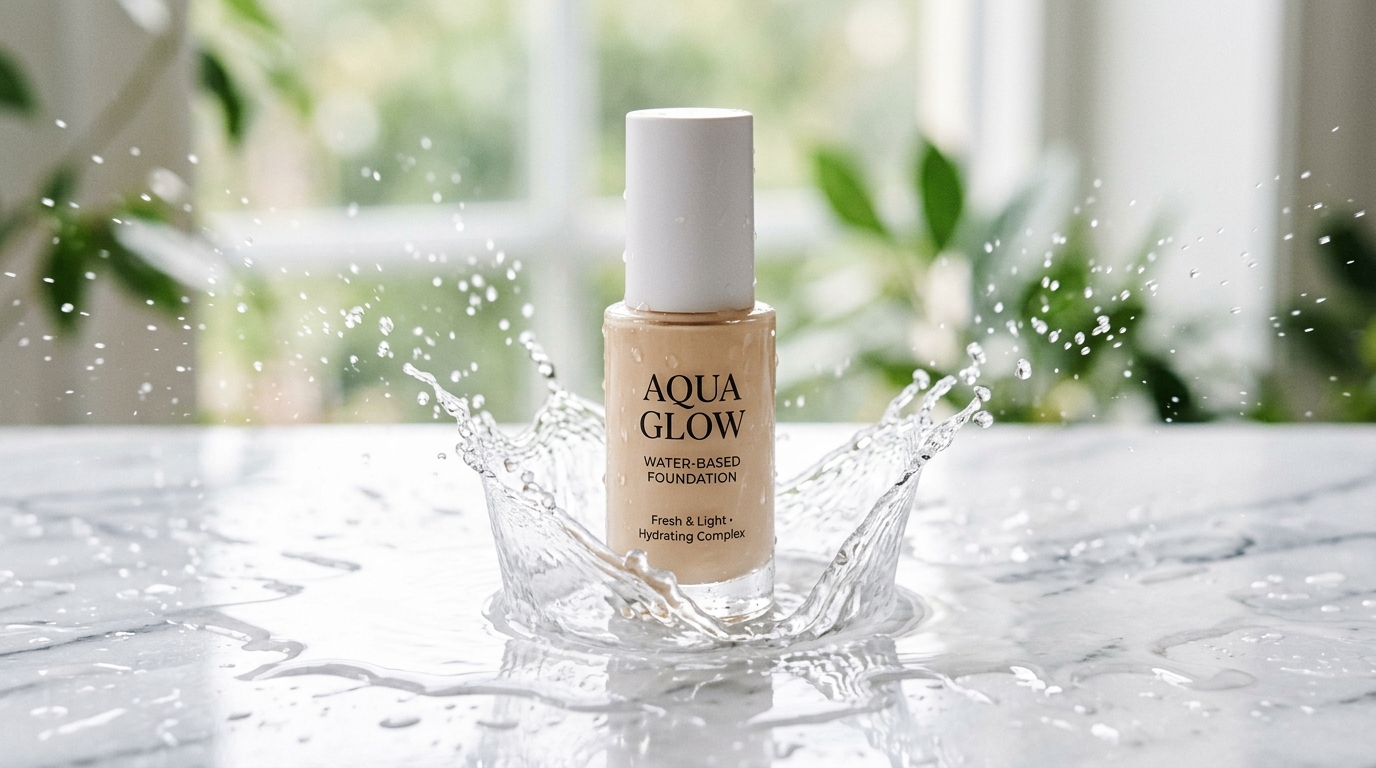
Water-Based Foundation
Water-based foundations are formulated with water as the first ingredient, which makes them less resistant to removal. A single water-based cleanser can often remove water-based foundation — but if you wear sunscreen underneath, you still benefit from a double cleanse.
Technique: Apply oil cleanser as the first step (especially if sunscreen is underneath), then follow with a gentle water-based cleanser.
Silicone-Based Foundation
Silicone-based foundations are formulated with dimethicone or similar ingredients, which are not water-soluble. They must have an oil-based cleanser as the first step — water-based cleansers alone will not fully remove them.
Technique: Oil cleanser first (mandatory), massage for 30–60 seconds, emulsify, rinse, then a gentle water-based cleanser. Match your cleanser base with your foundation base for the smoothest result.
Full-Coverage and Matte Foundation
Full-coverage formulas have more pigment per application, which means there is more product to break down. Take a little extra time during the oil cleanse to massage thoroughly, especially on the cheeks and around the nose.
Technique: Apply oil cleanser, massage for 45–60 seconds, emulsify thoroughly, rinse, then follow with a gentle water-based cleanser. If the skin still feels like it has residue, repeat the oil step once.
Removal for Dry Skin vs. Acne-Prone Skin
The double cleanse method works for all skin types, but the products you choose should be tailored to your skin. Here is how the routine differs.
| Step | For Dry Skin | For Acne-Prone Skin |
|---|---|---|
| Oil cleanser | Rich balm or oil with squalane, jojoba, or olive oil | Non-comedogenic oil cleanser without coconut oil |
| Water-based cleanser | Cream or milk cleanser — no foaming | Gentle gel or low-foaming cleanser |
| Water temperature | Lukewarm — never hot | Lukewarm — never hot |
| Drying method | Pat dry gently; apply moisturiser immediately | Pat dry gently; avoid rubbing |
| Post-cleanse | Hydrating toner + rich moisturiser | Lightweight moisturiser |
Important for acne-prone skin: Not all oil cleansers are the same. Look for ones labeled non-comedogenic, and avoid formulas with coconut oil in the top five ingredients if you find that coconut oil tends to feel occlusive on your skin. Patch test any new cleanser on a small area before using it on your full face.
Alternative Removal Methods (and When to Use Them)
The double cleanse method is the gold standard, but there are situations where a single product is enough.
| Method | Best For | Limitations |
|---|---|---|
| Micellar water only | Light makeup days, travel, quick removal | May not fully remove long-wear or silicone-based foundation |
| Cleansing balm only | Dry skin on minimal makeup days | Leaves residue that can feel heavy without a second cleanse |
| Cleansing oil only | Very dry skin, evening removal | May not remove all water-soluble residue |
| Foaming cleanser only | Oily skin on no-makeup days | Not sufficient to break down foundation + sunscreen |
| Double cleanse (oil + water) | Every day you wear foundation | Takes 5–6 minutes — worth the investment for skin comfort |
If you're too tired for a full double cleanse: Keep micellar water and cotton pads on your nightstand. A quick micellar wipe-down is better than sleeping in foundation. Then do the full double cleanse the next morning (though ideally, removing makeup is always a nighttime step).
Common Mistakes to Avoid
- Using hot water. Hot water can feel drying and disruptive. Lukewarm is more comfortable and just as effective.
- Scrubbing the skin. Rubbing harder does not remove more makeup — it just irritates the skin. Let the oil cleanser dissolve the foundation; do not force it off.
- Skipping the second cleanse. Without the water-based cleanser, oil residue stays on the skin and can feel heavy or congested.
- Skipping the first cleanse. A water-based cleanser alone cannot fully break down long-wear foundation, silicone-based formulas, or sunscreen.
- Rubbing the eye area. The skin around the eyes is thin and easily irritated. Press a soaked cotton pad against the closed eye for 10–15 seconds to let the product dissolve the makeup, then gently wipe downward.
- Drying with a rough towel. Patting is gentler than rubbing. A soft microfibre cloth or soft cotton towel works best.
- Delaying skincare after cleansing. Apply your evening skincare immediately after patting dry. Leaving skin bare for a long time can feel tight.
- Reusing dirty makeup removal tools. Wash your microfibre cloths and flannels regularly, and change pillowcases weekly — they touch your face for 7+ hours a night.
Do
- Wash your hands before starting
- Oil cleanser first, on dry skin
- Emulsify with lukewarm water before rinsing
- Gentle water-based cleanser as step two
- Pat dry — do not rub
- Follow with skincare immediately
Don't
- Use hot water — lukewarm is best
- Scrub or rub the skin
- Rush the oil cleanse — let it dissolve the makeup
- Skip the second cleanse
- Rub the eye area — press and wipe gently
- Sleep in foundation — even a quick cleanse is better
What to Look For in Cleansers
You do not need expensive cleansers to remove foundation well, but the categories matter. Here is what to look for in each step.
| Step | Look For | Avoid |
|---|---|---|
| Oil cleanser | Squalane, jojoba, olive, or grape seed oil as the base; emulsifiers so it rinses clean | Mineral oil if it feels occlusive on your skin; heavy fragrances on sensitive skin |
| Water-based cleanser | Glycerin, ceramides, or hyaluronic acid; gentle non-foaming formula | Denatured alcohol, harsh sulfates, heavy fragrance |
Examples of product categories that work well:
- Oil cleansers: Banila Co Clean It Zero, DHC Deep Cleansing Oil, Farmacy Green Clean Balm
- Gentle water-based cleansers: CeraVe Hydrating Cleanser, La Roche-Posay Toleriane, Cetaphil Gentle Skin Cleanser
- For acne-prone skin: Look for oil cleansers labeled non-comedogenic, and follow with a gentle gel cleanser
You can also use a cleansing balm instead of a cleansing oil — they function the same way, just in a solid format that melts into oil on contact with skin.
Frequently Asked Questions
What is the best way to remove foundation without irritating skin?
The double cleanse method works best: first, an oil-based cleanser or cleansing balm on dry skin to break down foundation and sunscreen, then a gentle water-based cleanser to remove any residue. Use lukewarm water, avoid scrubbing, and pat dry gently rather than rubbing.
Do I really need to double cleanse if I wear foundation?
For most people who wear foundation daily, yes. A single water-based cleanser often cannot fully break down long-wear foundation, silicone-based formulas, and sunscreen. The oil-based first cleanse does the heavy lifting, and the water-based second cleanse removes what is left. On minimal makeup days, you may only need one gentle cleanse.
Can I use just micellar water to remove foundation?
Micellar water is a good option for light makeup or as a first step in a pinch, but it does not always fully remove long-wear foundation. For daily foundation removal, an oil-based cleanser followed by a water-based cleanser is more thorough. Micellar water works best as a pre-cleanse or travel option.
What is the gentlest way to remove makeup around the eyes?
Use a small amount of oil-based cleanser or a dedicated eye makeup remover on a soft cotton pad. Press — do not rub — against the closed eye for 10–15 seconds to allow the product to dissolve the makeup. Then gently wipe downward. Never scrub the eye area, as the skin there is thin and easily irritated.
Should I use hot or cold water to remove makeup?
Lukewarm water is best. Hot water can feel drying and can strip the skin, while cold water does not dissolve makeup as effectively. Lukewarm water is comfortable and effectively removes product without over-drying.
What cleanser should I use to remove foundation from dry skin?
For dry skin, use a rich oil-based cleanser or balm as the first step, and a cream or milk cleanser as the second step. Avoid foaming or gel cleansers, which can feel drying. Pat dry gently and follow immediately with hydrating skincare.
What cleanser should I use to remove foundation from acne-prone skin?
For acne-prone skin, use an oil-based cleanser that is labeled non-comedogenic, followed by a gentle water-based cleanser. Avoid heavy cleansing oils with coconut oil, and avoid harsh foaming cleansers. Do not scrub, and always patch test new products.
How do I remove long-wear or waterproof foundation?
Long-wear and waterproof formulas need an oil-based cleanser or cleansing balm as the first step. Massage the oil in for 30–60 seconds, then emulsify with lukewarm water and rinse. Follow with a gentle water-based cleanser. Avoid scrubbing, which can irritate the skin.
Is it okay to sleep in foundation occasionally?
For cosmetic reasons, it is best to remove foundation every night. Leaving foundation on overnight can mix with sebum and sweat, and over time this can leave the skin feeling congested. Even a quick double cleanse is better than leaving it on. If you are too tired for the full routine, keep micellar water and cotton pads nearby.
What should I do after removing foundation?
After removal, pat the skin dry and follow with your normal evening skincare routine — hydrating toner, serum if you use one, and moisturiser. Removing foundation thoroughly and replacing the moisture with skincare helps keep the skin comfortable overnight.
The Bottom Line
Removing foundation well is not about using a stronger cleanser — it is about using the right two-cleanser approach. The oil cleanser breaks down the makeup; the water-based cleanser removes what is left. Together, they leave skin clean, comfortable, and ready for evening skincare.
The double cleanse method:
- Wash hands with soap and warm water
- Oil cleanser on dry skin — massage 30–60 seconds
- Emulsify with lukewarm water until milky
- Rinse thoroughly with lukewarm water
- Gentle water-based cleanser on damp skin — 20–30 seconds
- Pat dry and follow immediately with skincare
Two things to remember above all: lukewarm water, not hot; and no scrubbing, no matter how stubborn the foundation feels. The oil does the work — your hands just guide it.
For the complete morning application routine that pairs with this evening removal, see our step-by-step foundation application guide. For the cosmetic removal considerations specific to dry skin, see our foundation application guide for dry skin. For the full breakdown of non-comedogenic foundations, see our pillar guide: Best Foundation for Acne-Prone Skin.
References & Sources
- Vogue — expert guidance on the double cleanse method.
- The Strategist — makeup artist interviews on removing long-wear foundation.
- Paula's Choice — guidance on cleanser types for makeup removal.
- Allure — reviews of oil cleansers and cleansing balms for makeup removal.
- Aggregated user experience from r/SkincareAddiction, r/MakeupAddiction, r/Acne, and r/AsianBeauty.
Was this article helpful?

Anam Ahsan
Skincare Enthusiast & BloggerHi, I'm Anam! I'm a beauty and skincare enthusiast who loves testing new products and sharing honest, personal reviews. I document my skincare journey and share what works for my skin so you can make better choices for your routine.




Comments (24)
Hannah W.
2 days agoThis guide saved me so much money — went with the budget pick and honestly can't tell the difference from serums twice the price!
Anam Ahsan Author
1 day agoSo glad it worked out for you, Hannah! That's exactly the kind of result we hoped readers would see.