
You finish your makeup. Everything looks smooth. And then three hours later, you catch yourself in a mirror and see it — every fine line around your mouth, your eyes, and your forehead has a thin ring of foundation sitting inside it, making the lines look twice as deep as they actually are.
This is one of the most common complaints in makeup — and one of the most misunderstood. Foundation settling into fine lines is not a sign that your foundation is defective or that your skin is "aging badly." It is a physics problem: the skin moves, and the foundation layer does not move with it.
Foundation settles into fine lines because it dries down to a fixed film that cannot flex with facial movement. The fix is not a new foundation — it is making the whole system more flexible. Hydrate the skin thoroughly, choose a flexible serum or cream formula, apply thinner layers around the eyes and mouth, use a damp sponge, and skip powder. Do those five things and the settling reduces dramatically.
This guide walks through the six real causes — from formula choice to application technique to the wrong primer — and the fix for each. By the end, you should be able to identify which one is causing your problem and correct it in a single morning routine.
The 6 causes of foundation settling into fine lines: (1) matte or long-wear formula, (2) dry skin underneath, (3) too much product around eyes and mouth, (4) brush application, (5) powder setting, (6) blurring primer emphasising dryness. The fix: flexible formula, damp sponge, thin layers, no powder, hydrating spray.
Key Takeaway
Foundation settles into fine lines because it cannot flex with the skin. Mattifying formulas, heavy application, and powder setting all make this worse. Flexible serum or cream formulas, ultra-thin layers around the eyes and mouth, a damp sponge, and skipping powder reduce settling dramatically — regardless of the specific foundation brand.
Why Foundation Settles Into Fine Lines
Before diving into the six causes, it helps to understand the mechanism. When you apply foundation, it dries down to a thin film on the surface of the skin. That film has limited flexibility — the more matte and long-wear the formula, the more rigid the film.
Your skin, meanwhile, is in constant motion. Every smile, frown, blink, and even normal talking stretches and contracts the skin around your mouth, eyes, and forehead. If the foundation film cannot stretch with the skin, it does one of two things:
- It cracks. The film breaks apart where the skin stretched, and the pigment settles into the crack — which is exactly what a fine line looks like.
- It migrates. The film slides as the skin moves, and it ends up redistributed into the deeper creases where it becomes more visible.
Every one of the six causes below feeds into one of these two mechanisms. Fix the cause and the settling reduces.
The 6 Causes (And How to Fix Each)
You're using a matte or long-wear formula
Matte and long-wear foundations are formulated to lock in place. They contain film-forming polymers and oil-absorbing powders that dry down firmly. On oily skin, this keeps makeup from sliding off. On dry or mature skin with fine lines, this rigidity causes the foundation to crack into every line it cannot move with.
This is the single biggest cause of visible settling. Long-wear formulas that promise "12 hours" or "24 hours" are usually the worst offenders on dry skin with fine lines — the whole point of their formulation is to stay put, which is exactly what you do not want around moving areas like the mouth and eyes.
The skin underneath is too dry
Dry skin has less elasticity and fewer oils at the surface. It moves less smoothly with facial expressions — and it provides less moisture to keep the foundation film flexible. A foundation applied over dry skin dries down faster, becomes more rigid, and cracks into fine lines more easily.
Even if your skin feels comfortable before foundation, the hydration level may not be enough for the foundation to remain flexible for a full day. This is why people often notice their foundation "starts out fine" and then settles around hour four — as the day goes on, the skin dehydrates further and the foundation becomes more brittle.
Too much product around the eyes and mouth
This is the most common technique mistake. Most people apply the same amount of foundation to the entire face — but the eyes and mouth have thinner skin, more movement, and more fine lines than the rest of the face. More product here means more pigment to settle into more lines.
The correct approach is to use less product on the high-movement areas, not more. Most people do the opposite out of habit, because these areas often have more redness or discolouration to cover. But layering more foundation makes the settling worse, not better.
You're applying with a brush
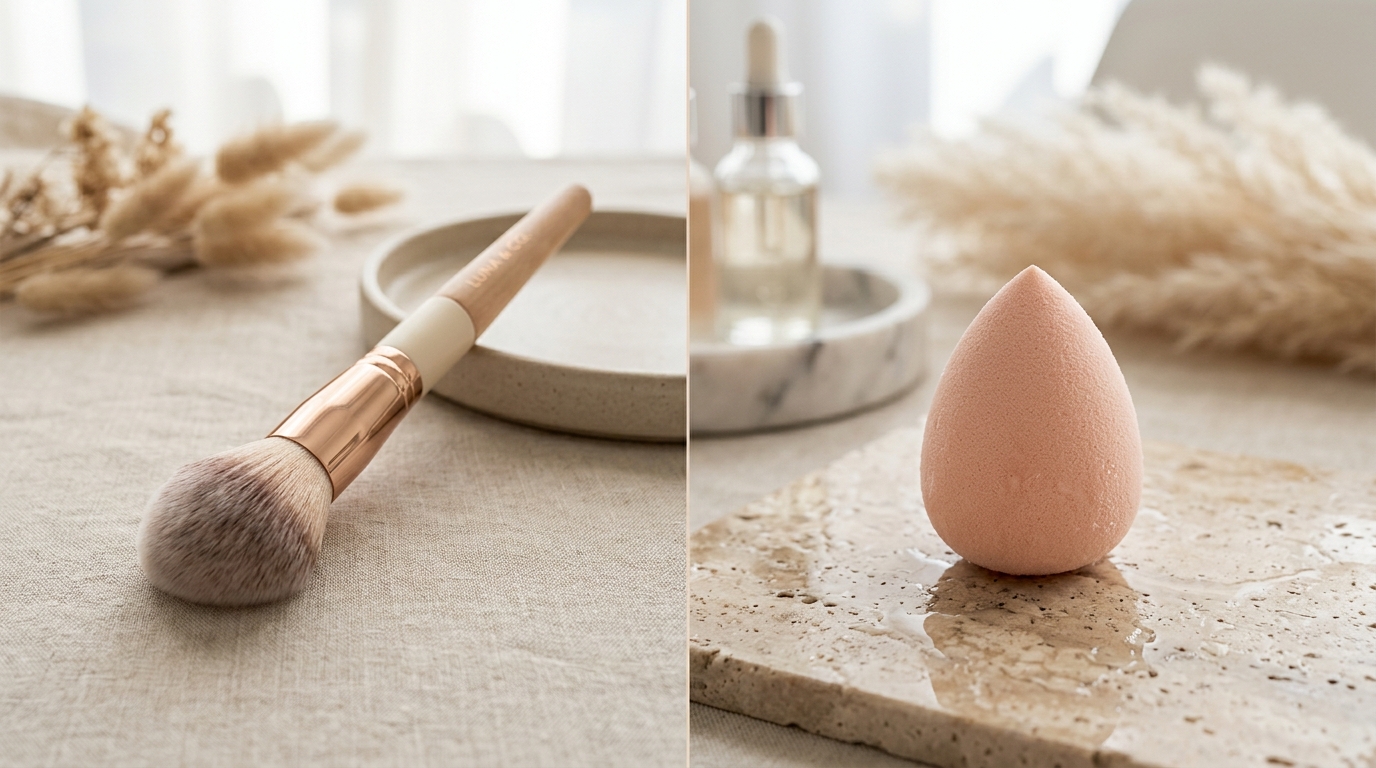
Brushes deposit foundation more heavily than sponges and can push product into fine lines rather than over them. The bristles sweep across the skin, and on areas with fine lines, they tend to fill in the creases with product — exactly what causes visible settling.
Brushes also apply foundation unevenly. Heavier deposits in one spot and lighter deposits in another create a film that is more likely to crack as it dries, because the surface tension is uneven.
You're setting with powder
Powder is the number one cause of visible fine lines after foundation. It absorbs moisture from the foundation film, which makes the film drier and more rigid. It also physically fills the creases with powder particles, making the lines look even more pronounced. And because dry skin does not produce enough oil to "melt" the powder in, the powder sits visibly on the surface and separates into the lines over the day.
This is especially true around the mouth and eyes. Even a light dusting of translucent powder over these areas can turn a smooth finish into a line-filled one within an hour.
Blurring or pore-filling primer is emphasising dryness
Blurring and pore-filling primers are formulated with heavy silicones that sit on top of the skin and "fill in" texture. On oily or normal skin, this creates a smooth canvas. On dry skin with fine lines, it does the opposite — the silicone fills in the fine lines with a drier substance, and the foundation on top cracks more easily because the base is not flexible.
This is a counterintuitive cause. Many people assume a primer will help prevent settling, but a blurring primer can actually make it worse on fine lines by creating a surface that does not move with the skin underneath.
Quick Diagnosis: Which Cause Is Yours?
| What You See | Most Likely Cause | Quick Fix |
|---|---|---|
| Foundation cracks into every line within 2–3 hours | Cause 1: Matte or long-wear formula | Switch to serum or cream foundation |
| Foundation starts fine, settles by mid-day | Cause 2: Skin too dry underneath | Add serum + richer moisturiser, wait longer |
| Settling concentrated around eyes and mouth | Cause 3: Too much product | Use 1/3 the amount in those areas |
| Lines are filled with product immediately after application | Cause 4: Brush application | Switch to a damp sponge |
| Lines appear within 1 hour of setting makeup | Cause 5: Powder setting | Skip powder, use hydrating spray |
| Foundation looks drier after primer than without | Cause 6: Blurring primer | Switch to hydrating primer |
The Mid-Day Fix (Without Making It Worse)
If foundation has already settled into your fine lines and you are out of the house, there is exactly one thing you should do — and one thing you absolutely should not.
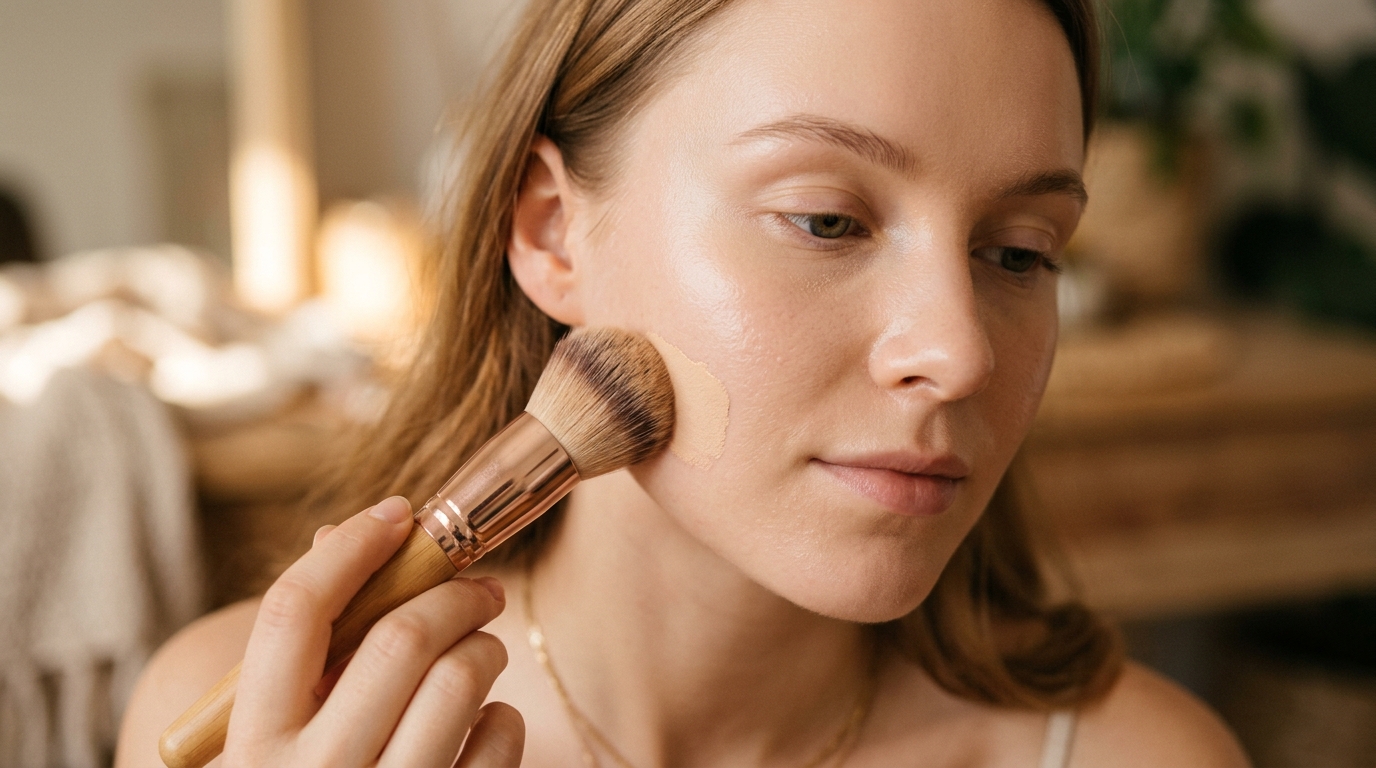
Do: Use a clean damp sponge to gently press over the area. The moisture in the sponge helps redistribute the foundation without adding more product. Press straight down and lift — do not sweep. If the area looks dry, press a very small amount of moisturiser or hydrating balm into the line with the sponge.
Do not: Add more foundation over settled lines. This is the most common mistake and always makes it worse. More foundation adds more pigment that will settle into more lines. If you are tempted to "cover up" the settling with more product, put the bottle down and reach for the sponge and moisturiser instead.
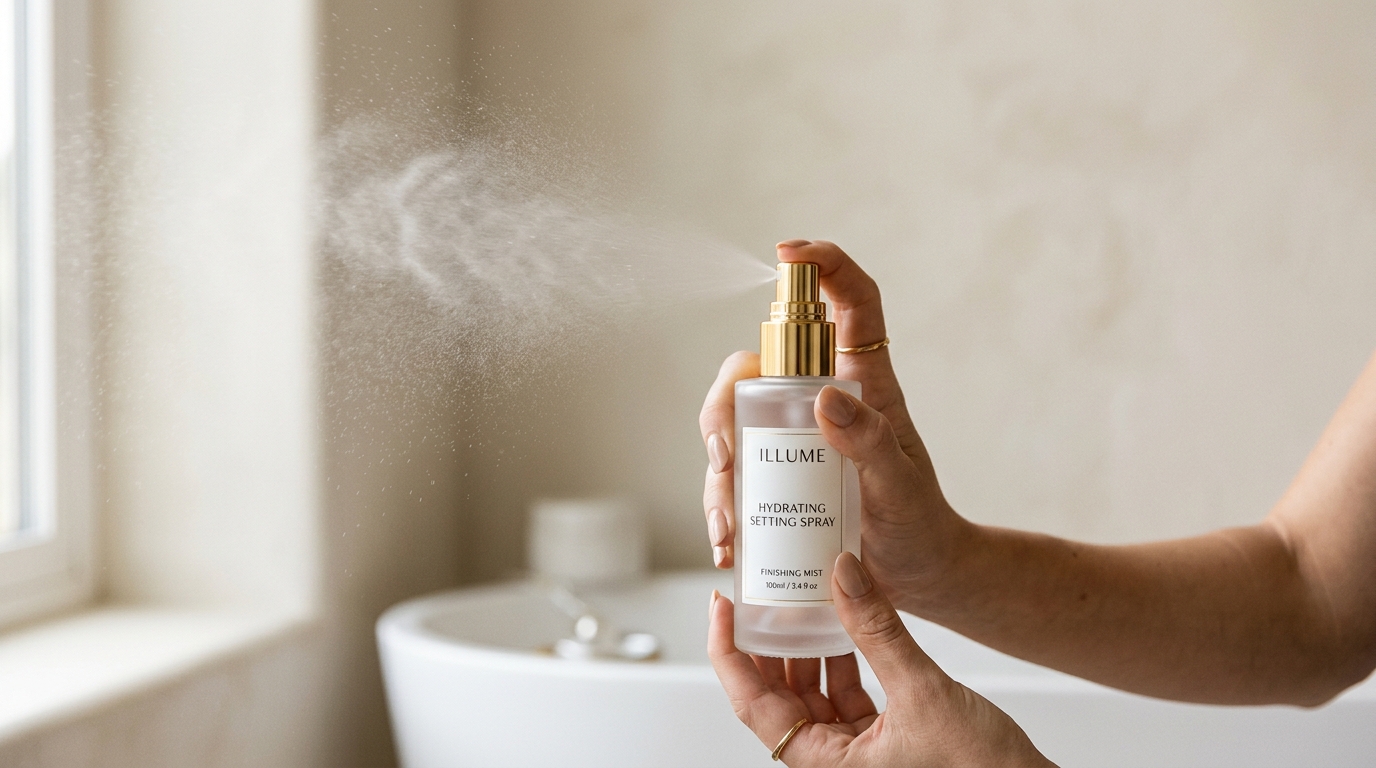
If you do not have a damp sponge with you, a hydrating setting spray pressed gently into the area with a clean fingertip can also help — but a damp sponge is more effective.
Long-Term Prevention
Preventing foundation settling is not just about technique on the day — it is about the skin underneath. These habits make the biggest difference over time:
- Consistent daily hydration. Even on days you do not wear makeup, use a hydrating serum and moisturiser. Skin that is consistently hydrated is more flexible and moves better with foundation.
- Consider a barrier-supporting ingredient. Ceramides and niacinamide in your skincare help maintain the barrier that keeps skin supple. Cosmetic guidance only — if you have concerns about your skincare routine, consult a qualified professional.
- Adjust seasonally. In winter and dry climates, switch to a richer moisturiser and a more flexible foundation formula. What works in summer may not work in January.
- Avoid over-exfoliating. Aggressive exfoliation strips the barrier and makes skin drier, which makes fine lines appear deeper and foundation settle more visibly. Keep exfoliation to 1–3 times per week.
- Consider your cleanser. Foaming cleansers strip moisture. If your skin feels tight after cleansing, switch to a cream or milk cleanser.
- Hydration starts at night. A hydrating overnight mask once a week keeps skin consistently supple — and shows up in how foundation applies in the morning.
Do
- Choose flexible serum or cream formulas
- Hydrate the skin thoroughly before foundation
- Use less product around eyes and mouth
- Apply with a damp sponge and press, don't sweep
- Skip powder on areas with fine lines
- Fix mid-day with a damp sponge, not more foundation
Don't
- Use matte or long-wear formulas on fine lines
- Apply heavily around the eyes and mouth
- Use a brush across areas with fine lines
- Set with powder anywhere near fine lines
- Layer on more foundation to fix settling
- Use blurring primers on areas with fine lines
Common Mistakes to Avoid
- Applying foundation all the way into the eye area. Foundation is not formulated for the thin skin around the eyes. Use only a tiny amount, or skip it and use concealer applied sparingly.
- Using more product for "coverage" around the mouth. More foundation equals more settling. Use less, and add concealer only if needed.
- Smiling while your foundation sets. The foundation sets into the expression your face is holding. After applying, keep your face relaxed for 1–2 minutes as the foundation settles — do not smile, frown, or squint.
- Powdering "just to be safe." If your skin is dry, you do not need powder. Trust the hydrating spray and skip the powder step entirely.
- Using the same foundation year-round. Fine lines look very different in humid summer versus dry winter. Adjust formulas seasonally.
- Ignoring the neck and jawline. Foundation that "stops" at the jawline makes fine lines on the face more visible by contrast. Blend down.
- Not waiting between skincare and foundation. Rushing this step is one of the most common causes of uneven foundation that later settles. Five to ten minutes makes a real difference.
Frequently Asked Questions
Why does foundation settle into fine lines?
Foundation settles into fine lines because the skin moves with facial expressions but the foundation layer does not. As foundation dries down and becomes less flexible, it cracks into the lines it cannot move with. Formula choice, application method, and skincare prep all contribute.
How do I stop foundation from settling into smile lines?
Use a flexible serum or cream foundation rather than a matte or long-wear formula. Apply a very thin layer around the mouth, using less product than elsewhere on the face. Press the foundation in with a damp sponge instead of sweeping. Avoid powder on the area entirely. Set with a hydrating spray.
Is matte foundation worse for fine lines?
Yes. Matte foundations dry down more firmly and are less flexible, so they crack into fine lines more easily than dewy or serum foundations. Hydrating, flexible formulas bend with the skin and settle less visibly.
Should I use less foundation around the eyes and mouth?
Yes. These areas have thinner skin, more fine lines, and more movement than the rest of the face. Using less product there — and using a damp sponge to press it in — dramatically reduces settling. Many people apply too much product in these areas out of habit.
Does primer help stop foundation from settling into fine lines?
Sometimes. A smoothing or hydrating primer can create a smoother surface so foundation sits more evenly. However, a heavy silicone-based pore-filling primer can actually make things worse by emphasising dryness in fine lines. Choose a hydrating primer over a blurring one for fine lines.
What should I do if foundation has already settled into my fine lines?
Do not add more foundation. Instead, use a clean damp sponge to gently press over the area — the moisture in the sponge helps redistribute the foundation without adding product. If the area looks dry, press a small amount of moisturiser into the line with the sponge. This is the only reliable mid-day fix.
Can I use powder if I have fine lines?
Best avoided on areas with fine lines, especially around the eyes and mouth. Powder absorbs moisture, sits in the creases, and dries out the foundation film, which makes lines more visible. If you must set, use the smallest possible amount of finely milled powder only on the T-zone, and set the rest with a hydrating spray.
Which foundation formula is best for fine lines?
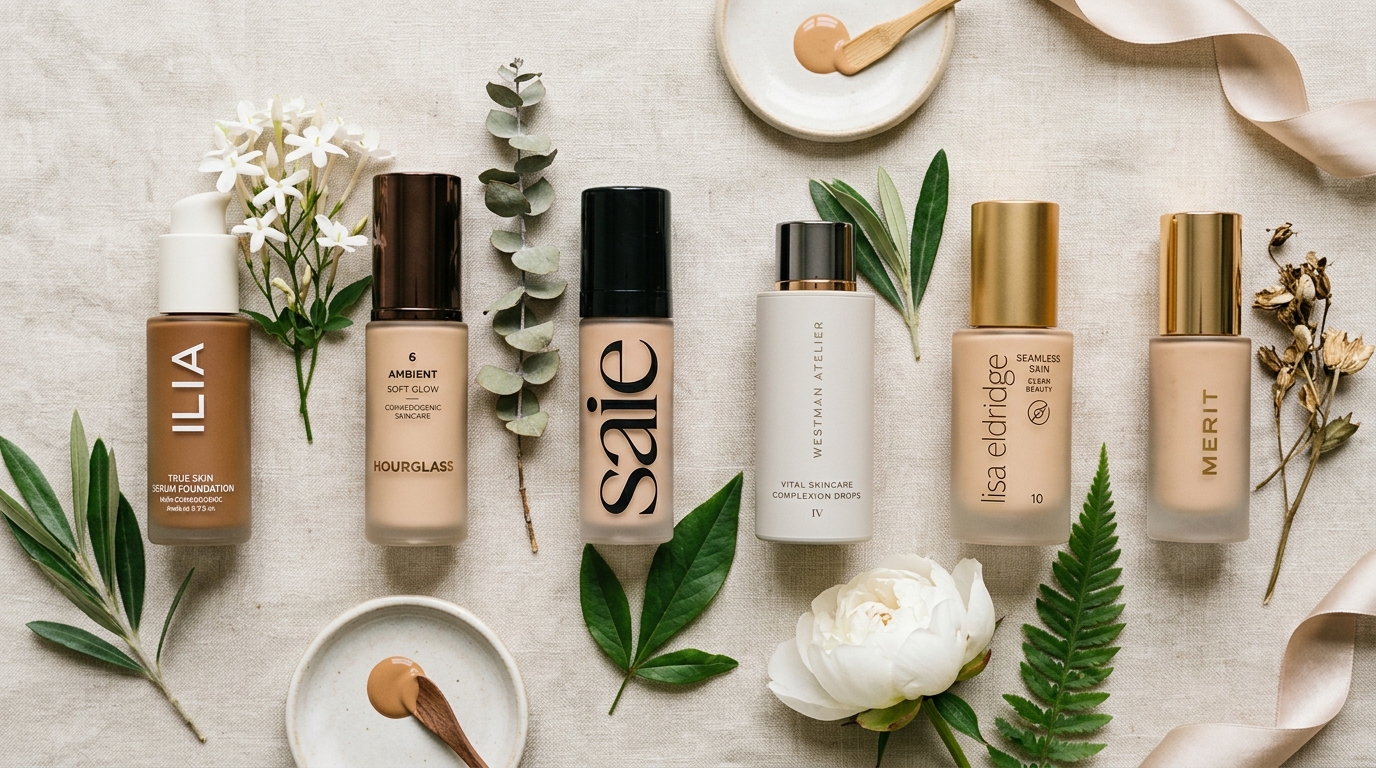
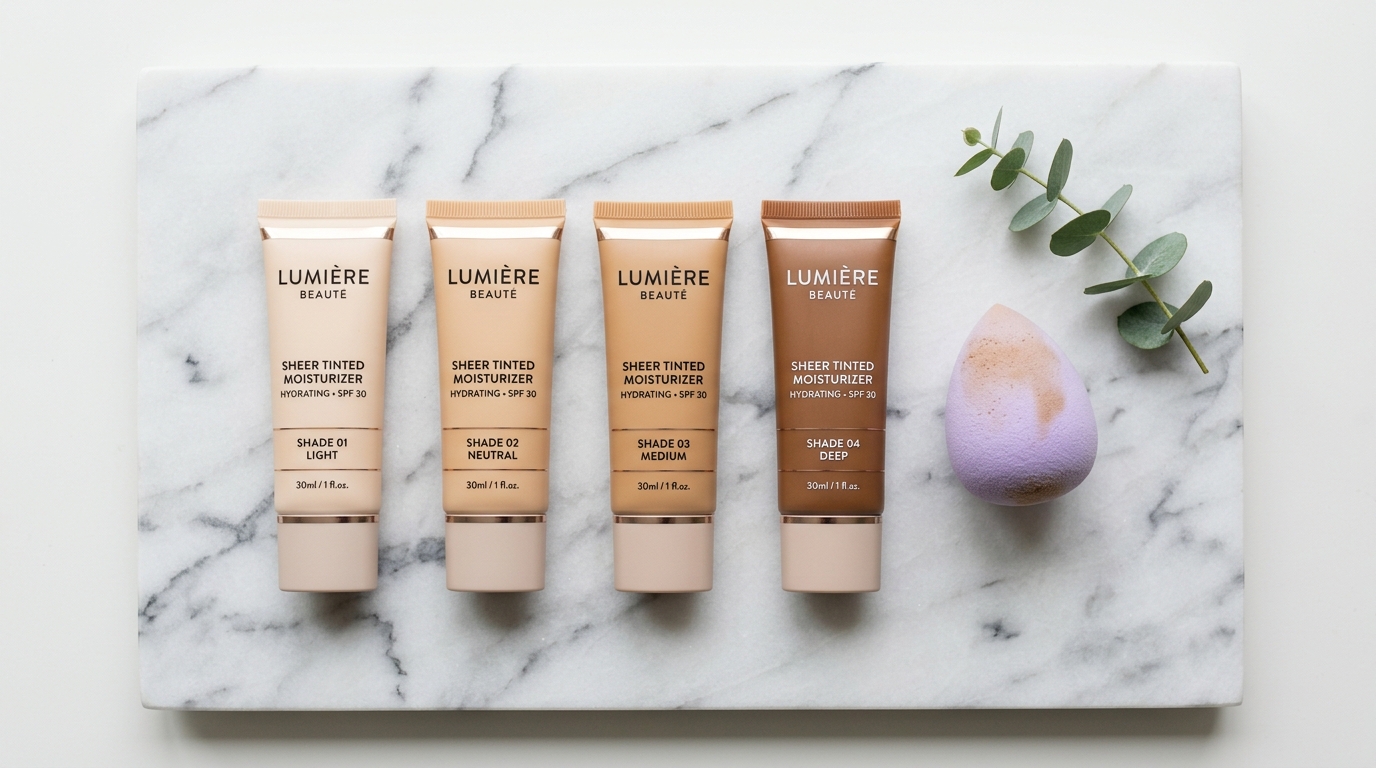
Serum foundations are generally the most flexible and move with the skin best, making them the top choice for fine lines. Cream foundations can also work well if applied in thin layers. Avoid matte, long-wear, and powder-to-liquid formulas, which dry down firmly and crack into lines.
How do I apply foundation around my eyes to avoid creasing?
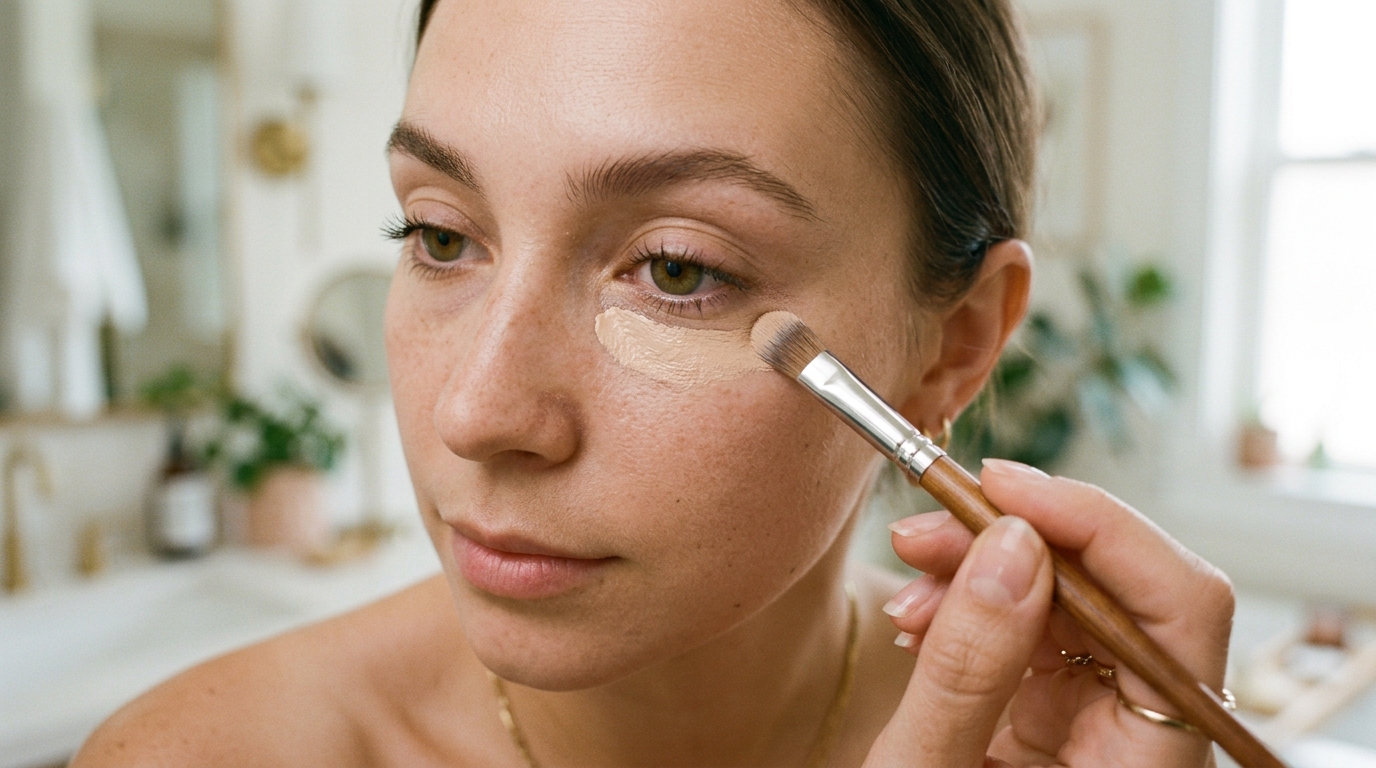
Apply the smallest possible amount of foundation around the eyes with a small damp sponge. Do not draw the foundation into the eye area — press it in with a tapping motion. If you use concealer, apply it after foundation and use only a tiny amount. Set with a very light mist of hydrating spray rather than powder.
Does dry skin make foundation settle into fine lines more?
Yes. Dry skin has less bounce and flexibility, so it moves less with facial expressions. Foundation applied over dry skin has less moisture to help it stay flexible, which increases the chance it will crack into lines. Hydrating the skin thoroughly before foundation is the single most effective fix.
The Bottom Line
Foundation settling into fine lines is not a sign that your foundation is wrong or that there is something wrong with your skin. It is a physics problem — and every single cause has a fix.
The fastest fix: Switch to a flexible serum or cream formula, apply thin layers with a damp sponge, use less product around the eyes and mouth, and skip powder. Change nothing else and the settling reduces noticeably within a week.
The most common mistake: Adding more foundation over settled lines. Always fix settling with a damp sponge and moisturiser, never with more product.
The long-term fix: Consistent daily hydration, seasonal adjustments, and a flexible foundation formula that matches your skin's needs. Skin that is consistently hydrated and cared for settles foundation far less visibly.
For the full application method, see our step-by-step guide to applying foundation on dry skin. For the best flexible formulas across every price point, see our pillar guide: Best Foundation for Dry Skin. For mature skin specifically, see our foundation guide for skin over 40.
References & Sources
- Vogue — expert application tips for foundation on mature skin.
- The Strategist — makeup artist interviews on preventing foundation settling.
- Paula's Choice — guidance on finishes and formulas for fine lines.
- Allure — best foundations for mature skin and fine lines.
- Aggregated user troubleshooting from r/MakeupAddiction, r/dryskin, and r/MatureBeauty.
Was this article helpful?

Anam Ahsan
Skincare Enthusiast & BloggerHi, I'm Anam! I'm a beauty and skincare enthusiast who loves testing new products and sharing honest, personal reviews. I document my skincare journey and share what works for my skin so you can make better choices for your routine.
Comments (24)
Hannah W.
2 days agoThis guide saved me so much money — went with the budget pick and honestly can't tell the difference from serums twice the price!
Anam Ahsan Author
1 day agoSo glad it worked out for you, Hannah! That's exactly the kind of result we hoped readers would see.