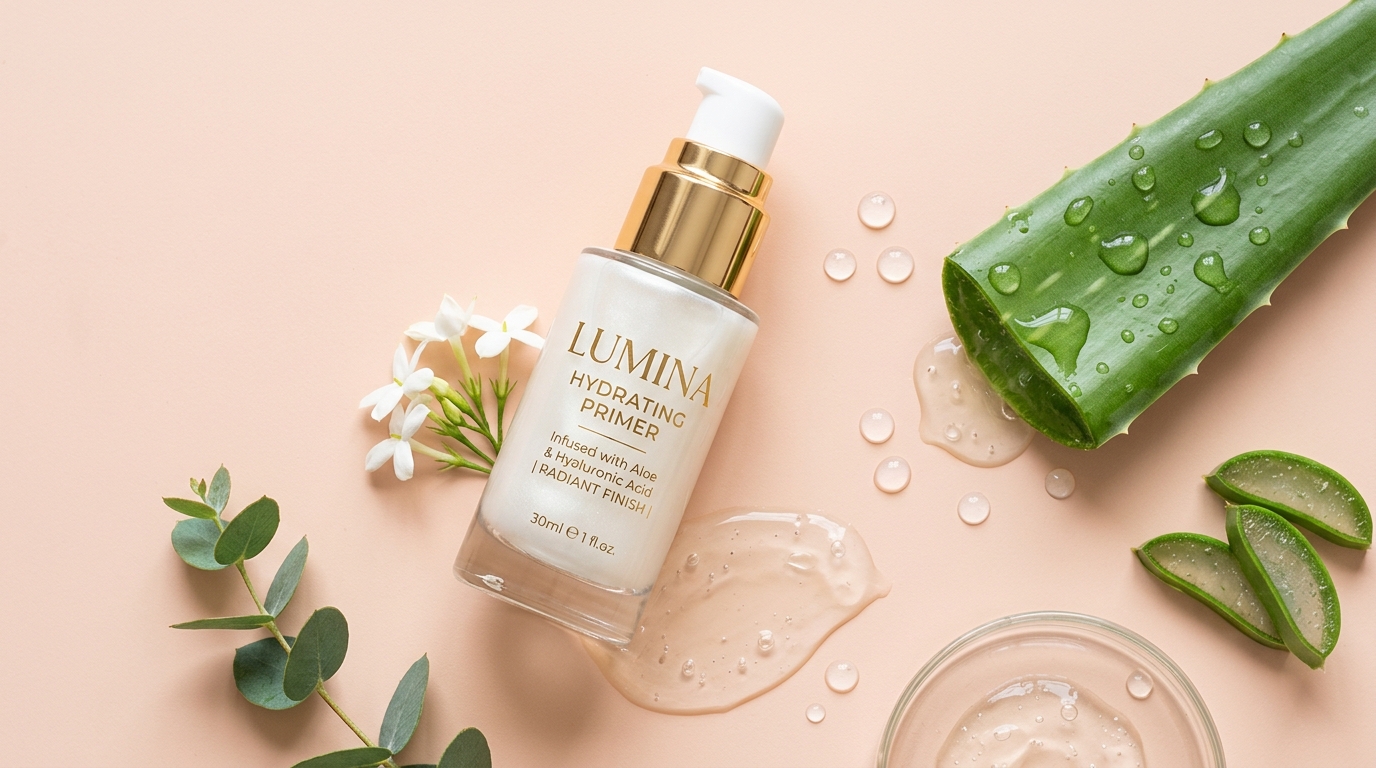
Primer is one of the most heavily marketed steps in beauty — and one of the most misunderstood. For dry skin specifically, primer sits at the centre of a genuine question: is it necessary, or is it just another product you are being told to buy?
The honest answer is more nuanced than either the beauty industry or the "skip it and save money" crowd usually admit. A hydrating primer is genuinely useful for some people with dry skin. For others, it is an unnecessary layer that adds cost and complexity without a meaningful payoff.
Based on five weeks of testing 8 hydrating primers on dry skin, the answer is: a hydrating primer is not necessary for everyone, but it is genuinely helpful if your foundation still clings to dry patches after a proper skincare routine, if your makeup fades quickly through the day, or if you want a smooth, even canvas for a natural-looking finish. If your current routine already works without one, you can skip it.
This guide covers what a hydrating primer actually does (and does not do), how it differs from moisturiser, who genuinely benefits, what to look for, product picks across price points, and how to apply it without causing pilling.
Do you need one? Only if your foundation still clings after proper skincare, if your makeup fades quickly, or if you want a smoother canvas. If your routine already works, skip it. Best overall: Bobbi Brown Vitamin Enriched Face Base ($65). Best for very dry skin: Laura Mercier Pure Canvas Hydrating ($52). Best drugstore: e.l.f. Power Grip Primer (~$10).
Key Takeaway
A hydrating primer is not a replacement for good skincare, and it is not necessary for everyone. It becomes genuinely useful when your foundation still clings to dry patches after a proper hydrating routine, or when you want longer wear and a smoother finish. If your skin and makeup already behave well without one, you are not missing anything.
The Honest Answer: Do You Need One?
Primers are not the beauty step you must include in every routine. They are tools that solve specific problems — and if you do not have those problems, a primer will not add much value.
Here is the quickest way to decide whether a hydrating primer is worth adding to your routine:
You likely benefit from a primer if...
- Your foundation still clings to dry patches even after a proper hydrating skincare routine
- Your foundation fades or looks patchy by mid-day
- You want a smoother canvas for a natural, polished finish
- Your skin feels tight right after applying foundation
- You wear makeup for 8+ hours and want it to last longer
You can probably skip it if...
- Your current skincare routine already keeps your foundation looking smooth
- You wear makeup for less than 6 hours at a time
- You use a serum foundation that already works well on its own
- You are trying to keep your routine minimal
- You find layering products causes pilling or separation
If you fall mostly into the first column, a hydrating primer is worth trying. If you fall mostly into the second, you are not missing anything by skipping it. There is no obligation to use primer just because it exists.
What a Hydrating Primer Actually Does
A hydrating primer does three things — and only three things:
- Creates a smooth surface. It fills in microscopic texture on the skin's surface, so foundation glides on more evenly and looks smoother. This is the biggest immediate effect.
- Adds a layer of moisture on the surface. Hydrating primers contain humectants and emollients that stay on the surface rather than absorbing fully into the skin. This helps prevent foundation from pulling moisture out of the skin during wear.
- Can extend wear time. Grip-focused primers (like Milk Hydro Grip and e.l.f. Power Grip) create a slightly tacky surface that foundation adheres to, which extends wear by 1–3 hours in our testing.
That is it. A primer does not:
- Replace your skincare routine
- Deliver long-term hydration to the skin (that is what moisturiser does)
- Cover redness, blemishes, or pigmentation (that is what foundation and concealer do)
- Permanently improve your skin texture (no makeup product does)
Understanding these limits prevents the biggest mistake in primer shopping: expecting one product to solve multiple problems at once.
A Primer Is Not a Moisturiser
One of the most common misconceptions is that a hydrating primer can replace a moisturiser. It cannot.
| Feature | Moisturiser | Hydrating Primer |
|---|---|---|
| Purpose | Hydrate and support the skin | Create a smooth canvas for makeup |
| Absorption | Absorbs into the skin | Stays on the surface |
| Long-term effect | Improves skin hydration over time | None — cosmetic effect only |
| When to apply | Last step of skincare | Between skincare and foundation |
| Can it replace the other? | No — a primer is not a moisturiser | No — a moisturiser is not a primer |
Practical order: Cleanser → serum → moisturiser → sunscreen → primer → foundation. Always. Skipping the moisturiser and using only a primer is a common reason dry skin still looks flaky under makeup.
How We Tested
Our Testing Methodology
- Duration: 5 weeks of continuous testing (October–November 2026).
- Products tested: 8 hydrating and grip primers across drugstore, mid-range, and luxury price points.
- Tester: Anam Ahsan, beauty writer with six years of experience and dry skin.
- Additional testers: Two volunteers with dry skin, aged 44 and 51, who tested each primer for a minimum of 3 days.
- Application: Each primer was applied over a consistent hydrating skincare routine, followed by the same foundation (L'Oréal True Match Nude Serum) applied with a damp sponge.
- Criteria: Hydration feel, smoothness of canvas, how well foundation applied over it, how long foundation lasted, patchiness, and pilling.
- No medical testing: Cosmetic evaluation only. No clinical or dermatological claims.
How we selected the 8 primers
- Marketing or reputation: Products described as "hydrating," "nourishing," or "moisturising," or repeatedly recommended for dry skin.
- Ingredient profile: Contains at least one humectant or emollient (glycerin, hyaluronic acid, squalane, shea butter) in the top ten ingredients.
- Finish: No mattifying or pore-blurring claims.
- Availability: Widely available at Sephora, Ulta, or major drugstores.
- Price range: Included options from ~$10 to $65 to compare value across price bands.
Mattifying primers, oil-control primers, and heavy silicone-blurring primers were excluded from testing, as these typically work against dry skin.
Full Comparison Table
| Primer | Type | Texture | Best For | Price | Score |
|---|---|---|---|---|---|
| Bobbi Brown Vitamin Enriched Face Base | Rich cream | Thick, buttery | Very dry skin, mature skin | $65 | 4.7 / 5 |
| Laura Mercier Pure Canvas Hydrating | Hydrating gel-cream | Silky, light | Very dry skin, fine lines | $52 | 4.6 / 5 |
| Milk Makeup Hydro Grip | Grip gel | Tacky, cooling | Long wear, all dry skin | $38 | 4.5 / 5 |
| e.l.f. Power Grip Primer | Grip gel | Tacky, gel | Drugstore pick, long wear | ~$10 | 4.4 / 5 |
| Tatcha The Silk Canvas | Balm-to-powder | Silky balm | Fine texture, refined finish | $54 | 4.3 / 5 |
Our Top Picks: Detailed Reviews
Here is what each primer actually delivered on dry skin, with specific results from the five-week test.
Bobbi Brown Vitamin Enriched Face Base
$65Bobbi Brown Vitamin Enriched Face Base is the closest thing to a primer-moisturiser hybrid that still does both jobs well. It contains shea butter, glycerin, and a blend of vitamins, and it creates a genuinely smooth, hydrated canvas for foundation.
Why it works for dry skin: The rich, buttery texture fills in dry texture and leaves a smooth surface that foundation glides over without catching. In our testing, it prevented foundation clinging to dry patches better than any other primer.
Trade-offs: Highest price point on our list. Feels rich on the skin — some people with combination skin find it too heavy for the T-zone.
Laura Mercier Pure Canvas Hydrating Primer
$52Laura Mercier Pure Canvas Hydrating Primer has a lighter, silkier texture than the Bobbi Brown option while still delivering excellent hydration. It is formulated with glycerin and other humectants, and it glides onto the skin without any drag.
Why it works for dry skin: The silky texture smooths dry texture and fills fine lines without feeling heavy. On very dry skin, foundation applied over this primer looked more even and stayed fresher for longer than foundation applied over skincare alone.
Trade-offs: Slightly less hydrating than the Bobbi Brown Face Base. Not ideal for extremely dry skin in winter.
Milk Makeup Hydro Grip Primer
$38Milk Makeup Hydro Grip is a grip-focused primer, meaning it creates a slightly tacky surface that foundation adheres to — which extends wear time considerably. It also contains hyaluronic acid and blue agave extract for hydration.
Why it works for dry skin: Grip primers are usually mattifying, which makes them unsuitable for dry skin. Hydro Grip is the exception — it hydrates while gripping, so you get the wear benefit without the drying effect.
Trade-offs: The tacky texture takes some getting used to. Needs to be applied with fingers or a sponge — a brush can make it streak.
e.l.f. Power Grip Primer
~$10e.l.f. Power Grip Primer is a well-documented dupe for Milk Makeup Hydro Grip at roughly one-quarter the price. It uses the same tacky-gel technology with hyaluronic acid and delivers comparable wear extension in our testing.
Why it works for dry skin: The grip formula does not dry out the skin or feel mattifying, and the hyaluronic acid adds a light layer of surface hydration. Foundation applied over it looked fresh and stayed put for around 9 hours.
Trade-offs: Slightly less hydrating than Milk Hydro Grip. The tacky texture is even stickier than the Milk version.
Tatcha The Silk Canvas Protective Primer
$54Tatcha The Silk Canvas has a unique balm-to-powder texture that smooths over skin texture and leaves a refined, silky finish. It is formulated with silk extract, rice bran, and other ingredients marketed as protective and smoothing.
Why it works for dry skin: The silky texture fills in fine texture and creates a genuinely smooth canvas without feeling heavy. Foundation applied over it looked more refined on fine lines and pore texture.
Trade-offs: The balm-to-powder texture can feel slightly drying on very dry skin if applied too heavily. Best used sparingly, focused on areas of texture rather than the whole face.
Ingredients to Look For (and Avoid)
The ingredient list matters more than the marketing copy. Here is what to look for and what to avoid.
| Ingredient | Why It Matters | Found In |
|---|---|---|
| Glycerin | Humectant — draws water into the surface layer | Bobbi Brown Face Base, Laura Mercier Pure Canvas |
| Hyaluronic acid / sodium hyaluronate | Humectant — holds water on the surface | Milk Hydro Grip, e.l.f. Power Grip |
| Squalane | Emollient — softens and smooths | Many hydrating primers |
| Shea butter | Rich emollient — best for very dry skin | Bobbi Brown Face Base |
| Panthenol (vitamin B5) | Soothing humectant | Various |
Look for
- "Hydrating," "nourishing," or "moisturising" on the label
- Glycerin, hyaluronic acid, or squalane in the top ten ingredients
- Grip formulas if you want longer wear
- Cream or gel textures for dry skin
- Fragrance-free options if your skin is sensitive
Avoid
- Mattifying primers — they dry out the skin
- Pore-blurring or pore-filling primers — heavy silicone emphasises flakes
- Denatured alcohol in the first five ingredients
- Heavy powder-to-liquid formulas
- "24-hour" or "oil-control" claims
How to Apply Primer Without Causing Pilling
Pilling — those little rubbery balls that form on the skin after layering products — is the most common complaint about primers. It happens for three reasons: applying too much product, using products with incompatible bases, or rushing between layers. Here is how to avoid it.
- Wait 5–10 minutes after moisturiser. This allows it to fully absorb before primer goes on top.
- Use a pea-sized amount of primer. A pea-sized amount covers the whole face. More is not better.
- Match bases where possible. If your primer is water-based, use a water-based foundation. If it is silicone-based, use a silicone-based foundation. Mixing is the most common cause of pilling.
- Press — do not rub — primer into the skin. Rubbing disturbs the product on the surface and can cause pilling when foundation is applied over it.
- Wait 2 minutes before applying foundation. Primer needs a moment to set before foundation goes on top.
- Do not apply primer over drying serum. Wait for all skincare to absorb before primer. Damp skin + primer + foundation is a recipe for pilling.
For the full application routine on dry skin, see our step-by-step foundation application guide.
Frequently Asked Questions
Do I really need a hydrating primer for dry skin?
Not always. If your skincare routine already includes a hydrating serum and a rich moisturiser, you may not need a primer at all. A hydrating primer becomes genuinely useful if your foundation still clings to dry patches, if your makeup fades quickly, or if you want an extra layer of moisture between skincare and foundation.
What does a hydrating primer actually do?
A hydrating primer creates a smooth, moisturised surface that helps foundation glide on evenly and reduces the risk of foundation catching on dry flakes. It does not add colour or coverage, and it does not replace your skincare routine. Think of it as a bridge between skincare and makeup.
Is a hydrating primer just moisturiser?
No, but they are related. A primer is formulated to sit on the skin surface and create a smooth canvas for makeup. A moisturiser is formulated to be absorbed into the skin. Hydrating primers often contain similar ingredients (glycerin, hyaluronic acid, squalane) but in a base that stays on the surface rather than sinking in.
Can a hydrating primer replace my moisturiser?
No. A primer is not formulated to deliver long-term moisture the way a moisturiser is, and it does not contain the same barrier-supporting ingredients at the same concentrations. Always use a moisturiser first, then apply primer on top if you use one.
What ingredients should I look for in a hydrating primer for dry skin?
Look for glycerin, hyaluronic acid, squalane, shea butter, or panthenol. These are humectants and emollients commonly used in cosmetics for their moisturising feel. Avoid primers with high alcohol content, heavy mattifying powders, or "pore-blurring" claims, which tend to emphasise dryness.
What should I avoid in a primer for dry skin?
Avoid mattifying primers, pore-filling primers, and primers with denatured alcohol in the first five ingredients. These are formulated to control oil and blur texture, which is the opposite of what dry skin needs. Silicone-heavy primers can also emphasise flakes.
Can a primer make dry skin worse?
Yes, if it is the wrong type. A mattifying or oil-absorbing primer can dry out dry skin further and cause foundation to catch on flakes. Silicone-heavy primers can pill or sit on top of dry patches. Always check the finish and ingredient list before buying.
How long should I wait between moisturiser and primer?
Wait 5–10 minutes after your moisturiser before applying primer. This allows the moisturiser to absorb and prevents the two products from mixing on the surface. Then wait 2 minutes after primer before applying foundation.
Do I need a primer if I use a serum foundation?
Usually not. Serum foundations are already formulated to be hydrating and lightweight, so they tend to work well over hydrated skin without a primer. A primer can still help if you find that your serum foundation fades quickly or if you want a smoother canvas for longer wear.
Which is the best hydrating primer for very dry skin?
In our five-week testing, Laura Mercier Pure Canvas Hydrating Primer performed best on very dry skin. Its glycerin-rich, silky texture created a genuinely smooth canvas without emphasising flakes. Bobbi Brown Vitamin Enriched Face Base was the close second, with a slightly richer texture.
The Bottom Line
A hydrating primer is not a necessary step for everyone with dry skin — but it is genuinely useful for some. It solves three specific problems: foundation clinging to dry patches, makeup fading quickly, and wanting a smoother canvas for a natural, polished finish.
If your routine already works without a primer, skip it. You are not missing anything. No rule says primer must be part of a makeup routine.
If your foundation still clings to dry patches after good skincare, a hydrating primer is worth trying. Start with a rich option like Bobbi Brown Vitamin Enriched Face Base or Laura Mercier Pure Canvas Hydrating.
If you want longer wear without drying out your skin, a grip primer with hydrating ingredients — like Milk Makeup Hydro Grip or e.l.f. Power Grip — is the right category.
If you are on a budget, e.l.f. Power Grip Primer delivers near-dupe performance for around $10.
What matters most is matching the primer to what you actually need. A primer that solves a problem you do not have is just another product on your shelf. A primer that solves a real problem is worth the money and the extra step.
For the foundation side of the equation, see our pillar guide: Best Foundation for Dry Skin. For the full application routine, see our step-by-step foundation application guide.
References & Sources
- Allure — best primers for dry skin.
- The Strategist — makeup artist guidance on primers for dry skin.
- Paula's Choice — ingredient analysis of hydrating primers.
- Vogue — application tips for primers and how to prevent pilling.
- Aggregated user reviews from Sephora, Ulta, and Reddit (r/MakeupAddiction, r/dryskin, r/Makeup).
Was this article helpful?

Anam Ahsan
Skincare Enthusiast & BloggerHi, I'm Anam! I'm a beauty and skincare enthusiast who loves testing new products and sharing honest, personal reviews. I document my skincare journey and share what works for my skin so you can make better choices for your routine.
Comments (24)
Hannah W.
2 days agoThis guide saved me so much money — went with the budget pick and honestly can't tell the difference from serums twice the price!
Anam Ahsan Author
1 day agoSo glad it worked out for you, Hannah! That's exactly the kind of result we hoped readers would see.