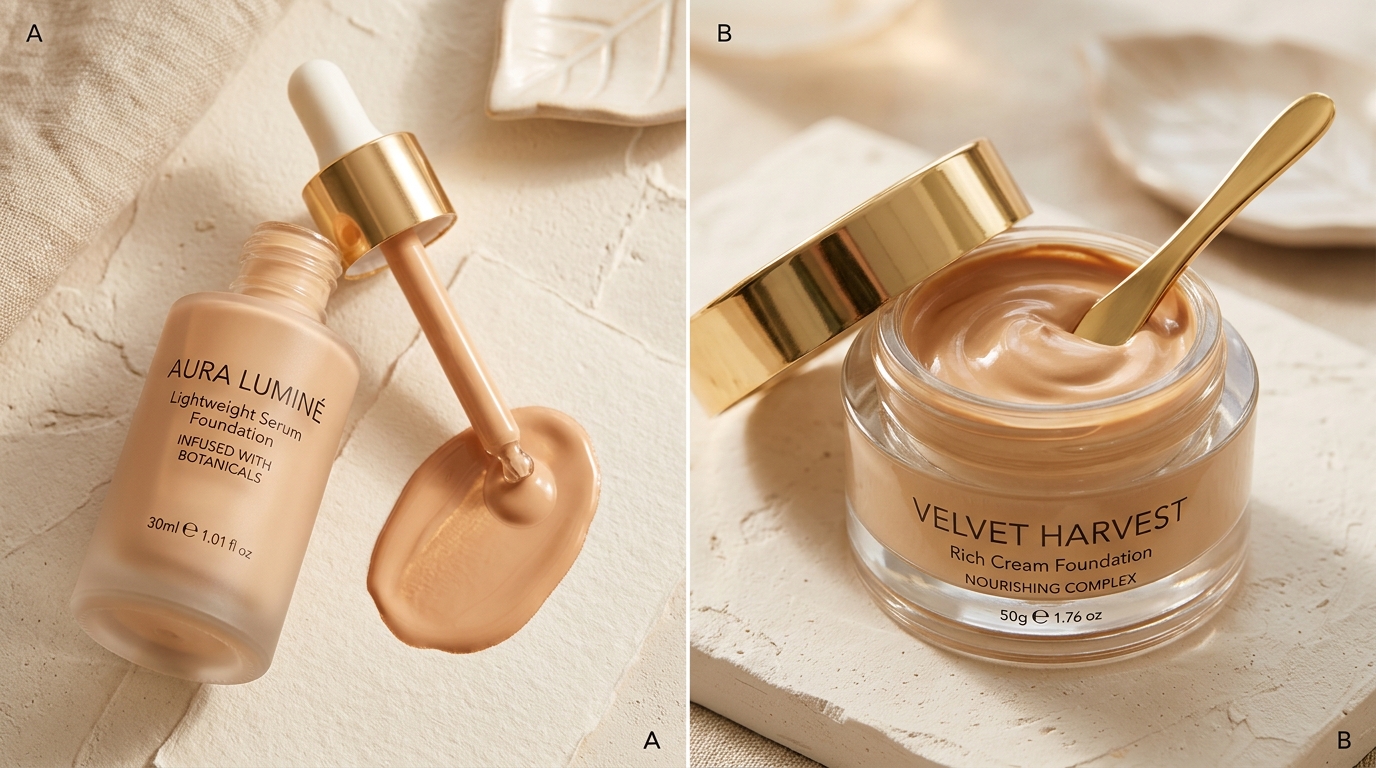
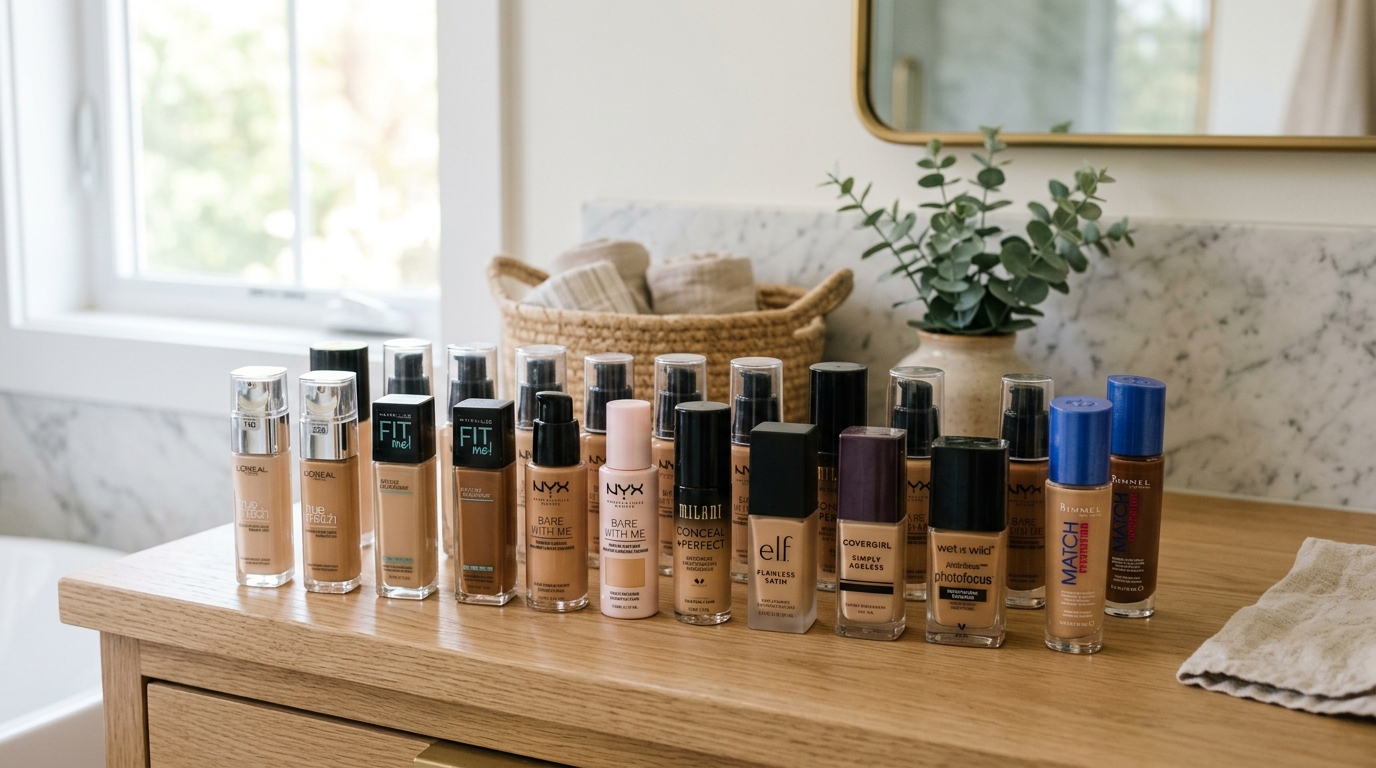
Foundation is not one product — it is a category. The word covers four distinct formula types, each with a different texture, coverage level, wear time, and hydration profile. And for dry skin, the formula type you choose matters more than the brand you buy.
A $15 serum foundation can out-perform a $70 cream foundation on dry skin — and vice versa — because the two formulas solve different problems. Serum foundations prioritise hydration and a natural finish. Cream foundations prioritise coverage and comfort. Stick foundations prioritise portability and fuller coverage. Cushion foundations prioritise convenience and touch-ups.
Based on our testing across all four formula types, the honest answer is this: serum foundations are best for mild to moderate dryness and everyday wear; cream and stick foundations are best for severe dryness; and cushion foundations are best for touch-ups and travel. There is no universally "best" formula — only the best formula for your specific dryness level and coverage needs.
This guide compares all four formula types side by side on coverage, wear time, hydration, finish, application, and best-use scenarios — so you can choose the right one before you spend money on a product that isn't right for your skin.
Best for everyday dry skin: Serum foundation. Best for very dry skin: Cream or stick foundation. Best for touch-ups: Cushion foundation. Best for full coverage on dry skin: Cream or stick. Best for mature dry skin: Serum (most flexible) or cream (more coverage).
Key Takeaway
Serum, cream, stick, and cushion foundations are not competing products — they solve different problems. Choose based on your dryness level (mild, moderate, severe) and your coverage needs (sheer, medium, full). Most people with dry skin benefit from owning two: a serum for daily wear and a cream or stick for drier days.
Why Formula Type Matters More Than Brand
When you buy a foundation, you are not just buying pigment — you are buying a delivery system. That system determines:
- How much coverage it provides — sheer, medium, or full
- How it feels on the skin — lightweight or rich, hydrating or drying
- How long it wears — from 4 hours to 12+ hours
- How it applies — sponge, fingers, brush, or stick
- How it layers — over skincare, under makeup, with touch-ups
Two foundations can be identical in colour and price and completely different on dry skin because they use different formula types. That is why formula-first shopping works better than brand-first shopping for dry skin.
How We Tested
Our Testing Methodology
- Duration: 6 weeks of continuous testing (September–October 2026).
- Products tested: 14 foundations across four formula types (serum, cream, stick, cushion), from drugstore to luxury.
- Tester: Anam Ahsan, beauty writer with six years of experience and dry skin.
- Application: Consistent hydrating skincare routine + hydrating primer + damp sponge, following the method in our dry skin foundation application guide.
- Criteria: Hydration feel, coverage, wear time, finish, patchiness, creasing, and application ease.
- No medical testing: Cosmetic evaluation only. No clinical or dermatological claims.
Side-by-Side Comparison: All Four Formulas
Here is how the four formula types compare on the criteria that matter most for dry skin. Use this table as a quick reference before reading the detailed sections below.
| Feature | Serum | Cream | Stick | Cushion |
|---|---|---|---|---|
| Texture | Light, watery | Rich, thick | Solid balm | Liquid on sponge |
| Coverage | Sheer | Medium–full | Medium–full | Light–medium |
| Finish | Dewy | Satin/natural | Natural | Fresh/dewy |
| Wear Time | 6–8 hrs | 8–10 hrs | 8 hrs | 6 hrs |
| Hydration | Highest | High | High (if emollient-rich) | Medium |
| Best for Dryness Level | Mild–moderate | Moderate–severe | Severe | Mild |
| Application | Fingers or sponge | Sponge or fingers | Sponge or fingers (never direct) | Included puff |
| Portability | Low | Low | High | Very high |
| Best Use Case | Everyday, minimal coverage | Full coverage, mature skin | Travel, targeted coverage | Touch-ups, on-the-go |
| Shade Range | Usually 10–40 | Usually 20–50 | Usually 15–40 | Usually 10–20 |
Serum Foundation: Best for Everyday Dry Skin
Serum Foundation
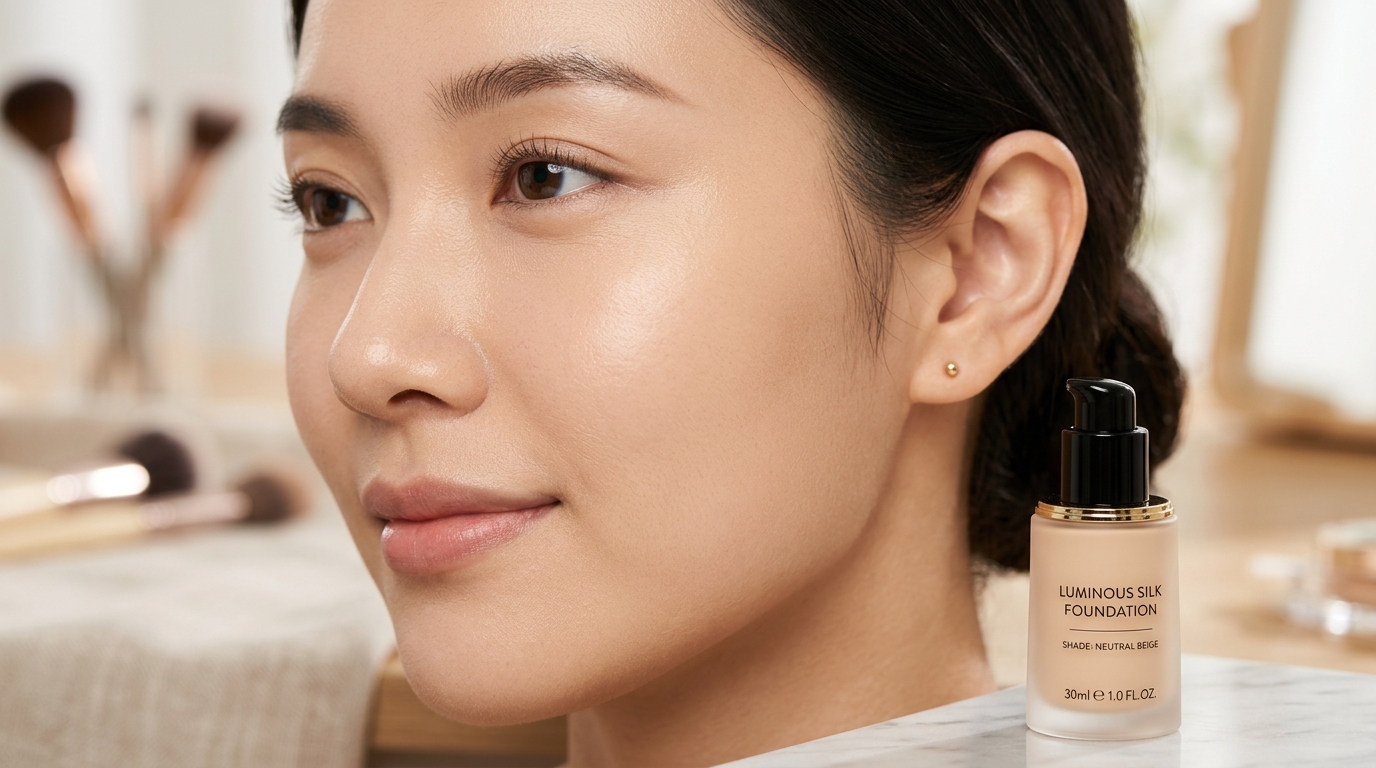
Serum foundations are the lightest of the four formula types. They have a watery, fluid texture — sometimes closer to a tinted moisturiser than a traditional foundation. They are formulated with skincare ingredients like hyaluronic acid, glycerin, and niacinamide, and they apply more like a serum than a makeup product.
How it feels on dry skin: Comfortable, hydrating, and weightless. Serum foundations do not sit on top of the skin the way heavier formulas do — they melt in and look like skin. This makes them the most forgiving formula for dry patches.
Coverage: Sheer. You will need concealer for blemishes, dark circles, or redness. If you are looking for full coverage, serum foundation is not the right formula.
Best for: Everyday wear, "no makeup makeup" looks, mature skin with fine lines, and anyone who wants hydration over coverage.
Pros
- Most hydrating formula type
- Moves with the skin — doesn't settle into fine lines
- Never looks cakey or heavy
- Layers well over skincare
Cons
- Sheer coverage only
- Shorter wear time (6–8 hrs)
- Shade ranges often narrower
- Less effective on redness or blemishes
Cream Foundation: Best for Severe Dryness
Cream Foundation
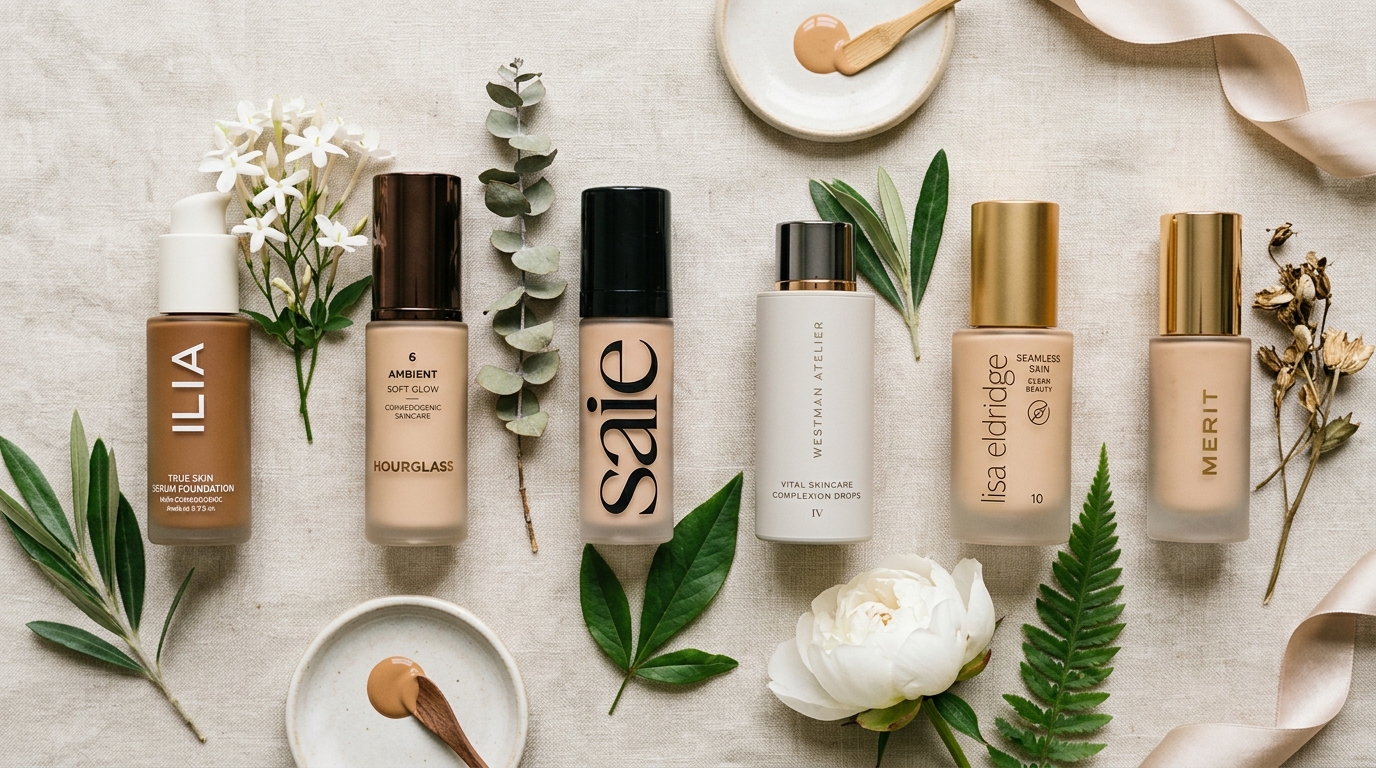
Cream foundations are the richest of the four formula types. They have a thick, buttery texture and contain high concentrations of emollients like squalane, shea butter, and apricot butter. They are the closest thing to skincare in a foundation format.
How it feels on dry skin: Nourishing and comfortable. Cream foundations provide a protective layer that keeps moisture in and gives skin a soft, supple finish. They are ideal for dry skin that feels tight, flaky, or sensitive.
Coverage: Medium to full, buildable. Cream foundations can cover redness, uneven tone, and blemishes more effectively than serum foundations without looking cakey.
Best for: Very dry or mature skin, evening looks, cold weather, and anyone who wants fuller coverage without sacrificing hydration.
Pros
- Most nourishing formula type
- Medium-to-full buildable coverage
- Longer wear time (8–10 hrs)
- Protects against moisture loss
Cons
- Can feel heavy in warm weather
- Requires careful application to avoid caking
- Usually more expensive
- Not ideal for humid climates
Stick Foundation: Best for Targeted Coverage
Stick Foundation
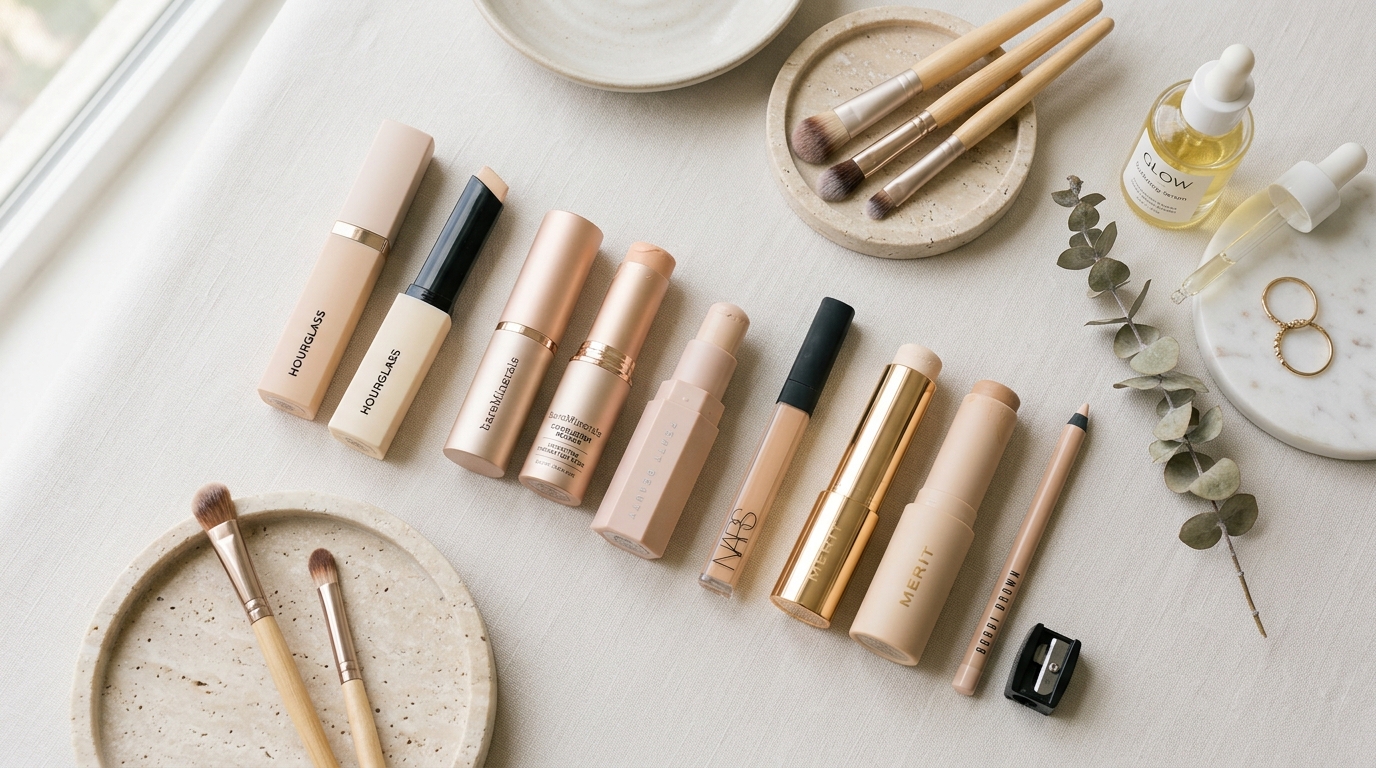
Stick foundations are solid balms that come in a twist-up tube. They are essentially cream foundations in a more portable format — the emollient content is often the same, but the delivery system is different.
How it feels on dry skin: Rich and comfortable if the formula contains emollients. The key is to avoid stick foundations that feel powdery or matte — those will drag on dry skin and emphasise flakes.
Coverage: Medium to full, buildable. Stick foundations can provide targeted coverage on specific areas (blemishes, redness) without needing to apply foundation all over the face.
Best for: Travel, on-the-go touch-ups, targeted coverage, and dry skin that wants a cream-like finish in a more convenient format.
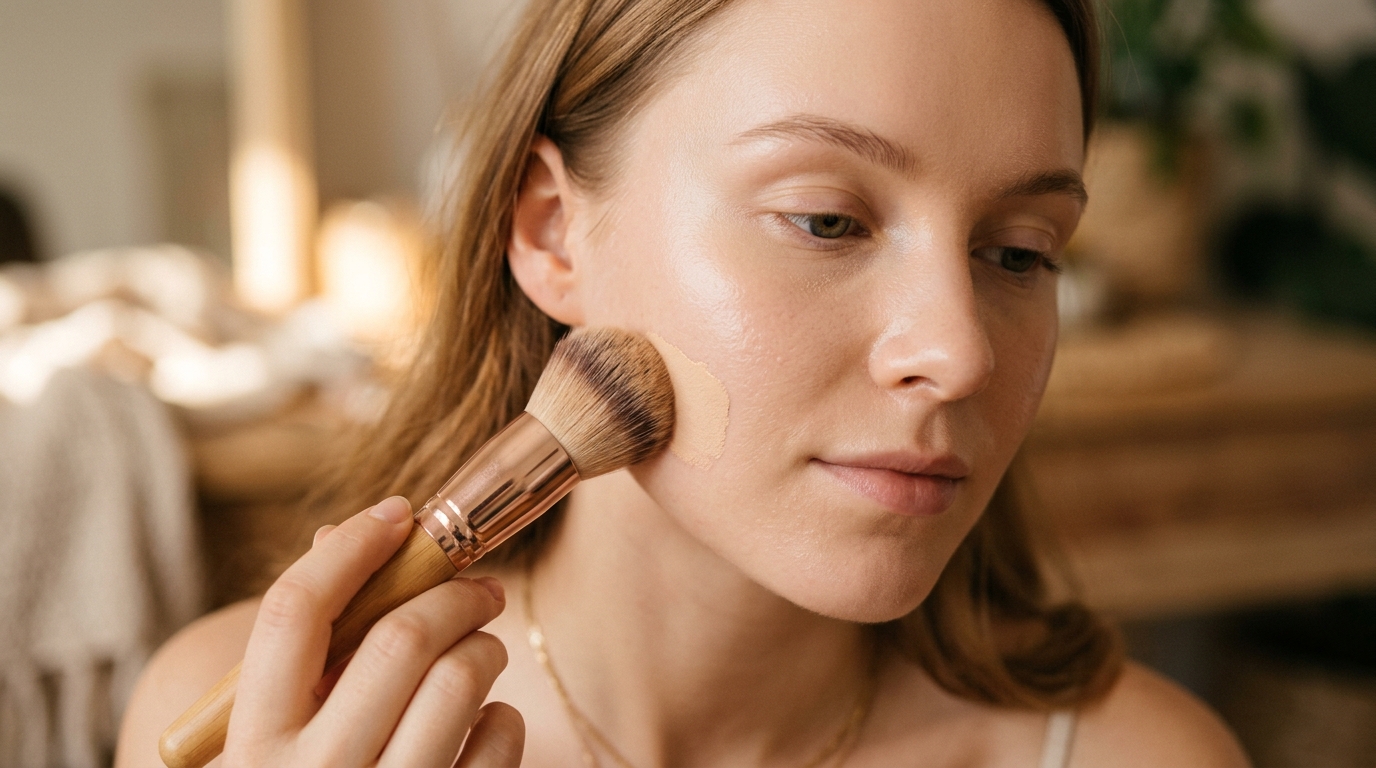
Important: Do not draw the stick directly on your face. This is the number one cause of cakey stick foundation. Instead, swipe a small amount onto the back of your hand, warm it with your fingertip, then pick it up with a damp sponge and press it in.
Pros
- Highly portable — great for travel
- Medium-to-full coverage
- Fast application
- Good for targeted coverage
Cons
- Easy to over-apply if used directly
- Can be drying if formula is mattifying
- Shorter shelf life once opened
- Hygiene concerns with direct application
Cushion Foundation: Best for Touch-Ups
Cushion Foundation
Cushion foundations are liquid formulas soaked into a sponge inside a compact, applied with an included puff. They originated in Korea and are now widely available globally.
How it feels on dry skin: Fresh and dewy, if the formula is hydrating. Cushion foundations are convenient and easy to reapply throughout the day, which is helpful for dry skin that needs mid-day hydration.
Coverage: Light to medium, buildable. Cushions rarely offer full coverage — they are designed for a fresh, natural look.
Best for: On-the-go touch-ups, travel, and dry skin that prefers a lightweight, hydrating finish. Not ideal as a primary foundation for severe dryness.
Pros
- Very convenient for touch-ups
- Lightweight and fresh feeling
- Refillable options available
- Great for travel
Cons
- Shortest wear time (around 6 hrs)
- Narrowest shade ranges
- Less hygienic than pump formulas
- Not ideal for severe dryness
How to Choose: Formula Matched to Your Dryness Level
Use this table to identify which formula is likely to work best for your specific type of dry skin.
| Your Skin | Best Formula | Why | Product Example |
|---|---|---|---|
| Mildly dry (occasional flakes) | Serum foundation | Hydrating, lightweight, easy to wear daily | L'Oréal True Match Nude Serum |
| Moderately dry (flakes on cheeks) | Serum or cream | Serum for everyday; cream for extra hydration on dry days | L'Oréal Super-Blendable or Dior Forever Glow |
| Severely dry (tight, flaky, uncomfortable) | Cream or stick | Richest emollients; prevents moisture loss; more coverage | BASMA Stick or Clinique Even Better |
| Dry + mature (fine lines) | Serum or flexible cream | Moves with the skin; doesn't settle into lines | Armani Luminous Silk or L'Oréal Nude Serum |
| Dry + sensitive | Fragrance-free cream or serum | Minimal ingredient lists; soothing emollients | BASMA Stick |
| Dry + acne-prone | Lightweight serum | Hydrating without heavy emollients that clog pores | L'Oréal True Match Nude Serum |
| Dry in summer/humid climate | Serum or cushion | Lighter textures that don't feel heavy in heat | YSL Cushion or L'Oréal Nude Serum |
| Dry in winter/cold climate | Cream or stick | Richer emollients that protect against moisture loss | BASMA Stick or Dior Forever Glow |
Application Differences by Formula
Each formula type applies differently. Using the wrong technique for the formula is a common reason people think a foundation "doesn't work" on their dry skin — when the real issue is that they applied it wrong.
| Formula | Best Tool | Technique | Common Mistake |
|---|---|---|---|
| Serum | Fingers or damp sponge | Apply like a serum — press into skin, don't rub | Using too much — serum foundations are already lightweight |
| Cream | Damp sponge | Warm on back of hand, pick up with sponge, press in thin layers | Applying too much in one layer — cream formulas are concentrated |
| Stick | Damp sponge (never direct) | Swipe onto back of hand, warm with finger, pick up with sponge and press | Drawing the stick directly on the face — creates caking and dragging |
| Cushion | Included puff | Press the puff into the cushion, then press onto skin (don't drag) | Rubbing the puff across the face — disturbs flakes and causes streaks |
Wear Time: What to Expect from Each Formula
Wear time matters on dry skin because flaking and patchiness get worse the longer foundation sits on the face. Here is what we observed in testing:
| Formula | Average Wear (Dry Skin) | What Happens as It Wears |
|---|---|---|
| Serum | 6–8 hours | Fades gradually; may need touch-up around hour 6 |
| Cream | 8–10 hours | Holds well; may settle slightly into fine lines after 8 hours |
| Stick | 8 hours | Wears similar to cream; can look drier toward end of day |
| Cushion | 6 hours | Fades faster; needs reapplication or touch-ups |
Worth noting: wear time is affected more by how you prep and set your foundation than by the formula type alone. A serum foundation applied over well-hydrated skin and set with a hydrating spray will often wear longer than a cream foundation applied over dry skin and set with powder.
Can You Layer Formula Types?
Yes — and it is a technique many makeup artists use for dry skin. Here are three ways to layer formula types:
- Serum base + stick on top. Apply a thin layer of serum foundation as a hydrating base, then use a stick foundation only on areas that need more coverage (redness, blemishes). This gives you the best of both — hydration and targeted coverage.
- Cream base + cushion touch-up. Apply cream foundation in the morning, then carry a cushion compact for mid-day touch-ups. The cushion adds hydration and freshness without adding weight.
- Serum + cream for seasonal transition. In spring and autumn, when dryness is variable, apply serum foundation on days when skin feels comfortable and switch to cream on drier days.
What not to do: Do not layer two full-face foundations on the same day. Layer only where needed — the goal is targeted coverage, not doubling up.
Choose serum if...
- Your dryness is mild to moderate
- You want a natural, skin-like finish
- You have fine lines and want flexibility
- You wear makeup every day
- You prefer light coverage with concealer
Choose cream/stick if...
- Your dryness is severe or your skin feels tight
- You want medium-to-full coverage
- You have mature skin that needs nourishment
- You need longer wear time (8+ hours)
- You are in cold or dry climates
Frequently Asked Questions
Is serum or cream foundation better for dry skin?
Both can work well. Serum foundations are better for mild to moderate dryness and everyday wear because they are lightweight, hydrating and easy to reapply. Cream foundations are better for severe dryness because they contain richer emollients and provide more coverage. Many people use serum for daily wear and cream for drier days or evening looks.
Is stick foundation good for dry skin?
Yes, if it is formulated with emollients like apricot butter, shea butter, or squalane. Stick foundations provide medium-to-full coverage and are excellent for severely dry skin because they contain richer moisturising ingredients. Avoid stick foundations that feel powdery or matte, as these can emphasise flaking.
What is the best foundation formula for very dry skin?
Cream and stick foundations are generally best for very dry skin because they have the richest emollient content. Serum foundations work well for mild to moderate dryness, but for severe dryness a cream or stick formula provides better comfort and coverage without clinging to dry patches.
How long does each foundation formula last on dry skin?
In our testing, serum foundations wore for 6–8 hours, cream foundations for 8–10 hours, stick foundations for 8 hours, and cushion foundations for 6 hours. Wear time depends more on the specific product and how it is applied than on the formula type alone.
Which foundation formula is best for dry skin with fine lines?
Serum foundations are generally best for dry skin with fine lines because they are the most flexible and move with the skin rather than settling into creases. Cream foundations can also work if applied in thin layers. Avoid stick and cushion formulas that are heavier or dryer.
Can I use a stick foundation on dry skin?
Yes, as long as it is a hydrating or emollient-rich stick foundation. Apply it with a damp sponge and build in thin layers rather than drawing directly on the face. Warm the product on the back of your hand first. Avoid stick foundations marketed as matte or long-wear.
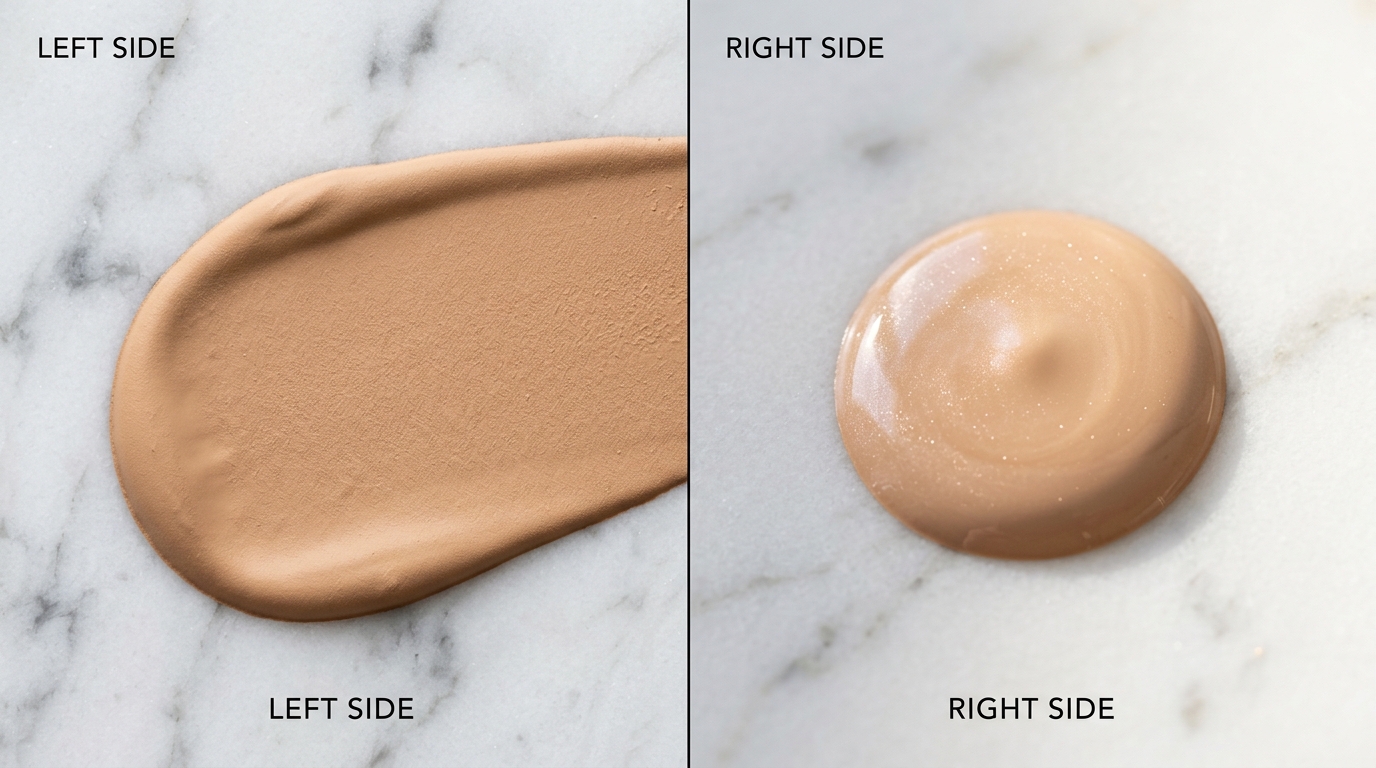
What is the difference between liquid and cream foundation?
Liquid foundations are water-based or silicone-based and tend to be lighter, more spreadable and more hydrating. Cream foundations are thicker, contain more emollients, and provide richer coverage. Liquid foundations work well for normal-to-dry skin; cream foundations are better for very dry or mature skin.
Which foundation formula is best for dry skin in summer?
Serum and cushion foundations are best for dry skin in summer because they are lighter and more breathable in heat and humidity. Cream and stick foundations can feel heavy in warm weather, so reserve them for cooler months or evening wear.
How do I apply stick foundation on dry skin without caking?
Do not draw the stick directly on your face. Instead, swipe a small amount onto the back of your hand, warm it with your fingertip, then pick it up with a damp makeup sponge and press it into the skin in thin layers. Build only where needed. Skip powder and set with a hydrating spray.
Are cushion foundations good for dry skin?
Cushion foundations can be good for dry skin if the formula is hydrating. They are best for mild dryness and for touch-ups throughout the day because the compact is portable. However, cushion foundations tend to have shorter wear time and narrower shade ranges than other formulas.
The Bottom Line
Serum, cream, stick, and cushion foundations each solve a different problem. The right formula depends on your dryness level, coverage preference, and lifestyle — not on which one is "best" in general.
Serum foundations are the most hydrating and forgiving. Choose them for everyday wear and mild-to-moderate dryness.
Cream foundations are the richest and most nourishing. Choose them for severe dryness, mature skin, and fuller coverage.
Stick foundations are portable and coverage-focused. Choose them for travel, targeted coverage, and quick application — but only if the formula is emollient-rich.
Cushion foundations are convenient and lightweight. Choose them for touch-ups and travel, not as a primary base for severely dry skin.
Most people with dry skin benefit from owning two: a serum foundation for daily wear and a cream or stick foundation for drier days or when more coverage is needed. That combination covers almost every scenario.
For the specific products we recommend in each category, see our pillar guide: Best Foundation for Dry Skin. For the full application method for any formula, see our foundation application guide.
References & Sources
- Allure — best foundation formulas for dry and mature skin.
- The Strategist — makeup artist recommendations on serum vs. cream foundations.
- Paula's Choice — guidance on foundation textures and finishes for dry skin.
- Vogue — expert application tips for different foundation formulas.
- Aggregated user reviews from Sephora, Ulta, and Reddit (r/MakeupAddiction, r/dryskin, r/drugstoreMUA).
Was this article helpful?

Anam Ahsan
Skincare Enthusiast & BloggerHi, I'm Anam! I'm a beauty and skincare enthusiast who loves testing new products and sharing honest, personal reviews. I document my skincare journey and share what works for my skin so you can make better choices for your routine.
Comments (24)
Hannah W.
2 days agoThis guide saved me so much money — went with the budget pick and honestly can't tell the difference from serums twice the price!
Anam Ahsan Author
1 day agoSo glad it worked out for you, Hannah! That's exactly the kind of result we hoped readers would see.