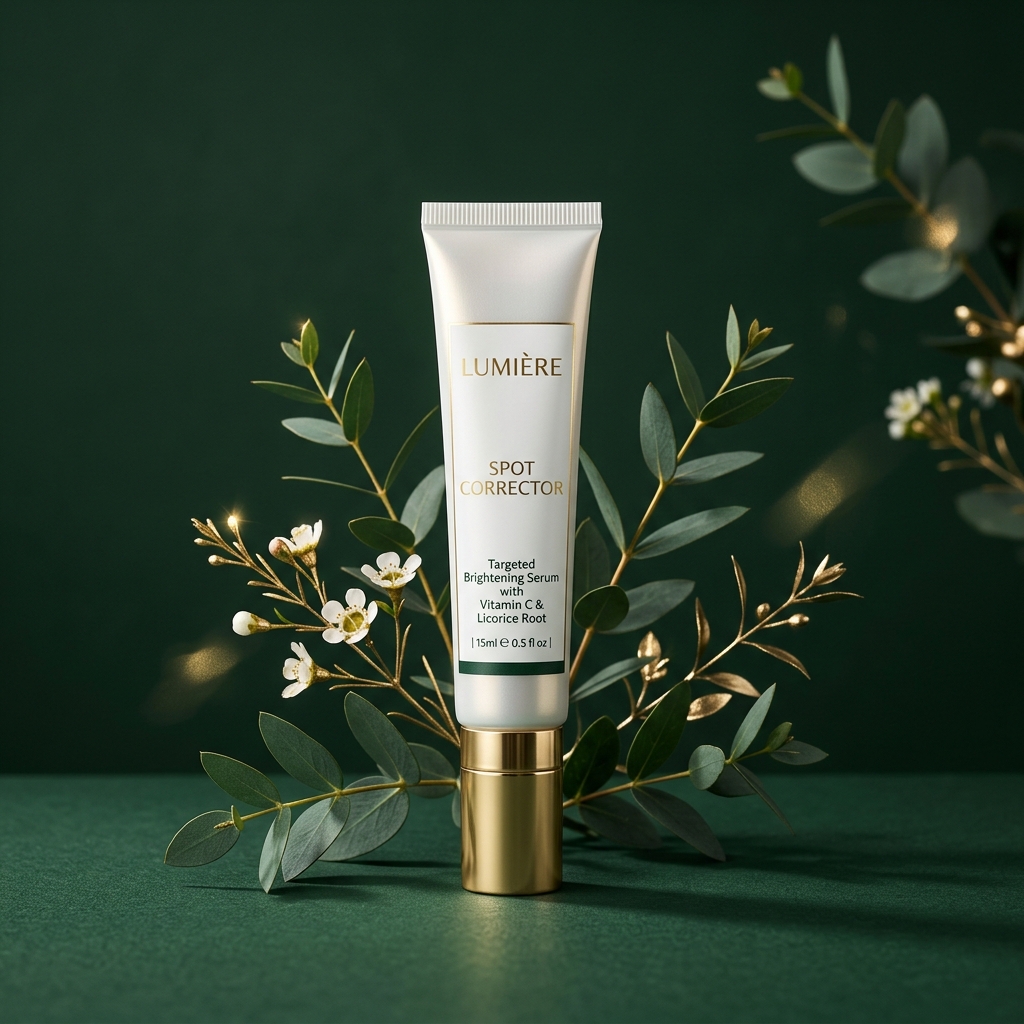
An important note first: this article distinguishes between topical tranexamic acid in cosmetic products and oral tranexamic acid, which is a prescription medication with genuine risks. That distinction matters a great deal, and the article covers both — but oral use is a medical decision requiring a doctor, not something to arrange for yourself.
With that said: melasma is one of the most stubborn pigmentation conditions in dermatology. It recurs, resists treatment, and frequently frustrates people who have tried everything on the shelf. Tranexamic acid has emerged over the past decade as one of the more genuinely promising options — and unusually for a trending skincare ingredient, the clinical evidence is reasonably solid.
This guide covers how it works, what the research supports, and how it compares to the alternatives.
Key Takeaway
Tranexamic acid works best as part of a system — paired with daily SPF 50, avoiding triggers like heat and hormonal shifts, and giving it at least 12 weeks. Sunscreen alone prevents more melasma than any ingredient can reverse.
What Tranexamic Acid Is
Tranexamic acid is a synthetic derivative of the amino acid lysine. It was developed in the 1960s and has been used in medicine for decades — but not for skin.
Its original and primary medical use is as an antifibrinolytic: it slows the breakdown of blood clots, and is used to control heavy bleeding in surgery, trauma, and heavy menstrual bleeding.
The skin connection was discovered by accident. Patients taking oral tranexamic acid for bleeding disorders reported that their melasma improved. That observation prompted the research that eventually established it as a pigmentation treatment.
This origin story matters, because it explains both why the evidence base is relatively good — the medication was already well characterized — and why oral use carries real considerations that a cosmetic ingredient normally would not.
What to do
- Apply consistently with SPF: Tranexamic acid without daily sun protection will not produce lasting results.
- Be patient: Melasma responds slowly — expect 12–16 weeks before judging efficacy.
- Combine with niacinamide: Both target different pigmentation pathways and work well together.
What to avoid
- Skipping sunscreen: UV exposure directly triggers and worsens melasma — no ingredient overcomes this.
- Expecting complete resolution: Melasma management is ongoing, not a cure.
- Using topical and oral simultaneously without medical guidance: Oral tranexamic acid should only be used under dermatologist supervision.
How It Works on Pigmentation
Tranexamic acid does not work the way most brightening ingredients do, which is part of why it is useful.
The plasmin pathway
Most pigment-targeting ingredients — vitamin C, arbutin, kojic acid — act on tyrosinase, the enzyme that initiates melanin production.
Tranexamic acid intervenes earlier, at the signalling stage.
When skin is exposed to UV radiation, keratinocytes activate a molecule called plasmin. Plasmin triggers the release of arachidonic acid and prostaglandins, which signal melanocytes to produce more melanin.
Tranexamic acid blocks plasminogen from converting to plasmin, interrupting that signal before melanin production is ever prompted.
Why this matters practically: it addresses the trigger rather than the output. For melasma specifically — which is driven substantially by UV and hormonal signalling rather than simple overproduction — this is a more relevant point of intervention.
Vascular effects
Melasma involves increased blood vessel density in affected areas, and there is a relationship between vascular activity and pigmentation in the condition.
Tranexamic acid appears to reduce this vascular component as well, which may explain why it performs better for melasma specifically than for other forms of pigmentation.
What the Research Shows
The evidence here is genuinely stronger than for most trending skincare ingredients, though it varies sharply between oral and topical routes.
Topical tranexamic acid
The evidence is more mixed but generally positive. Studies have found topical tranexamic acid improves melasma, with results in several trials comparable to hydroquinone — long considered the benchmark — but with fewer side effects.
The main uncertainty is penetration. Tranexamic acid is water-soluble and does not cross the skin barrier easily, so how much reaches its target from a topical product is an open question that varies by formulation.
Concentrations used in research typically range from 2% to 5%. Many cosmetic products use lower concentrations, sometimes without disclosing them.
In-clinic delivery
Microneedling and mesotherapy delivery of tranexamic acid have been studied and show good results, since these bypass the penetration problem entirely.
This is a clinical procedure rather than an at-home option.
How It Compares to Other Pigmentation Treatments
| Ingredient | Mechanism | Melasma evidence | Irritation | Availability |
|---|---|---|---|---|
| Tranexamic acid | Blocks plasmin signalling | Good | Very low | Varies by region |
| Hydroquinone | Inhibits tyrosinase | Strong | Moderate | Regulated in many markets |
| Azelaic acid | Inhibits tyrosinase, anti-inflammatory | Good | Low | Varies by region |
| Vitamin C | Inhibits tyrosinase, antioxidant | Moderate | Moderate | OTC |
| Niacinamide | Blocks melanin transfer | Moderate | Very low | OTC |
| Kojic acid | Inhibits tyrosinase | Moderate | Moderate | OTC |
| Arbutin | Inhibits tyrosinase | Moderate | Low | OTC |
| Retinoids | Accelerates turnover | Moderate | High | Varies by region |
What makes tranexamic acid distinctive: it is the only widely available option acting on the plasmin signalling pathway rather than on tyrosinase. That means it can be combined with tyrosinase inhibitors to attack pigmentation from two directions — which is exactly how dermatologists tend to approach melasma.
Its other advantage is tolerability. Hydroquinone can cause irritation and, with prolonged use, paradoxical darkening. Retinoids irritate. Tranexamic acid is unusually well tolerated, which matters enormously for melasma — because irritation itself triggers more pigmentation.
Realistic Expectations
Being honest about this is important, because melasma generates a lot of disappointment.
Melasma is managed, not cured. It is a chronic condition driven by hormones, UV exposure, visible light, and genetics. Treatment reduces it; stopping treatment usually allows it to return.
Topical tranexamic acid produces gradual, moderate improvement. Expect visible change around eight to twelve weeks, continuing over several months. It is not dramatic.
Sun protection determines the outcome more than any active ingredient. This is not a caveat — it is the central fact of melasma treatment. Without rigorous daily sun protection, no topical product will produce lasting improvement.
Combination approaches work better than single ingredients. Dermatologists typically layer mechanisms rather than relying on one.
Recurrence is normal. Summer, pregnancy, hormonal changes, and lapses in sun protection all commonly trigger a return. This is not treatment failure.
How to Use Topical Tranexamic Acid
Concentration: research typically uses 2-5%. Products disclosing their percentage are preferable to those making vague claims.
Frequency: once or twice daily, applied to clean skin before moisturizer.
Where in the routine: after cleansing and any lightweight water-based products, before moisturizer.
Timeline: eight to twelve weeks for visible change, with continued improvement over several months.
Combining it with other actives
Tranexamic acid layers unusually well.
With niacinamide — an excellent pairing. Different mechanisms, both gentle, frequently formulated together.
With azelaic acid — complementary, and both suit sensitive and melasma-prone skin.
With vitamin C — compatible, addressing pigmentation through two different pathways. Vitamin C in the morning, tranexamic acid either time.
With retinoids — compatible, though retinoid irritation can aggravate melasma. Introduce carefully if at all.
With exfoliating acids — use caution. Irritation worsens melasma, and aggressive exfoliation is a common reason melasma treatment fails.
The non-negotiable part
Sun protection. Broad-spectrum SPF 50, applied properly, reapplied when outdoors.
And specifically, tinted sunscreen with iron oxides. Melasma responds not only to UV but to visible light, which standard sunscreens do not block. Iron oxides provide visible light protection, and for melasma this is a meaningful difference rather than a marginal one.
If you take one thing from this article, it is that a tinted mineral sunscreen matters more for melasma than any active ingredient you layer beneath it.
Who It Suits
Anyone with melasma, particularly those who have found hydroquinone irritating or ineffective.
Sensitive skin with pigmentation. The tolerability advantage is real.
Deeper skin tones. Melasma and post-inflammatory hyperpigmentation are more common in deeper skin tones, and irritating treatments carry higher risk of worsening pigmentation. Tranexamic acid’s gentleness is a genuine advantage here.
Those who have plateaued on tyrosinase inhibitors. Adding a different mechanism often produces further improvement.
People with post-inflammatory hyperpigmentation. Evidence is stronger for melasma, but the mechanism is relevant here too.
Who Should Look Elsewhere
Anyone wanting fast results. This is a months-long approach.
Anyone unwilling to commit to daily sun protection. Without it, treatment will not work — and this is not a case where partial effort produces partial results.
Anyone with sun spots or freckles rather than melasma. These respond better to other approaches, and often to procedures.
Anyone considering oral tranexamic acid without medical supervision. This is worth stating plainly: do not self-prescribe. The screening is what makes it safe.
Understanding What Triggers Melasma
Treatment works considerably better when you also reduce what is driving the condition. Melasma has several triggers, and most people focus on only one.
Ultraviolet radiation is the most obvious. UVA in particular penetrates deeply and passes through window glass, which is why melasma frequently worsens for people who drive or sit near windows regardless of how much time they spend outdoors.
Visible light is the trigger most people miss entirely. Research indicates visible light — particularly in the blue-violet range — contributes meaningfully to melasma, and standard sunscreens do not block it. This is why tinted formulations with iron oxides outperform untinted ones for this condition specifically.
Heat is an underappreciated factor. Infrared radiation and elevated skin temperature can worsen melasma independently of UV exposure. Time near ovens, saunas, or in hot climates can aggravate it even with good sun protection.
Hormonal influence is substantial. Pregnancy, hormonal contraception, and hormone therapy are all common triggers. Melasma appearing after starting a new contraceptive is worth noting, as changing formulation sometimes helps.
Irritation creates a vicious cycle. Inflammation stimulates melanocyte activity, meaning aggressive treatment can worsen the condition it is meant to fix. This is the single most common reason melasma treatment fails — people escalate to harsher products when results are slow, and the resulting irritation drives more pigmentation.
Certain medications can increase photosensitivity or pigmentation. If melasma appeared or worsened after starting a new medication, that is worth noting.
A Realistic Melasma Routine
Bringing this together into something practical.
Morning:
- Gentle, non-stripping cleanser
- Tranexamic acid or vitamin C serum
- Niacinamide, if using
- Moisturizer
- Tinted mineral sunscreen with iron oxides, SPF 50 — applied generously, reapplied if outdoors
Evening:
- Gentle cleanser
- Tranexamic acid, or azelaic acid, or alternate them on different nights
- Moisturizer
Two or three times weekly, optional: a gentle exfoliant such as mandelic acid or a PHA — but only if your skin tolerates it comfortably. Aggressive exfoliation is counterproductive here.
Additional measures that genuinely help:
- A wide-brimmed hat when outdoors
- Window film on car windows if you drive frequently
- Avoiding prolonged heat exposure where practical
- Reapplying sunscreen at midday even indoors, if you sit near a window
What to avoid:
- Harsh scrubs and aggressive peels
- Stacking multiple strong actives
- Switching products every few weeks
- Skipping sunscreen on cloudy days or in winter
The pattern that works is gentle, consistent, and protected. The pattern that fails is aggressive, inconsistent, and unprotected — and the second is far more common.
Frequently Asked Questions
Does tranexamic acid actually work for melasma? The evidence is reasonably good. Oral tranexamic acid has strong clinical support; topical evidence is more mixed but generally positive, with several studies finding results comparable to hydroquinone with fewer side effects.
How long does tranexamic acid take to work? Visible improvement typically appears around eight to twelve weeks, with continued gradual improvement over several months.
Can I use tranexamic acid with vitamin C? Yes. They act through different mechanisms and combine well. Vitamin C in the morning and tranexamic acid at either time is a straightforward arrangement.
Is tranexamic acid better than hydroquinone? Some studies have found comparable results with better tolerability. Hydroquinone has a longer track record, but tranexamic acid avoids the irritation and, with prolonged use, the paradoxical darkening that hydroquinone can cause.
Can I use it during pregnancy? Melasma frequently appears during pregnancy, but new actives during pregnancy should always be introduced with caution.
What concentration should I look for? Research typically uses 2-5%. Products that disclose their concentration are preferable to those making unspecified claims.
Will my melasma come back if I stop? Very likely. Melasma is chronic and driven by hormones and light exposure. Maintenance treatment and consistent sun protection are what keep it controlled.
Does tranexamic acid help with acne scars? It may help with post-inflammatory hyperpigmentation — the flat dark marks left after acne. It does not address textural scarring, which requires procedural treatment.
The Bottom Line
Tranexamic acid is one of the more genuinely promising additions to pigmentation treatment, and unusually for a trending ingredient, it arrived with real clinical evidence behind it.
What makes it worth considering:
- It acts on a different pathway than most brightening ingredients, so it combines well
- It is unusually well tolerated, which matters because irritation worsens melasma
- The evidence for melasma specifically is better than for most alternatives
- It suits sensitive skin and deeper skin tones, where harsher treatments carry more risk
What to be realistic about:
- Results are gradual — months, not weeks
- Melasma is managed rather than cured, and recurrence is normal
- Results are modest and require consistency
- Sun protection, particularly tinted sunscreen with iron oxides, matters more than any active you apply
Was this article helpful?

Anam Ahsan
Skincare Enthusiast & BloggerHi, I'm Anam! I'm a beauty and skincare enthusiast who loves testing new products and sharing honest, personal reviews. I document my skincare journey and share what works for my skin so you can make better choices for your routine.



Comments (24)
Hannah W.
2 days agoThis guide saved me so much money — went with the budget pick and honestly can't tell the difference from serums twice the price!
Anam Ahsan Author
1 day agoSo glad it worked out for you, Hannah! That's exactly the kind of result we hoped readers would see.