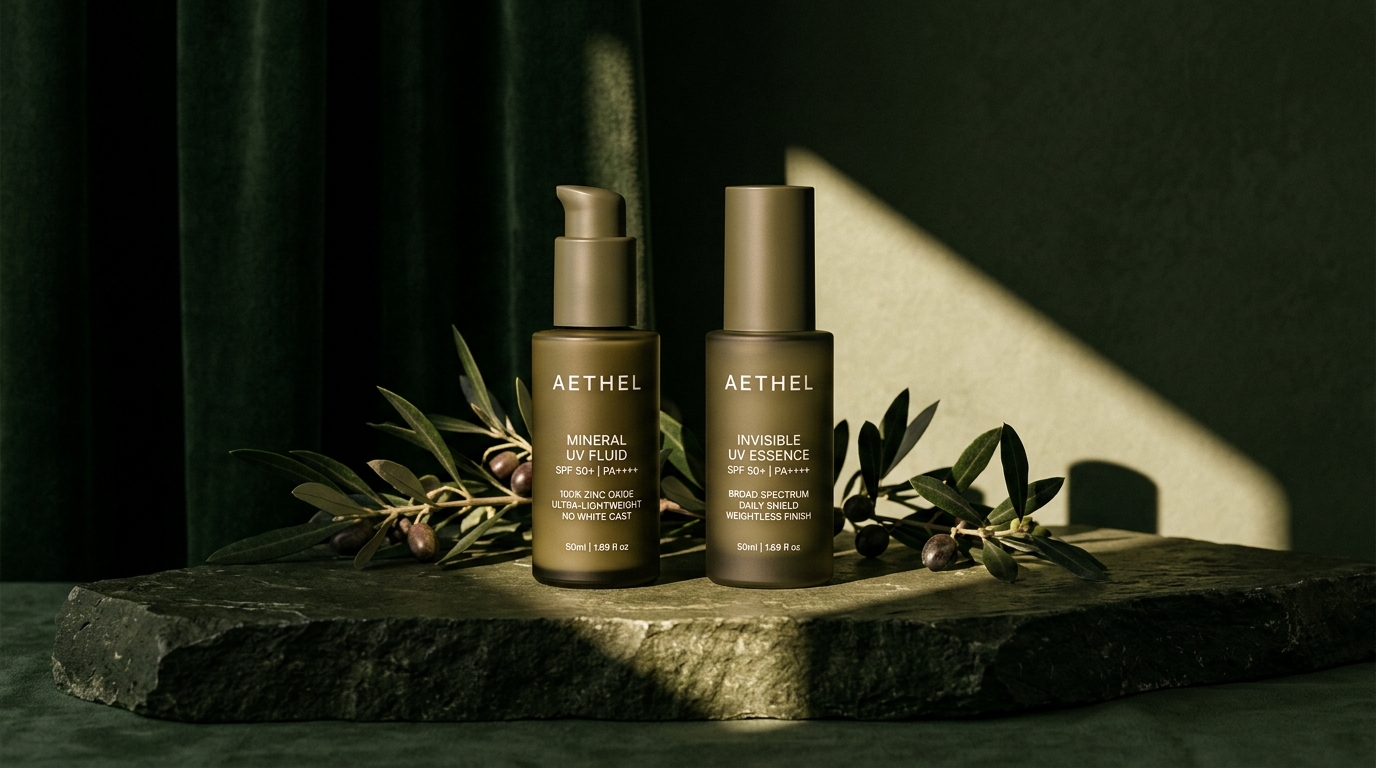
The mineral versus chemical sunscreen debate has become unusually charged for what is, at its core, a question about which formulation suits your skin better.
Mineral sunscreens are frequently marketed as the “clean,” “safe,” “natural” option. Chemical sunscreens are positioned as more elegant and effective. Both framings involve a degree of oversimplification, and neither category is universally superior.
The honest answer is that both provide effective protection when properly formulated and correctly applied, and the better choice depends on your skin, your priorities, and — most importantly — which one you will actually wear every day.
This guide compares them on protection, safety research, cosmetic performance, and suitability for different skin types, without the marketing framing on either side.
Key Takeaway
There is no universally ‘better’ sunscreen—the best sunscreen is the one you will actually wear every day in the correct amount without breaking out.
How Each Type Works
Mineral sunscreens
Mineral sunscreens — also called physical or inorganic sunscreens — use zinc oxide and titanium dioxide as active filters.
The common explanation is that they sit on the skin and reflect UV like tiny mirrors. This is partially accurate but incomplete. Research indicates mineral filters primarily absorb UV radiation, with reflection and scattering accounting for a smaller portion of their action — perhaps 5-10%.
So the mechanism is not as different from chemical filters as the marketing suggests. What genuinely differs is that mineral particles are larger and remain predominantly on the skin surface rather than penetrating.
Coverage:
- Zinc oxide provides genuinely broad protection across both UVB and UVA ranges, including UVA1
- Titanium dioxide is stronger in UVB and shorter UVA, weaker against longer UVA wavelengths
This is why zinc oxide is the more valuable of the two for comprehensive protection.
Chemical sunscreens
Chemical sunscreens — also called organic sunscreens, referring to carbon-based chemistry rather than organic farming — use filters that absorb UV radiation and convert it to a small amount of heat.
Common filters and what they cover:
| Filter | Primary coverage | Notes |
|---|---|---|
| Avobenzone | UVA | Photounstable alone; requires stabilizers |
| Octinoxate | UVB | Widely used; restricted in some regions |
| Octocrylene | UVB, short UVA | Often used to stabilize avobenzone |
| Homosalate | UVB | Common in US formulations |
| Octisalate | UVB | Mild, often used as a stabilizer |
| Bemotrizinol | Broad UVA/UVB | Highly photostable; not approved in the US |
| Bisoctrizole | Broad UVA/UVB | Highly photostable; not approved in the US |
| Ecamsule | UVA | Photostable; limited US availability |
An important regulatory note: several of the most photostable, cosmetically elegant modern filters — including bemotrizinol and bisoctrizole — are approved in the EU, Australia, Japan, and much of Asia but not in the United States. US sunscreen filter approvals have not been meaningfully updated in decades.
This means the chemical versus mineral comparison genuinely differs by market. A chemical sunscreen available in Europe or Korea may use substantially better filter technology than one available in the US.
What to do
- Immediate protection: Effective as soon as it's applied.
- Less irritating: Great for sensitive or redness-prone skin.
- Photostable: Doesn't degrade quickly in direct sunlight.
What to avoid
- White cast: Can look chalky on deeper skin tones.
- Thicker texture: Often harder to rub in and feels heavier.
- Can pill: Might not layer smoothly under makeup.
Protection: Which Performs Better?
The short answer: both can provide excellent protection. Formulation quality matters more than category.
Where mineral has an edge
Zinc oxide’s broad UVA coverage is genuinely strong, including the longer UVA1 wavelengths that some chemical filters cover less effectively.
Photostability. Mineral filters do not degrade with UV exposure. Avobenzone, by contrast, is photounstable on its own and requires stabilizing partners — well-formulated products handle this, but poorly formulated ones may lose UVA protection during wear.
Immediate effectiveness. Mineral sunscreens work as soon as applied. Chemical filters are conventionally recommended to be applied 15-20 minutes before exposure, though this is partly about allowing even film formation.
Where chemical has an edge
Higher achievable SPF with less product. Chemical filters generally deliver higher SPF at lower concentrations, which is why very high SPF chemical formulations feel lighter than mineral equivalents.
Better real-world application. This matters more than it appears. Because chemical formulations feel more comfortable and leave no cast, people tend to apply more of them and reapply more willingly. Applied protection beats theoretical protection.
Modern filter technology. In markets where they are available, newer filters like bemotrizinol offer excellent photostable broad-spectrum coverage in cosmetically pleasant formulations.
The practical reality
A well-formulated broad-spectrum SPF 50 from either category, applied in adequate quantity, protects you well. A poorly formulated version of either does not.
The variable that actually determines outcomes is application — how much you use and whether you use it daily. That makes cosmetic acceptability a protection factor, not a vanity concern.
The Safety Question
This is where most of the heat in the debate comes from, so it is worth addressing carefully and without overstatement in either direction.
What the research on chemical filters shows
Studies have examined systemic absorption of some chemical filters, finding that certain ones — including oxybenzone, avobenzone, octinoxate, and homosalate — can be detected in blood plasma after application.
What this does and does not mean:
It does mean absorption occurs, and regulators have asked for further safety data on several filters. This is a reasonable regulatory response.
It does not mean harm has been demonstrated. Detection in blood is not evidence of adverse effect. The studies used maximal application conditions — full-body application multiple times daily for several days — which exceeds typical facial use considerably.
Oxybenzone has attracted the most scrutiny, with some research suggesting potential hormonal activity in laboratory models. Human evidence of endocrine disruption at real-world exposure levels has not been established. It remains approved in major markets, though many formulations have moved away from it in response to consumer concern.
Current regulatory position in the US, EU, and Australia is that approved filters are considered safe at recommended use levels. Research continues, and that is appropriate.
What the research on mineral filters shows
Nanoparticles. Modern mineral sunscreens frequently use nano-sized particles to reduce white cast. This raised concerns about skin penetration.
Research to date indicates nanoparticles of zinc oxide and titanium dioxide do not meaningfully penetrate intact skin, remaining in the stratum corneum. Regulatory bodies including the EU’s scientific committees have assessed them as safe for topical use.
Inhalation risk. This is a legitimate consideration for spray and loose powder mineral formulations — inhaled titanium dioxide and zinc oxide particles are a genuine concern. Avoid spraying near the face and be cautious with loose mineral powders.
Topical safety. For creams and lotions, mineral filters have a strong safety profile and are the filters typically recommended for infants, pregnancy, and highly sensitive skin.
The honest summary
Mineral filters have a somewhat more established topical safety profile, which is why they are the default recommendation for babies, during pregnancy, and for reactive skin.
Chemical filters are considered safe by regulators, with ongoing research on some older filters. Newer-generation filters generally have better safety and stability profiles than the older ones attracting concern.
Unprotected sun exposure carries well-documented risks — photoaging, DNA damage, and skin cancer. Avoiding sunscreen due to uncertainty about filter absorption trades a demonstrated risk for a hypothetical one.
If you prefer mineral filters for precautionary reasons, that is entirely reasonable. Using no sunscreen is not.
Cosmetic Performance
This is where the practical difference is largest.
White cast
Mineral: the persistent challenge. Zinc oxide and titanium dioxide are white pigments. Non-nano formulations leave a noticeable cast, particularly on deeper skin tones. Nano formulations and tinted versions have improved this considerably, but a cast is still common.
Chemical: essentially none. Filters are transparent.
Texture and finish
Mineral: typically thicker, sometimes described as heavy or chalky. Higher SPF requires higher filter concentration, which compounds this. Modern formulations have improved substantially, particularly in Asian and European products.
Chemical: generally lighter and more elegant, with a wider range of finishes from matte to dewy.
Under makeup
Mineral: can pill or interfere with foundation, particularly thicker formulations.
Chemical: usually layers better under makeup.
For deeper skin tones
Mineral: the white cast is a genuine barrier. Tinted mineral options are the practical answer, though shade range remains limited in many product lines.
Chemical: no cast, making it generally more accessible.
Worth noting: tinted sunscreens containing iron oxides offer a genuine additional benefit beyond cosmetics — some protection against visible light, which is relevant for stubborn dark spots and post-inflammatory hyperpigmentation.
Which Should You Choose?
Choose mineral if you:
- Have sensitive or reactive skin — mineral filters cause less stinging
- Have rosacea — zinc oxide’s anti-inflammatory properties may help
- Are pregnant or breastfeeding — commonly recommended for precaution
- Are buying for an infant or young child
- Have acne-prone skin — zinc oxide has some supporting research
- Experience stinging around the eyes from chemical formulations
- Prefer a precautionary approach to systemic absorption questions
- Have stubborn dark spots — tinted mineral options add visible light protection
Choose chemical if you:
- Want an invisible finish with no cast
- Have deeper skin tone and want to avoid tinting or cast issues
- Wear makeup daily and need something that layers well
- Live somewhere humid where heavier textures feel unpleasant
- Have found mineral formulations too thick to apply generously
- Have access to newer filters — European, Australian, Japanese, or Korean products often use better filter technology
- Struggle with consistency — a formulation you like is one you will use
Consider a hybrid
Many products combine both — mineral filters for broad photostable coverage plus chemical filters to reduce the amount of mineral needed. This can deliver good protection with better cosmetic performance than mineral alone.
The Environmental Question
Some jurisdictions have restricted oxybenzone and octinoxate over coral reef concerns.
What the research shows: laboratory studies have demonstrated coral bleaching effects from these filters at certain concentrations. Field evidence about real-world contribution is more contested, and researchers generally identify ocean warming, acidification, agricultural runoff, and overfishing as considerably larger drivers of reef decline.
Reasonable position: if you swim in reef environments, choosing mineral formulations or filters not implicated in reef research is a low-cost precaution. Framing sunscreen as a primary cause of reef damage overstates the evidence considerably.
A note on “reef-safe” labelling: this is not a regulated term. It carries no verified meaning and any product can use it.
What Actually Matters More Than the Category
Broad-spectrum coverage. Both UVA and UVB. In the US, look for “broad-spectrum.” In Asian markets, PA+++ or PA++++ indicates strong UVA protection.
SPF 30 minimum, with SPF 50 providing a buffer against under-application.
Adequate quantity. Roughly a quarter teaspoon for the face, or the two-finger method. Under-application undermines any product regardless of category.
Daily use. Consistency matters more than optimizing the formulation.
A texture you tolerate. This determines whether you use it, which determines whether it protects you.
How to Read a Sunscreen Label
Once you know what to look for, identifying which type you are holding — and how good it is — takes seconds.
Identifying the type
Check the active ingredients panel, which is listed separately from the full ingredient list on most sunscreens.
Mineral: zinc oxide, titanium dioxide. Usually just one or two actives.
Chemical: avobenzone, octinoxate, octocrylene, homosalate, octisalate, and similar. Often four or more actives listed together.
Hybrid: a mineral filter appearing alongside chemical ones.
Assessing UVA protection
This is where labels get inconsistent across markets, and it matters — UVA is the wavelength driving photoaging and pigmentation.
“Broad-spectrum” in US and Australian labelling indicates the product passed a UVA protection test relative to its SPF.
PA ratings (PA+ through PA++++) are used in Japan, Korea, and other Asian markets. More plus signs mean stronger UVA protection. PA+++ or PA++++ is a good target.
UVA in a circle is the EU marking, indicating UVA protection of at least one-third of the labelled SPF.
If a product lists only SPF with no UVA indication, you have no information about UVA coverage. SPF measures UVB protection only.
Checking for photostability
If a chemical sunscreen lists avobenzone, look for stabilizing partners — octocrylene is the most common. Avobenzone alone degrades with UV exposure, meaning UVA protection declines during wear.
Products using bemotrizinol or bisoctrizole do not have this issue, as both are inherently photostable.
Water resistance
Look for a stated duration — 40 or 80 minutes. “Waterproof” is not a permitted claim in most markets, and a product using it is either outdated or non-compliant.
Why Sunscreen Differs by Country
This is worth understanding because it explains a genuine quality gap that has nothing to do with brand quality.
In the United States, sunscreens are regulated as over-the-counter drugs. New filter approvals require extensive clinical data and the approval pathway has effectively stalled — the list of permitted filters has not been meaningfully expanded in decades.
In the European Union, Australia, Japan, and South Korea, sunscreens are regulated as cosmetics with safety assessment requirements. This has allowed newer filters like bemotrizinol, bisoctrizole, and others to reach market.
The practical consequence: sunscreens sold in Europe, Australia, Japan, and Korea often use filter systems that are more photostable, provide better UVA coverage, and feel considerably lighter than what is available in the US.
This is why many people report that Asian and European sunscreens feel dramatically better than domestic options — it is not just formulation skill, it is access to different chemistry.
If you are in the US and finding chemical sunscreens unpleasant, this context is useful. It may be the available filters rather than your skin or the brands. Some people import products, though that comes with its own considerations around authenticity and shipping conditions.
Frequently Asked Questions
Is mineral sunscreen better than chemical? Neither is universally better. Mineral has a more established topical safety profile and suits sensitive skin better. Chemical is more cosmetically elegant, which improves real-world application. Both protect well when properly formulated and adequately applied.
Is chemical sunscreen safe? Regulators in major markets consider approved chemical filters safe at recommended use levels. Some older filters are under continued study for systemic absorption, though harm has not been demonstrated at typical use levels.
Does mineral sunscreen protect against UVA? Zinc oxide provides genuinely broad UVA coverage. Titanium dioxide is weaker against longer UVA wavelengths, so zinc oxide is the more valuable mineral filter.
Why does mineral sunscreen leave a white cast? Zinc oxide and titanium dioxide are white pigments. Nano-sized particles and tinted formulations reduce this considerably but rarely eliminate it entirely.
Which is better for acne-prone skin? Zinc oxide has some supporting research for anti-inflammatory properties. However, formulation matters more than filter type — a lightweight non-comedogenic chemical sunscreen may suit acne-prone skin better than a heavy mineral cream.
Can I mix mineral and chemical sunscreen? Many commercial products combine them deliberately. Layering two different products yourself is less predictable and generally not recommended — apply one adequately instead.
Is mineral sunscreen better for babies? Mineral is typically recommended for infants due to its established topical safety profile and lower irritation potential. Sun avoidance and protective clothing are the primary recommendations for very young infants.
Do I need to wait before going outside with chemical sunscreen? The traditional advice is 15-20 minutes. This partly reflects allowing an even film to form. Mineral sunscreens are effective immediately.
Which lasts longer? Mineral filters are more photostable and do not degrade with UV exposure. However, both are removed by sweat, water, and touching your face, which is the main reason to reapply.
The Bottom Line
The mineral versus chemical debate generates more heat than it deserves. Both categories work. Both are regulated as safe in major markets. The differences that genuinely matter are practical rather than ideological.
Choose mineral if: your skin is sensitive or reactive, you have redness-prone skin, or you simply prefer the precautionary option.
Choose chemical if: you want an invisible finish, have a deeper skin tone, wear makeup daily, or have found mineral formulations too heavy to apply generously.
Remember what actually determines protection: broad-spectrum coverage, SPF 30 or higher, adequate quantity, and daily use. A chemical sunscreen you apply properly every morning protects you considerably better than a mineral one you use sporadically because you dislike how it looks.
The best sunscreen is not the one that wins a category debate. It is the one currently sitting on your bathroom shelf, half empty because you actually use it.
Was this article helpful?

Anam Ahsan
Skincare Enthusiast & BloggerHi, I'm Anam! I'm a beauty and skincare enthusiast who loves testing new products and sharing honest, personal reviews. I document my skincare journey and share what works for my skin so you can make better choices for your routine.



Comments (24)
Hannah W.
2 days agoThis guide saved me so much money — went with the budget pick and honestly can't tell the difference from serums twice the price!
Anam Ahsan Author
1 day agoSo glad it worked out for you, Hannah! That's exactly the kind of result we hoped readers would see.