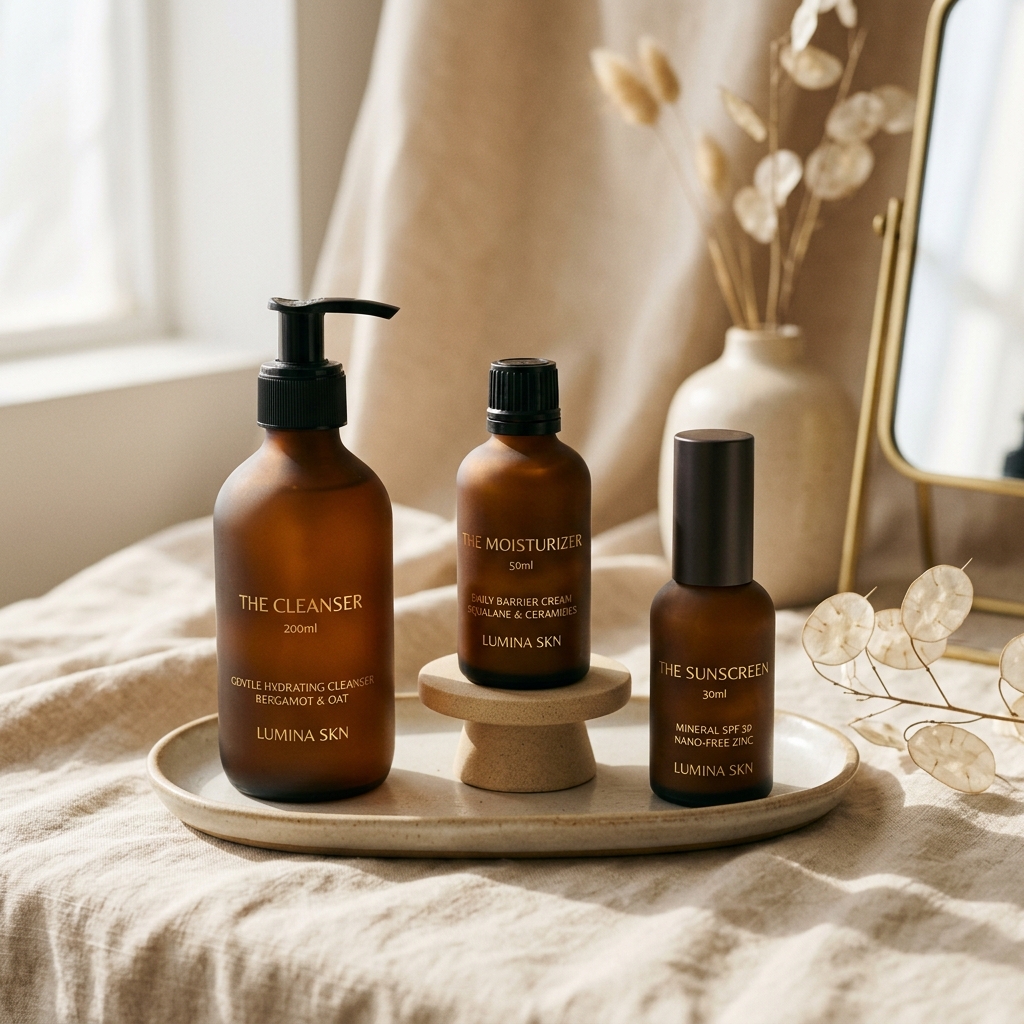
Search for a skincare routine and you will find ten-step regimens, elaborate layering charts, and product lists running into the hundreds of dollars. It is genuinely intimidating, and it creates the impression that good skin requires a substantial investment of both money and time.
It does not. Four products, used consistently, deliver the overwhelming majority of what skincare can realistically achieve. Everything beyond that is refinement — useful for specific concerns, but not foundational.
This guide covers exactly what those four steps are, what each one actually does, how to choose products without getting lost in marketing, and when it makes sense to add anything else.
The Core Philosophy
The best skincare routine isn’t the one with the most steps – it’s the one you can consistently stick to every single day without irritation.
Routine Rule
Consistency beats complexity every time. Using three products every single day will yield far better results than a ten-step routine you only do on weekends.
What to do
- Stick to basics: Cleanser, moisturizer, and sunscreen.
- Be consistent: Use the same simple routine daily.
- Use lukewarm water: Protects your skin barrier.
- Patch test new products: Introduce one item at a time.
What to avoid
- Complex 10-step routines: Unless specifically recommended by a dermatologist.
- Constant switching: Changing products every week prevents results.
- Over-exfoliating: Too many acids will ruin your barrier.
Why Fewer Products Often Work Better
This is not just a budget argument. There are practical reasons a small routine frequently outperforms a large one.
Fewer variables to troubleshoot. If you use four products and your skin reacts, identifying the culprit is straightforward. With twelve products, it is close to impossible.
Lower irritation risk. Every product adds potential irritants — fragrance, preservatives, actives. Stacking them increases the chance of a compromised barrier, which causes the problems people then buy more products to fix.
Better consistency. A four-step routine takes three minutes. A twelve-step routine takes twenty. Which one will you still be doing in six months? Consistency matters more than sophistication.
No conflicting actives. Complex routines frequently combine ingredients that irritate each other. A simple routine sidesteps this entirely.
Your skin can only respond so fast. Three brightening products do not brighten three times faster. Cell turnover takes about a month regardless of how many serums you own.
Essential Step
If you have to strip your routine down to absolute basics, focus on cleansing, moisturizing, and sun protection. Everything else is secondary.
The Four Steps
Morning: Cleanse ? Moisturize ? Sunscreen Evening: Cleanse ? Treat (optional) ? Moisturize
Written as four distinct products: cleanser, moisturizer, sunscreen, and one treatment.
That is the entire routine. Let us go through each.
What it does
A cleanser removes sebum, sweat, dead skin cells, pollution, makeup, and sunscreen. That is its whole job, and it is a genuinely important one — leaving sunscreen and debris on the skin overnight contributes to congestion.
What it should not do
It should not leave your skin feeling tight, squeaky, or stripped. That sensation is not cleanliness. It means the cleanser has removed barrier lipids along with the debris.
This is the single most common cleansing mistake, and it stems from the intuition that “clean” should feel a certain way. It should not. Well-cleansed skin feels comfortable, not tight.
How to choose one
For most skin types: a gentle, low-foaming or non-foaming cleanser without fragrance or denatured alcohol.
For oily skin: a gel cleanser is fine, but avoid harsh sulfates like sodium lauryl sulfate at high concentrations.
For dry or sensitive skin: cream, milk, or oil-based cleansers preserve the barrier better than foaming formulations.
What to ignore: claims about “deep cleansing,” “detoxifying,” or purifying. A cleanser is on your skin for under a minute — it cannot deliver meaningful actives, and it certainly cannot detoxify anything.
How to use it
- Use lukewarm water, never hot
- Massage gently with fingertips for around thirty seconds
- Rinse thoroughly
- Pat dry rather than rubbing
Morning cleansing is optional. If your skin is dry or sensitive, a water rinse in the morning is perfectly adequate — you cleansed the night before, and overnight your skin has only produced its own sebum.
Evening cleansing is not optional if you wear sunscreen or makeup. If you do, a first cleanse with an oil or balm followed by a gentle water-based cleanser removes them far more effectively.
Step 2: Moisturizer
What it does
Moisturizers work through three mechanisms, and good ones combine all three:
Humectants draw water into the skin. Glycerin, hyaluronic acid, urea, panthenol.
Emollients fill gaps between skin cells, smoothing the surface. Squalane, fatty alcohols, plant oils.
Occlusives form a barrier that reduces water loss. Dimethicone, petrolatum, shea butter.
Together, these hydrate the skin and support barrier function — which is what determines whether your skin looks healthy, tolerates actives, and defends itself against irritants.
Why you need one even with oily skin
This is worth addressing directly, because skipping moisturizer is one of the most common beginner mistakes.
Oily skin can still be dehydrated. Oil and water are different things — your skin can produce plenty of sebum while lacking water content. And stripping the skin without replacing moisture can trigger compensatory oil production, making oiliness worse.
The answer for oily skin is not skipping moisturizer. It is choosing a lighter one.
How to choose one
Oily or acne-prone: lightweight gel or gel-cream, labeled non-comedogenic Combination: light lotion Dry: richer cream containing ceramides and emollients Sensitive: simple formulation, fragrance-free, ideally with ceramides or panthenol
Ingredients worth looking for: glycerin, ceramides, niacinamide, squalane, panthenol, fatty alcohols, hyaluronic acid.
Ingredients worth avoiding if you are reactive: fragrance, essential oils, denatured alcohol, high concentrations of botanical extracts.
How to use it
Apply to slightly damp skin — this improves hydration meaningfully, particularly for humectant-based formulas. Use enough to cover comfortably without leaving a heavy film. Extend it to your neck.
Step 3: Sunscreen
Why this is the most important step
If you only do one thing for your skin, this is it.
UV exposure is responsible for the substantial majority of visible skin aging — wrinkles, loss of firmness, uneven pigmentation, and rough texture. It is also the primary modifiable risk factor for skin cancer.
No serum can undo what daily unprotected sun exposure does. Every other product in your routine works better when protected by sunscreen, and several — vitamin C, retinoids, brightening treatments — are actively undermined without it.
How to choose one
Minimum specifications:
- SPF 30 or higher
- Broad-spectrum (protects against both UVA and UVB)
- A texture you genuinely do not mind wearing
That last point matters more than it sounds. The best sunscreen is the one you apply every single morning without resenting it. An expensive sunscreen that feels unpleasant and sits unused protects you less than a modest one you actually wear.
Mineral versus chemical:
Mineral (zinc oxide, titanium dioxide) sits on the surface and reflects UV. Generally better tolerated by sensitive and reactive skin. Can leave a white cast, though modern formulations have improved considerably.
Chemical (avobenzone, octinoxate, and others) absorbs UV and converts it to heat. Usually more cosmetically elegant with no white cast. Can sting sensitive skin, particularly around the eyes.
Neither is inherently superior. Choose based on what your skin tolerates and what you will use consistently.
How to use it
Apply enough. This is where most people fall short. The standard measure is roughly a quarter teaspoon for the face, or the “two-finger” method — a line of product along your index and middle fingers.
Applying half the recommended amount does not give you half the SPF — the relationship is not linear, and actual protection drops substantially.
Apply it last in your morning routine, after moisturizer.
Reapply every two hours during sustained sun exposure. For a normal indoor day with limited window exposure, a single morning application is generally sufficient.
Do not skip it on cloudy days or in winter. UVA penetrates cloud cover and glass, and it is the wavelength primarily responsible for photoaging.
Step 4: One Treatment (Optional)
The fourth step is where you address a specific concern — and it is genuinely optional. Three steps done consistently beat four done sporadically.
Wait at least four weeks after establishing the first three steps before adding a treatment. This gives your skin time to stabilize and lets you evaluate what you actually need.
Choosing based on your concern
Aging, fine lines, or texture ? a retinoid Start with retinol at 0.25% or lower, twice weekly, applied to dry skin at night. Increase gradually over several weeks. This is the most evidence-backed anti-aging ingredient available over the counter.
Oiliness, congestion, or redness ? niacinamide At 4-5%, applied morning or evening. Well tolerated, addresses several concerns simultaneously, and supports barrier function.
Dullness or dark spots ? vitamin C Applied in the morning before moisturizer. Choose 10-15% L-ascorbic acid in opaque packaging, or a gentler derivative if your skin is sensitive.
Blackheads or congestion ? salicylic acid Two to three times weekly, not daily. It is oil-soluble, which lets it work inside pores.
Sensitive skin with redness and texture ? azelaic acid Gentle, versatile, and usually tolerated daily even by reactive skin.
The rule that matters most
One treatment at a time. Add it, use it for eight to twelve weeks, and evaluate before considering anything else. This is slower than most people want, but it is the only approach that tells you what actually works for your skin.
What You Do Not Need (Yet)
Toner. Optional for essentially everyone. Modern toners are lightweight hydrating layers — pleasant, but not doing anything your moisturizer cannot.
Essence. Same category. Skip until your routine is established and you have a reason.
Eye cream. For most people, extending your facial moisturizer to the eye area is sufficient. Buy a dedicated eye product only if you have a specific concern your moisturizer is not addressing.
Face masks. Effects are temporary. Enjoyable, but not contributing to long-term results.
Multiple serums. Layering three actives is how beginners end up with compromised barriers.
Exfoliating scrubs. Chemical exfoliation is more controlled and even. Physical scrubs, particularly with irregular particles, can cause micro-tears.
Cleansing devices. Frequently too aggressive for daily use and a common cause of irritation.
Anything targeting a concern you do not have. This sounds obvious, but a substantial amount of skincare purchasing is driven by marketing rather than a problem the buyer actually has.
Sample Routines by Skin Type
Oily skin
Morning: Gel cleanser ? lightweight gel moisturizer ? non-comedogenic sunscreen Evening: Gel cleanser ? niacinamide ? lightweight moisturizer
Dry skin
Morning: Water rinse or cream cleanser ? rich moisturizer ? sunscreen Evening: Cream or oil cleanser ? moisturizer, applied to damp skin
Combination skin
Morning: Gentle cleanser ? light lotion ? sunscreen Evening: Gentle cleanser ? treatment (2-3x weekly) ? moisturizer, richer on drier areas
Sensitive skin
Morning: Water rinse ? fragrance-free barrier moisturizer ? mineral sunscreen Evening: Gentle non-foaming cleanser ? barrier moisturizer
Add actives only once the barrier is consistently comfortable.
Acne-prone skin
Morning: Gentle cleanser ? lightweight non-comedogenic moisturizer ? non-comedogenic sunscreen Evening: Gentle cleanser ? salicylic acid or adapalene (start 2-3x weekly) ? moisturizer
Common Beginner Mistakes
1. Starting with too many products. Buying a full routine at once means you cannot identify what works or what caused a reaction.
2. Skipping moisturizer because of oily skin. Covered above — this frequently makes oiliness worse.
3. Over-cleansing. Twice daily is the maximum for most people. Washing more strips the barrier.
4. Expecting fast results. Meaningful change takes eight to twelve weeks. Two weeks tells you almost nothing.
5. Switching products constantly. Nothing gets a fair trial, so you never learn what works.
6. Using actives daily from day one. Build up gradually. Starting a retinoid nightly is a reliable route to irritation and abandonment.
7. Following someone else’s routine. Skin varies considerably. A routine that transformed someone else’s skin may be entirely wrong for yours.
8. Skipping sunscreen indoors or in winter. UVA passes through glass and cloud cover year-round.
9. Not patch testing. Three days on the inner forearm catches obvious reactions before they affect your face.
Your First 12 Weeks: A Practical Roadmap
Knowing the steps is one thing. Knowing the sequence to build them in is what prevents the most common beginner problems.
Weeks 1-4: Establish the basics
Buy three products only: a gentle cleanser, a moisturizer for your skin type, and a broad-spectrum SPF 30 sunscreen.
Use them consistently. Cleanse in the evening (and morning if your skin is oily), moisturize twice daily, sunscreen every morning without exception.
What to expect: improved comfort and hydration within one to two weeks. Skin that previously felt tight should stop doing so. This phase is not about dramatic transformation — it is about establishing a stable baseline.
Take a photo now. Same lighting, no makeup, natural daylight. You will want this in twelve weeks.
Weeks 5-8: Add one treatment
Only if your skin is comfortable and you have a specific concern.
Choose one treatment based on your primary concern. Patch test for three days. Then start at low frequency — twice weekly for retinoids and acids, daily for niacinamide and azelaic acid.
What to expect: possible mild adjustment, particularly with retinoids. Some dryness and light flaking in the first few weeks is normal. Burning, persistent redness, or worsening irritation is not — reduce frequency or stop.
Do not add anything else during this window. If you add two products and react, you have learned nothing.
Weeks 9-12: Build tolerance and assess
If your treatment is well tolerated, gradually increase frequency. Twice weekly to three times, then to every other night, then to nightly if appropriate.
At week twelve, take another photo under identical conditions and compare it to your baseline.
What to expect: this is where meaningful change typically becomes visible — smoother texture, more even tone, fewer congested areas.
Beyond 12 weeks
At this point you have a functioning routine and real information about how your skin responds. If you want to add a second treatment, you can — but many people find the four-step routine sufficient indefinitely, and there is nothing wrong with that.
A Practical Shopping Approach
Buy the smallest size available when trying something new. If it does not suit you, you have wasted less.
Check the ingredient list before the marketing copy. Look for the functional ingredients near the top and note whether fragrance is present.
Avoid buying a full routine from one brand at once. Brands package products together for commercial reasons, not because your skin needs all of them.
Do not buy based on someone else’s transformation. Skin type, climate, age, and underlying conditions all affect what works. A product that changed someone’s skin may do nothing for yours.
Give yourself permission to finish a product you dislike. Or to stop using it. Neither is a failure — it is information.
Track what you use. A note on your phone listing product names and start dates takes seconds and is genuinely useful when something goes wrong three months later.
Frequently Asked Questions
Is a 4-step routine enough? For most people, yes. Cleanser, moisturizer, sunscreen, and one targeted treatment address the fundamentals. Additional products refine rather than transform.
Do I need to wash my face in the morning? Not necessarily. Oily skin often benefits from a gentle morning cleanse; dry or sensitive skin frequently does better with a water rinse.
Can I skip moisturizer if my skin is oily? It is not recommended. Oily skin can be dehydrated, and stripping without replacing moisture can increase oil production. Use a lightweight gel formulation instead.
What order should I apply products? Thinnest to thickest, with sunscreen always last in the morning. For this routine: cleanser, treatment, moisturizer, sunscreen.
How long before I see results? Hydration improves within days. Texture and tone typically take eight to twelve weeks. Anti-aging benefits develop over months.
Should I use different products in summer and winter? The steps stay the same; textures often change. Lighter formulations in humid months, richer ones in cold, dry conditions.
When should I add more products? After at least four to eight weeks of consistency with the basics, and only when you have a specific concern the current routine is not addressing.
Is expensive skincare better for beginners? No. Effective cleansers, moisturizers, and treatments exist at modest prices. Sunscreen is the one category where spending more can be justified — because texture determines whether you use it daily.
Can I use the same products on my neck? Yes, and you should. Neck skin ages visibly and is routinely neglected.
How Long Does It Take for Skincare Products to Actually Work?
A realistic dermatological timeline for when to expect visible results from your skincare.
Read More →The Bottom Line
Good skin does not require a complicated routine. It requires a gentle cleanser, a moisturizer suited to your skin, sunscreen every morning, and — if you have a specific concern — one treatment used consistently.
The three principles that matter most:
- Consistency beats complexity. A simple routine done daily outperforms an elaborate one done occasionally.
- Add slowly. One product at a time, several weeks apart, so you always know what is working.
- Sunscreen is the highest-return step. Nothing else you buy will protect your skin as effectively as daily sun protection.
If you are starting from nothing, buy three products: a gentle cleanser, a moisturizer for your skin type, and a broad-spectrum SPF 30 sunscreen you like wearing. Use them consistently for a month. Then, if you have a specific concern, add one treatment.
That is genuinely all most people need — and it will serve your skin better than a shelf full of products used inconsistently.
This article is for informational purposes only and does not constitute medical advice. If you have a diagnosed skin condition or persistent concern, consult a board-certified dermatologist.
Was this article helpful?

Anam Ahsan
Skincare Enthusiast & BloggerHi, I'm Anam! I'm a beauty and skincare enthusiast who loves testing new products and sharing honest, personal reviews. I document my skincare journey and share what works for my skin so you can make better choices for your routine.



Comments (24)
Hannah W.
2 days agoThis guide saved me so much money — went with the budget pick and honestly can't tell the difference from serums twice the price!
Anam Ahsan Author
1 day agoSo glad it worked out for you, Hannah! That's exactly the kind of result we hoped readers would see.