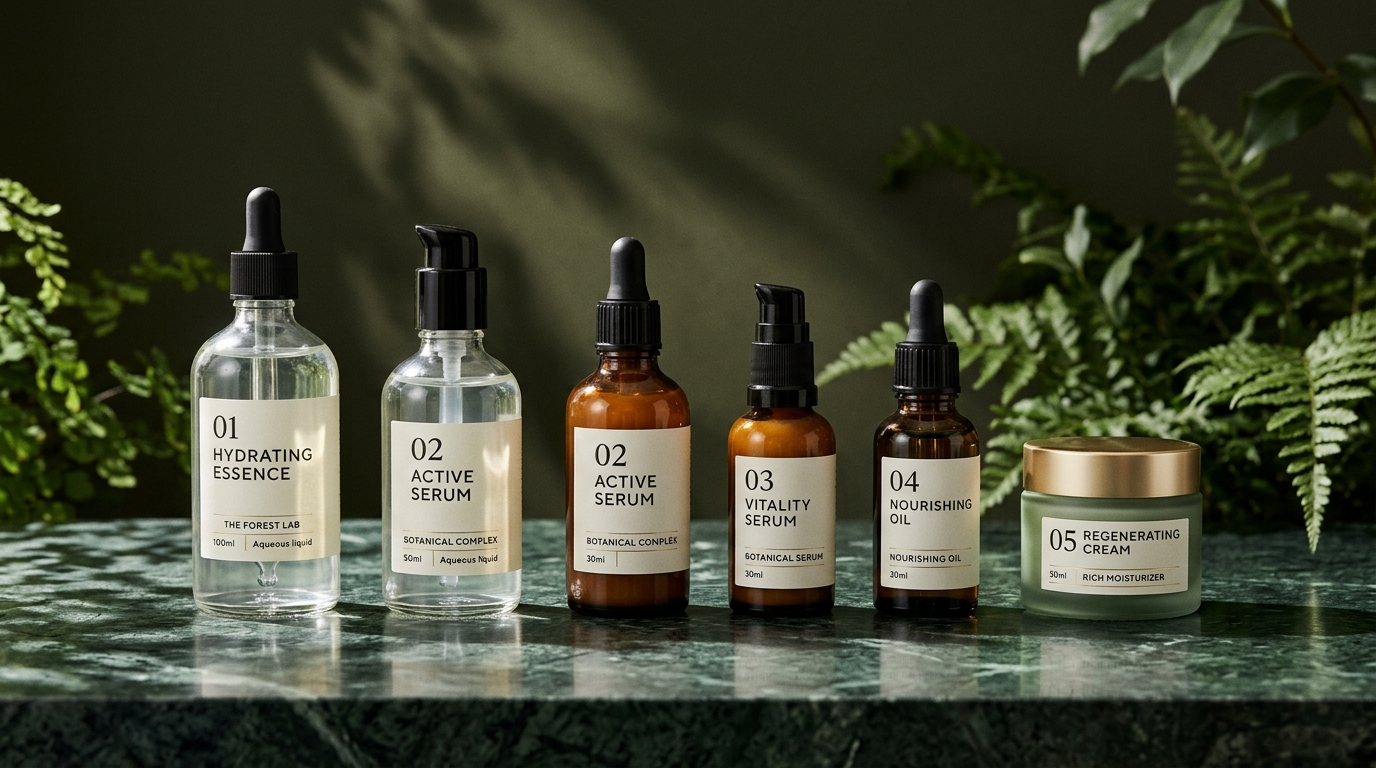
You can own excellent skincare products and still get mediocre results if you apply them in the wrong order. A serum layered over a moisturizer barely penetrates. A sunscreen applied first gets disrupted by everything that follows. Two actives stacked together can neutralize each other or shred your barrier.
The good news is that skincare layering follows a small number of logical rules rather than an arbitrary sequence you have to memorize. Once you understand the underlying principle — thinnest to thickest, with a few exceptions — you can order any routine correctly, including products you have never used before.
This guide covers the complete morning and night sequence, the reasoning behind each step, which ingredients should never share a routine, and how to simplify when your routine has grown out of control.
What to do
- Thinnest to thickest: Apply watery serums before thick creams.
- Water before oil: Oil blocks water from absorbing.
- Wait 60 seconds: Let each layer absorb before the next.
- Always end with SPF: In your morning routine.
What to avoid
- Applying oils first: They create a barrier nothing else can penetrate.
- Skipping moisturizer: Even oily skin needs hydration.
- Applying SPF at night: Give your skin a break while you sleep.
The Core Principle: Thinnest to Thickest
The foundational rule of skincare layering is straightforward: apply products from lightest consistency to heaviest.
The reasoning is physical rather than mystical. Heavier products contain occlusive and emollient ingredients that form a film on the skin surface. That film is exactly what you want at the end of a routine — it seals moisture in and reduces transepidermal water loss. But it also blocks whatever comes after it. A lightweight water-based serum applied over a rich cream will largely sit on top rather than penetrate.
A rough consistency hierarchy:
- Cleansers (rinsed off)
- Watery toners and essences
- Water-based serums
- Oil-based serums and treatments
- Eye creams
- Lotions and light moisturizers
- Creams and rich moisturizers
- Face oils
- Occlusive balms
- Sunscreen (morning only — see the note below)
There are two important exceptions to this rule, and both matter.
Two Important Exceptions
Sunscreen goes last in the morning, regardless of its texture. Applying anything over it disrupts the protective film.
pH-dependent actives need clean contact. Ingredients like L-ascorbic acid and exfoliating acids perform best applied to bare, clean skin.
The Golden Rule
Always apply products from thinnest to thickest consistency. This ensures that heavy creams don’t block lightweight serums from absorbing properly.
The Complete Morning Routine Order
Morning routines have one primary job: protect. The overnight repair work is done, and daytime skincare is largely about defending skin from UV radiation, pollution, and oxidative stress.
Step 1: Cleanser (or water rinse)
Whether you need a full cleanse in the morning depends on your skin. Oily skin and anyone using heavy overnight products generally benefits from a gentle cleanser. Dry or sensitive skin often does better with a plain water rinse, which preserves the barrier lipids that would otherwise be stripped.
Use a gentle, non-foaming or low-foaming cleanser. If your skin feels tight and squeaky after cleansing, your cleanser is too harsh.
Step 2: Toner or essence (optional)
Modern toners are not the astringent, alcohol-heavy products of decades past. Today they function as lightweight hydrating layers or delivery vehicles for actives.
Skip this step if: your routine is already working and you want to simplify. Toner is genuinely optional for most people.
Step 3: Antioxidant serum (vitamin C)
This is the anchor of a well-built morning routine. Vitamin C provides antioxidant defense against free radicals generated by UV exposure and pollution throughout the day.
Apply to clean, dry skin and allow 60 seconds to absorb before the next step. Vitamin C formulations — particularly L-ascorbic acid — work best with direct skin contact rather than layered over other products.
Step 4: Other water-based serums
Niacinamide, hyaluronic acid, peptides, or hydrating serums go here. If you use multiple, apply in order of consistency — thinnest first.
A practical note: apply hyaluronic acid to slightly damp skin. As a humectant, it draws water from its surroundings, and applying it to bone-dry skin in a dry climate can be counterproductive.
Step 5: Eye cream (optional)
Eye creams typically sit between serums and moisturizer. Pat gently with your ring finger rather than rubbing — the skin here is thin and does not need aggressive handling.
Honestly, a dedicated eye cream is optional for many people. A gentle facial moisturizer extended to the eye area works adequately unless you have a specific concern.
Step 6: Moisturizer
Moisturizer serves two functions: delivering hydrating and barrier-supporting ingredients, and sealing the layers beneath it.
Choose by skin type:
- Oily skin — lightweight gel or gel-cream
- Combination skin — light lotion
- Dry skin — richer cream with ceramides and emollients
- Sensitive skin — simple formulations with minimal fragrance
Step 7: Sunscreen (non-negotiable)
Sunscreen is the last step of every morning routine, without exception.
Application matters as much as product choice:
- Use approximately a quarter teaspoon for the face, or the “two-finger” measure
- Apply to face, neck, ears, and any exposed skin
- Allow it to set for a few minutes before applying makeup
- Reapply every two hours during sustained sun exposure
Under-application is the single most common sunscreen mistake. Most people apply roughly a quarter to half of the amount used in SPF testing, which means the actual protection received is substantially lower than the number on the bottle.
Final Step
Sunscreen is the absolute final step in any morning routine. Applying anything on top of it (other than makeup) compromises the protective film.
The Complete Night Routine Order
Evening routines have a different job: cleanse thoroughly and repair. This is when active treatment ingredients do their work, since there is no UV exposure to contend with and skin repair processes are naturally more active overnight.
Step 1: First cleanse (oil-based or balm)
If you wear makeup, sunscreen, or work in a polluted environment, a first cleanse with an oil, balm, or micellar water dissolves what water-based cleansers cannot.
This is the “double cleansing” method, and it is genuinely useful for anyone wearing sunscreen daily — sunscreen filters are designed to resist water and often are not fully removed by a water-based cleanser alone.
Step 2: Second cleanse (water-based)
A gentle water-based cleanser removes residue from the first cleanse along with sweat and general grime.
If you wear no makeup and minimal sunscreen, a single gentle cleanse is sufficient. Double cleansing is a tool, not a requirement.
Step 3: Exfoliant (2-3 times weekly, not daily)
Chemical exfoliants — salicylic acid, glycolic acid, lactic acid — go on clean, dry skin.
Critical point: this is not a daily step. Two to three times per week is sufficient for most skin. Daily exfoliation is one of the most common causes of compromised skin barriers, and the resulting sensitivity is often misattributed to other products.
Do not use an exfoliant on the same night as a retinoid unless you have specifically built up tolerance and know your skin handles it.
Step 4: Toner or essence (optional)
Same as the morning — optional, hydrating, and easily skipped when simplifying.
Step 5: Treatment serum or active
This is where the main event goes: retinol, bakuchiol, prescription retinoids, or targeted treatment serums.
Apply to completely dry skin. Damp skin increases penetration, which sounds beneficial but primarily increases irritation with retinoids. Wait a few minutes after cleansing.
For sensitive skin, use the sandwich method: a thin layer of moisturizer, then the retinoid, then moisturizer again. This buffers contact without meaningfully reducing efficacy.
Step 6: Hydrating serums
Hyaluronic acid, peptides, or barrier-supporting serums layer over the treatment step.
Step 7: Eye cream (optional)
Step 8: Moisturizer
Night moisturizers can be richer than daytime ones since there is no sunscreen or makeup to layer over them. Look for ceramides, cholesterol, fatty acids, or peptides depending on your concern.
Step 9: Face oil or occlusive (optional)
Face oils go after moisturizer, not before. Oils are largely occlusive — they seal rather than hydrate — so applying them first would block the water-based products that follow.
Slugging — applying a thin layer of an occlusive balm like petrolatum as a final step — can significantly reduce transepidermal water loss overnight. It works well for dry or compromised skin and is generally not recommended for acne-prone skin, where it can trap congestion.
Ingredients That Should Not Share a Routine
Some combinations increase irritation without increasing benefit. These are the ones worth knowing.
| Combination | Issue | Better approach |
|---|---|---|
| Retinol + AHA/BHA | Compounded irritation, barrier damage | Alternate nights |
| Retinol + benzoyl peroxide | Can degrade some retinoids; high irritation | Separate days or times |
| Vitamin C + AHA/BHA | pH conflict, irritation | Vitamin C morning, acids evening |
| Multiple exfoliating acids | Over-exfoliation | Choose one |
| Retinol + strong vitamin C | Different optimal pH, irritation risk | Vitamin C AM, retinol PM |
Combinations that are actually fine
Several supposed “conflicts” circulating online do not hold up:
Niacinamide + vitamin C — an outdated claim based on research conducted under high heat with pure, unformulated ingredients. Modern stabilized formulations combine them without issue.
Retinol + niacinamide — niacinamide’s barrier-supporting properties may actually reduce retinoid irritation. This is a genuinely good pairing.
Hyaluronic acid + almost anything — hyaluronic acid is a humectant with no pH conflicts. It layers freely.
Sunscreen + everything — sunscreen goes over your routine, and a properly formulated one does not require special accommodations.
How to Simplify an Overgrown Routine
Ten-step routines are popular but rarely necessary, and more steps mean more opportunities for irritation and more difficulty identifying what is causing a problem.
A minimum effective routine:
Morning: Gentle cleanser (or water rinse) → moisturizer → sunscreen
Night: Gentle cleanser → treatment (if using one) → moisturizer
That is it. Three steps in the morning, three at night, with one active ingredient. This routine will outperform a ten-step routine used inconsistently, and it makes troubleshooting far easier when something goes wrong.
When adding to this baseline:
- Add one product at a time
- Wait two to four weeks before adding the next
- If irritation appears, you know exactly what caused it
Common Layering Mistakes
1. Applying serums over moisturizer. This is the most common ordering error and it substantially reduces serum efficacy.
2. Applying products to soaking wet skin. Damp is fine for hydrating layers. Wet increases penetration of actives unpredictably and can amplify irritation.
3. Not waiting between layers. Give each layer 30 to 60 seconds to absorb, particularly with actives. Applying everything in rapid succession causes pilling and uneven absorption.
4. Rubbing products in aggressively. Pat or gently press products into skin. Aggressive rubbing causes irritation without improving absorption.
5. Applying sunscreen before moisturizer. Sunscreen always goes last.
6. Using every active every day. Rotation is often more effective than daily stacking. Retinoid on Monday, exfoliant on Wednesday, rest nights in between.
7. Skipping the neck. Neck skin ages visibly and is routinely neglected. Extend your routine downward.
Sample Routines by Skin Type
The order stays consistent across skin types — what changes is the product selection and texture. Here are practical starting frameworks.
Oily and acne-prone skin
Morning: Gentle gel cleanser → niacinamide serum → lightweight gel moisturizer → non-comedogenic sunscreen
Night: Oil cleanser (if wearing sunscreen or makeup) → gentle gel cleanser → salicylic acid or retinoid on alternating nights → lightweight gel-cream moisturizer
Key adjustments: Avoid heavy occlusives and skip slugging. Choose water-based and gel textures throughout. Do not skip moisturizer — dehydrated oily skin often overproduces oil in response.
Dry skin
Morning: Water rinse or cream cleanser → hydrating serum on damp skin → rich moisturizer with ceramides → sunscreen
Night: Cream or oil cleanser → hydrating serum → treatment (2-3 nights weekly) → rich moisturizer → optional face oil or occlusive balm
Key adjustments: Apply humectants to damp skin and always seal with an emollient or occlusive layer. Reduce active frequency compared to oily skin. Consider adding a humidifier if you live in a dry climate.
Combination skin
Morning: Gentle cleanser → antioxidant serum → light lotion moisturizer → sunscreen
Night: Gentle cleanser → treatment active (alternating nights) → light moisturizer, with a richer cream applied only to drier areas
Key adjustments: Zone-specific application is genuinely useful here. A lighter texture across the T-zone and something richer on the cheeks solves most combination-skin problems better than searching for a single perfect product.
Sensitive or reactive skin
Morning: Water rinse → barrier-supporting moisturizer with ceramides → mineral sunscreen
Night: Gentle non-foaming cleanser → barrier moisturizer → optional gentle active twice weekly once the barrier is stable
Key adjustments: Prioritize barrier repair before introducing any actives. Fragrance-free formulations throughout. Patch test everything new on the inner forearm or behind the ear for three days before applying to the face.
Mature skin
Morning: Gentle cleanser → vitamin C serum → peptide or hydrating serum → moisturizer → sunscreen
Night: Cleanser → retinoid → hydrating serum → rich moisturizer with ceramides and peptides
Key adjustments: Cell turnover slows with age, so results take longer — build in patience rather than escalating product strength. Extend every step to the neck and décolletage.
Adjusting Your Routine Seasonally
The same order works year-round, but the products within it often need to change.
Colder months typically call for richer textures. Lower humidity and indoor heating increase transepidermal water loss, so a moisturizer that felt adequate in summer may leave skin tight in winter. Consider switching to a cream base, adding an occlusive final step at night, and reducing exfoliation frequency, since compromised barriers are more common in cold weather.
Warmer months generally allow lighter textures. Gel moisturizers, water-based serums, and lighter sunscreen formulations feel more comfortable and reduce the risk of congestion from heavy products combined with sweat. Sunscreen reapplication becomes more important with increased outdoor exposure.
Travel and climate change deserve a mention as well. Moving between climates — particularly from humid to dry, or spending time in air-conditioned or heated environments — can noticeably shift what your skin needs. If your usual routine suddenly stops working after a move or a long flight, the routine is probably fine and the environment has changed.
The order of application never changes with the season. Only the weight of the products within each step does.
Frequently Asked Questions
What order should I apply skincare products? Thinnest to thickest: cleanser, toner, serums (water-based first), eye cream, moisturizer, then face oil at night or sunscreen in the morning. Sunscreen always goes last in the daytime.
Does toner go before or after serum? Toner goes before serum. It is applied immediately after cleansing to hydrate and prepare the skin, while serums carry the more concentrated actives that follow.
Should I apply moisturizer before or after serum? Serum first, moisturizer second. Serums are lighter and carry active ingredients that need to reach the skin; moisturizer seals them in.
How long should I wait between layers? Thirty to sixty seconds is sufficient for most products. Actives like vitamin C and retinoids benefit from a slightly longer wait — around a minute — before the next layer.
Does face oil go before or after moisturizer? After. Oils are primarily occlusive and would block water-based products applied over them.
Can I use retinol and vitamin C in the same routine? It is generally better to separate them — vitamin C in the morning, retinol at night. They prefer different pH environments, and combining them increases irritation risk without a proven benefit.
Do I really need a toner? No. Toner is optional. If your skin is doing well without one, there is no need to add it.
What if my products pill when layered? Pilling usually means you are applying too much product, layering too quickly, or combining formulations with incompatible textures — particularly silicone-based products over water-based ones. Use less, wait longer between layers, and try reordering.
Should the order change for oily versus dry skin? The sequence stays the same; the products change. Oily skin uses lighter textures throughout, dry skin uses richer ones and may add an occlusive final step at night.
The Bottom Line
Skincare layering is less complicated than the internet makes it seem. Apply thinnest to thickest, put sunscreen last in the morning, keep actives on clean skin, and avoid stacking irritating ingredients in the same routine.
The three rules that matter most:
- Thinnest to thickest, with sunscreen always last in the morning
- One active per routine — separate conflicting ingredients by time of day or day of week
- Consistency over complexity — a simple routine used daily beats an elaborate one used sporadically
If your routine currently feels complicated, difficult to maintain, or is causing irritation you cannot trace, strip it back to cleanser, moisturizer, and sunscreen for two weeks. Then rebuild slowly, one product at a time. It is a less exciting approach than buying something new, but it is the one that actually produces clear skin and clear answers.
This article is for informational purposes only and does not constitute medical advice. If you have a persistent skin concern or experience an adverse reaction to a product, consult a board-certified dermatologist.
Was this article helpful?

Anam Ahsan
Skincare Enthusiast & BloggerHi, I'm Anam! I'm a beauty and skincare enthusiast who loves testing new products and sharing honest, personal reviews. I document my skincare journey and share what works for my skin so you can make better choices for your routine.



Comments (24)
Hannah W.
2 days agoThis guide saved me so much money — went with the budget pick and honestly can't tell the difference from serums twice the price!
Anam Ahsan Author
1 day agoSo glad it worked out for you, Hannah! That's exactly the kind of result we hoped readers would see.