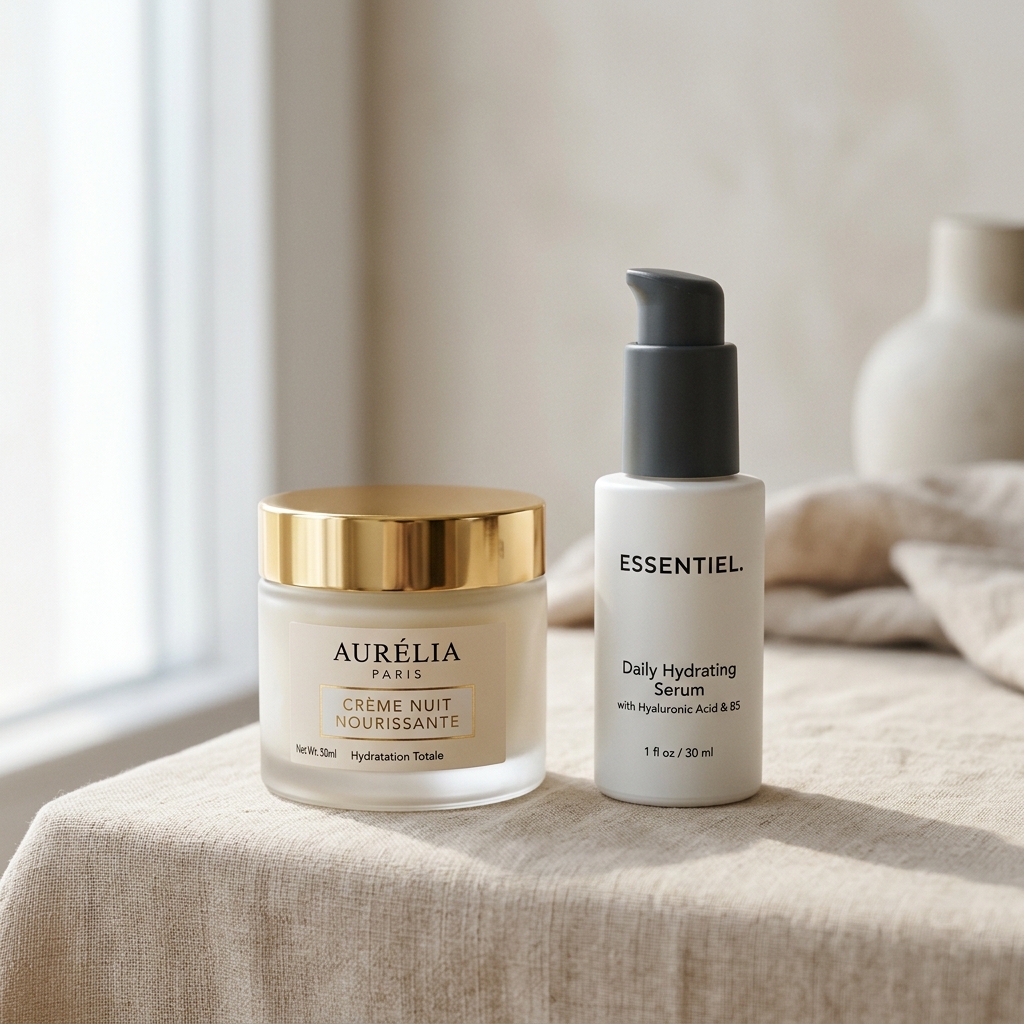
The price range in skincare is genuinely strange. Two moisturizers can sit on adjacent shelves — one at a modest price, one costing ten times more — with ingredient lists that look remarkably similar.
Sometimes that price gap reflects real formulation differences. Often it does not.
The problem with most “dupe” lists is that they go stale almost immediately. Brands reformulate, products get discontinued, and a recommendation that was accurate last year may be wrong today. A specific product list has a short shelf life.
What does not go stale is knowing how to identify a dupe yourself. This guide teaches you to read an ingredient list, understand what actually drives price, recognize which categories have genuine budget alternatives, and identify the few where paying more is justified.
The Assessment
A true dupe doesn’t just look similar – it shares the same active ingredients at functional percentages. Don’t be fooled by packaging that mimics luxury brands while offering a completely different formula.
Chemistry Matters
The percentage of an active ingredient is only half the story. The delivery system determines whether that active actually penetrates the stratum corneum.
What Actually Drives Skincare Pricing
Understanding where the money goes makes it much easier to spot where you can save.
Costs that affect the product
Active ingredient concentration. A serum with 15% L-ascorbic acid genuinely costs more to produce than one with 2%. This is a real cost difference that shows up in results.
Ingredient quality and stability. Stabilized, encapsulated, or patented ingredient forms cost more than basic versions. Encapsulated retinol, for instance, genuinely costs more than standard retinol and can be better tolerated.
Packaging. Airless pumps and opaque containers cost more than clear jars — and for light-sensitive ingredients like vitamin C and retinol, this is a meaningful functional difference, not just aesthetics.
Formulation complexity. A well-formulated product with appropriate pH, effective preservation, elegant texture, and proven stability requires more development work than a simple one.
Testing. Stability testing, safety assessment, and clinical trials cost money. Brands that conduct genuine efficacy studies have real expenses that show up in pricing.
Costs that do not affect the product
Marketing and advertising. Frequently the single largest cost in a premium skincare product. Campaigns, influencer partnerships, and brand ambassadors are all paid for by the price on the box.
Retail margin. Department store and luxury retail positioning carries substantially higher markups than pharmacy distribution.
Packaging aesthetics. Weighted glass, magnetic closures, and elaborate outer boxes contribute nothing to how a product performs.
Brand positioning. Some products are priced high specifically to signal luxury. This is a legitimate business strategy, but you are buying positioning rather than performance.
Fragrance and sensory experience. Sophisticated fragrance and elegant texture add genuine enjoyment — and for many people that has value — but they do not affect efficacy.
The practical implication: a substantial portion of what you pay for expensive skincare frequently has nothing to do with what the product does to your skin. That is exactly the gap dupes exploit.
How to Read an Ingredient List
This is the core skill. Once you have it, you no longer need anyone’s dupe list.
The basics of INCI
Skincare ingredients are listed using INCI (International Nomenclature of Cosmetic Ingredients), a standardized naming system. Two rules govern the order:
- Ingredients are listed in descending order by concentration — down to 1%
- Below 1%, ingredients can be listed in any order
That second rule matters enormously and is widely misunderstood.
Finding the 1% line
Most ingredients present at very low concentrations appear after a recognizable set of markers. Common indicators that you have crossed below 1% include:
- Preservatives: phenoxyethanol, sodium benzoate, potassium sorbate, ethylhexylglycerin
- Chelating agents: disodium EDTA, tetrasodium EDTA
- pH adjusters: sodium hydroxide, citric acid, triethanolamine
- Fragrance and colorants
- Xanthan gum and carbomer (thickeners, usually well under 1%)
Once you spot these, everything after them is present in trace amounts.
This is where marketing frequently misleads. A product advertising a prized botanical extract that appears after phenoxyethanol contains a negligible amount of it. The extract is on the label for the front of the box, not for your skin.
Comparing two products properly
Step 1: Compare the first five ingredients. These typically make up the bulk of the formula. If two products share a similar top five, their base is comparable.
Step 2: Locate the active ingredients in each. Where do they appear in the list? An active in position three means something very different from the same active in position twenty.
Step 3: Check for stated concentrations. Some brands disclose percentages. When they do, comparison becomes straightforward.
Step 4: Note the delivery system. Encapsulated, liposomal, or time-release forms genuinely behave differently from standard versions.
Step 5: Compare packaging. For unstable actives, this matters as much as the formula.
A Worked Example: Comparing Two Serums
Product A (Premium)
- Water, Niacinamide, Glycerin
- Butylene Glycol, Zinc PCA
- Sodium Hyaluronate, Panthenol
- Phenoxyethanol, Xanthan Gum
- Rare Botanical Extract, Fragrance
Product B (Budget)
- Water, Niacinamide, Glycerin
- Pentylene Glycol, Zinc PCA
- Sodium Hyaluronate
- Phenoxyethanol, Xanthan Gum
The Assessment
The functional ingredients are nearly identical. Product A’s rare botanical extract appears after the preservative (trace amounts). Its fragrance adds sensory appeal but no benefit.
Conclusion: These are functionally comparable products. The price difference reflects branding, fragrance, and a trace ingredient.
Some categories have excellent budget alternatives because the formulation science is well-established and unpatented.
Basic moisturizers
The ingredients that make a moisturizer work — glycerin, ceramides, fatty alcohols, squalane, petrolatum, dimethicone — are inexpensive, widely available, and thoroughly understood. Excellent moisturizers exist at modest prices, and price correlates poorly with performance in this category.
Niacinamide serums
Niacinamide is stable, inexpensive, and effective at 4-5%. There is very little a premium brand can do with niacinamide that a budget brand cannot. This is one of the strongest dupe categories.
Hyaluronic acid serums
Hyaluronic acid is a commodity ingredient. Molecular weight variation exists and multi-weight formulas have some rationale, but the difference between a modest and premium hyaluronic acid serum is usually small.
Cleansers
A cleanser is on your skin for under a minute before being rinsed off. Beyond being gentle and effective at removing debris, there is limited room for premium performance. Expensive cleansers are among the least justifiable purchases in skincare.
Chemical exfoliants
Glycolic acid, salicylic acid, and lactic acid are inexpensive, well-characterized ingredients. What matters is concentration and pH — both of which budget brands manage perfectly well.
Basic retinol
Standard retinol at disclosed concentrations is available affordably. Where premium formulations sometimes justify their price is in encapsulation and supporting barrier ingredients, which can improve tolerability.
Where Paying More Can Be Justified
Being fair about this matters, because “everything expensive is a ripoff” is as inaccurate as the reverse.
Sunscreen
This is the clearest case. Sunscreen performance depends on photostable filter systems, even film formation, and — critically — whether you will actually use it every day.
Newer-generation UV filters available in some markets offer better protection profiles and more elegant textures than older filters. And a sunscreen you enjoy wearing daily protects you far better than a cheaper one sitting unused because it feels unpleasant.
This is the product where paying more for a formulation you will actually use consistently is a genuinely rational decision.
Stabilized vitamin C
L-ascorbic acid is notoriously unstable. Formulations that maintain potency require careful pH control, supporting antioxidants, and protective packaging. Cheap vitamin C serums in clear droppers frequently oxidize before you finish them, which makes them poor value regardless of price.
Encapsulated or time-release actives
Delivery technology is a real formulation difference. Encapsulated retinol releasing gradually is not marketing language — it typically reduces irritation meaningfully.
Genuinely patented complexes
Some brands do fund original research and develop proprietary ingredients. Whether the premium is proportionate is a separate question, but the underlying work is real.
Prescription products
Tretinoin, azelaic acid at prescription strength, and prescription-strength treatments have no over-the-counter dupe. There is no ingredient list workaround for prescription-only actives.
Warning Signs That Something Is Not a Real Dupe
Different concentrations of the same active. A 2% niacinamide serum is not a dupe for a 10% one, even if the ingredient lists look similar.
The active appears far down the list. If the ingredient you want sits after the preservative, it is present in trace amounts.
Poor packaging for an unstable active. Vitamin C or retinol in a clear jar will degrade regardless of the formula.
Similar ingredients, very different texture. Texture differences often reflect different concentrations of functional ingredients, not just aesthetics.
Marketing claims without disclosure. Brands confident in their formulation usually state concentrations. Vague phrasing like “infused with” or “powered by” often signals a small amount.
Counterfeit products. Steeply discounted premium products from unauthorized sellers are frequently counterfeit, sometimes with genuinely unsafe ingredients. A dupe is a different brand offering a similar formula — not a suspiciously cheap version of the original.
A Practical Method for Finding Your Own Dupes
Step 1: Identify what you actually liked. Was it the active ingredient, the texture, the hydration, or the absence of irritation? Being specific narrows the search considerably.
Step 2: Find the key ingredient and its position. Look up the original product’s ingredient list and note where the relevant active appears.
Step 3: Search for that ingredient at that concentration. Look for budget products that disclose their percentages.
Step 4: Compare the first five ingredients. A similar base suggests a similar experience.
Step 5: Check packaging suitability. Particularly important for vitamin C, retinol, and peptides.
Step 6: Test properly. Patch test, then use consistently for eight to twelve weeks before judging. Switching after two weeks tells you nothing.
Step 7: Change one product at a time. Replacing your entire routine simultaneously makes it impossible to identify what worked or what caused a reaction.
The Contract Manufacturing Reality
One detail worth knowing: many skincare brands do not manufacture their own products. They work with contract manufacturers who produce formulations for multiple brands.
This means two products from very different price tiers can sometimes originate from the same facility using similar base formulations, with differences in active concentration, fragrance, and packaging.
The caveat: this is not universal, and it does not mean every expensive product has an identical cheap twin. Brands do commission genuinely different formulations. But it explains why ingredient lists sometimes look strikingly similar across price points.
Building a Complete Routine on a Budget
Knowing where to save is more useful in the context of an actual routine. Here is how the principles above translate into practical allocation.
The three products that matter most
If your budget is genuinely limited, these three deliver the majority of the benefit:
1. A gentle cleanser. Save here. An effective, non-stripping cleanser costs very little. What you need is a formula that removes debris without leaving your skin tight — which is a low bar that inexpensive products clear routinely.
2. A moisturizer with barrier-supporting ingredients. Save here too. Look for glycerin, ceramides, fatty alcohols, or squalane in the first several ingredients. Excellent options exist at modest prices across every pharmacy.
3. A sunscreen you will wear every day. This is where to allocate the most. Not because expensive sunscreen protects better in a laboratory, but because texture and finish determine whether you use it consistently — and consistency is what actually protects your skin.
These three, used daily, outperform an elaborate routine used sporadically.
Adding actives without overspending
Once the basics are covered, one active at a time:
Start with niacinamide if you have oily, acne-prone, or reactive skin. It is inexpensive, well-tolerated, and addresses multiple concerns. There is minimal reason to buy an expensive niacinamide product.
Add a retinoid if aging or texture is your focus. Basic retinol at a disclosed concentration is affordable. Consider spending more only if standard retinol has irritated you, in which case encapsulated forms may be worth the premium.
Add vitamin C if pigmentation or dullness is the concern. This is the category where being too cheap backfires, since poorly packaged formulas oxidize before you finish them. A mid-range product in an airless pump is better value than a bargain one in a clear dropper.
Add a chemical exfoliant two to three times weekly if texture is a concern. Save here — acids are inexpensive and what matters is concentration and pH, which budget brands handle well.
What to skip entirely
Toners, unless you have a specific reason for one. They are almost always optional.
Eye creams, in most cases. A gentle facial moisturizer extended to the eye area works for most people. Buy one only if you have a specific concern a general moisturizer is not addressing.
Sheet masks and treatment masks, if budget is tight. Their effects are temporary and they do not meaningfully advance long-term results.
Multiple products targeting the same concern. Three brightening products do not brighten three times faster. They increase cost and irritation risk while your skin can only respond at its own pace.
Anything you are buying because of a trend rather than a concern you actually have.
Quick Reference: Where to Save and Where to Spend
| Category | Verdict | Reasoning |
|---|---|---|
| Cleanser | Save | On skin under a minute; limited room for premium performance |
| Basic moisturizer | Save | Effective ingredients are inexpensive and well-established |
| Niacinamide serum | Save | Stable, cheap ingredient; 4-5% works regardless of brand |
| Hyaluronic acid serum | Save | Commodity ingredient with minimal differentiation |
| Chemical exfoliant | Save | Concentration and pH matter; both are easy to formulate |
| Basic retinol | Save | Standard retinol is affordable at disclosed concentrations |
| Toner | Skip or save | Optional for most routines |
| Eye cream | Skip or save | Facial moisturizer usually suffices |
| Face masks | Skip | Temporary effects, limited long-term contribution |
| Vitamin C serum | Mid-range | Stability and packaging genuinely matter here |
| Encapsulated retinol | Spend if needed | Real tolerability advantage for sensitive skin |
| Sunscreen | Spend | Daily use depends on texture; consistency is the whole point |
| Prescription actives | No alternative | Tretinoin and similar have no over-the-counter equivalent |
This is a general framework rather than a rule. A well-formulated budget vitamin C in good packaging beats a poorly formulated expensive one, and an expensive sunscreen you dislike wearing protects you less than a cheap one you apply every morning.
Frequently Asked Questions
Are expensive skincare products worth it? Sometimes. For sunscreen, stabilized vitamin C, and encapsulated actives, higher prices can reflect genuine formulation advantages. For basic moisturizers, cleansers, niacinamide, and hyaluronic acid, the correlation between price and performance is weak.
How do I know if two products are really dupes? Compare the first five ingredients, locate the active in each list, check stated concentrations, and assess packaging. If the functional ingredients match in position and concentration, and the packaging protects them equally, they are likely comparable.
Do dupes work as well as the original? Often yes for well-established formulation categories. Less reliably for products relying on proprietary technology or specific delivery systems.
Why do ingredient lists look identical but products feel different? Ingredients below 1% can be listed in any order, and concentration differences within the same ingredients change texture substantially. Manufacturing process also affects final feel.
Is the ingredient list the only thing that matters? No. Concentration, pH, formulation quality, stability, and packaging all matter. The ingredient list is the most accessible information available to consumers, not a complete picture.
Are cheap products lower quality? Not necessarily. Many pharmacy brands produce well-formulated products with disclosed concentrations and appropriate packaging. Price reflects distribution, marketing, and positioning as much as formulation.
Should I dupe my entire routine? Consider where the money matters. Saving on cleanser and basic moisturizer while investing in sunscreen and a stable vitamin C is a more sensible allocation than treating every category the same way.
How can I tell if a product is counterfeit? Buy from authorized retailers. Be suspicious of steep discounts on premium products from marketplace sellers. Check packaging quality, batch codes, and texture against the authentic product if you have used it before.
The Right Order to Apply Skincare Products
Layering your skincare incorrectly can render active ingredients useless. Learn the correct step-by-step order.
Read More →The Bottom Line
The most useful skill in skincare shopping is not memorizing dupe lists — those go out of date within months. It is being able to read an ingredient list, identify where the actives sit, and assess whether packaging suits the formula.
Where to save: cleansers, basic moisturizers, niacinamide, hyaluronic acid, chemical exfoliants, basic retinol.
Where to consider spending: sunscreen you will use daily, stabilized vitamin C, encapsulated actives, and anything requiring specialized delivery technology.
What to remember: ingredient position tells you more than front-label marketing. Anything appearing after the preservative is present in trace amounts. Packaging is part of the formula for unstable ingredients. And a product you use consistently for three months will outperform an expensive one you abandon after two weeks, every time.
This article is for informational purposes only and does not constitute medical advice. Product formulations change over time — always check current ingredient lists before purchasing. If you have a specific skin condition, consult a board-certified dermatologist.
Was this article helpful?

Anam Ahsan
Skincare Enthusiast & BloggerHi, I'm Anam! I'm a beauty and skincare enthusiast who loves testing new products and sharing honest, personal reviews. I document my skincare journey and share what works for my skin so you can make better choices for your routine.



Comments (24)
Hannah W.
2 days agoThis guide saved me so much money — went with the budget pick and honestly can't tell the difference from serums twice the price!
Anam Ahsan Author
1 day agoSo glad it worked out for you, Hannah! That's exactly the kind of result we hoped readers would see.