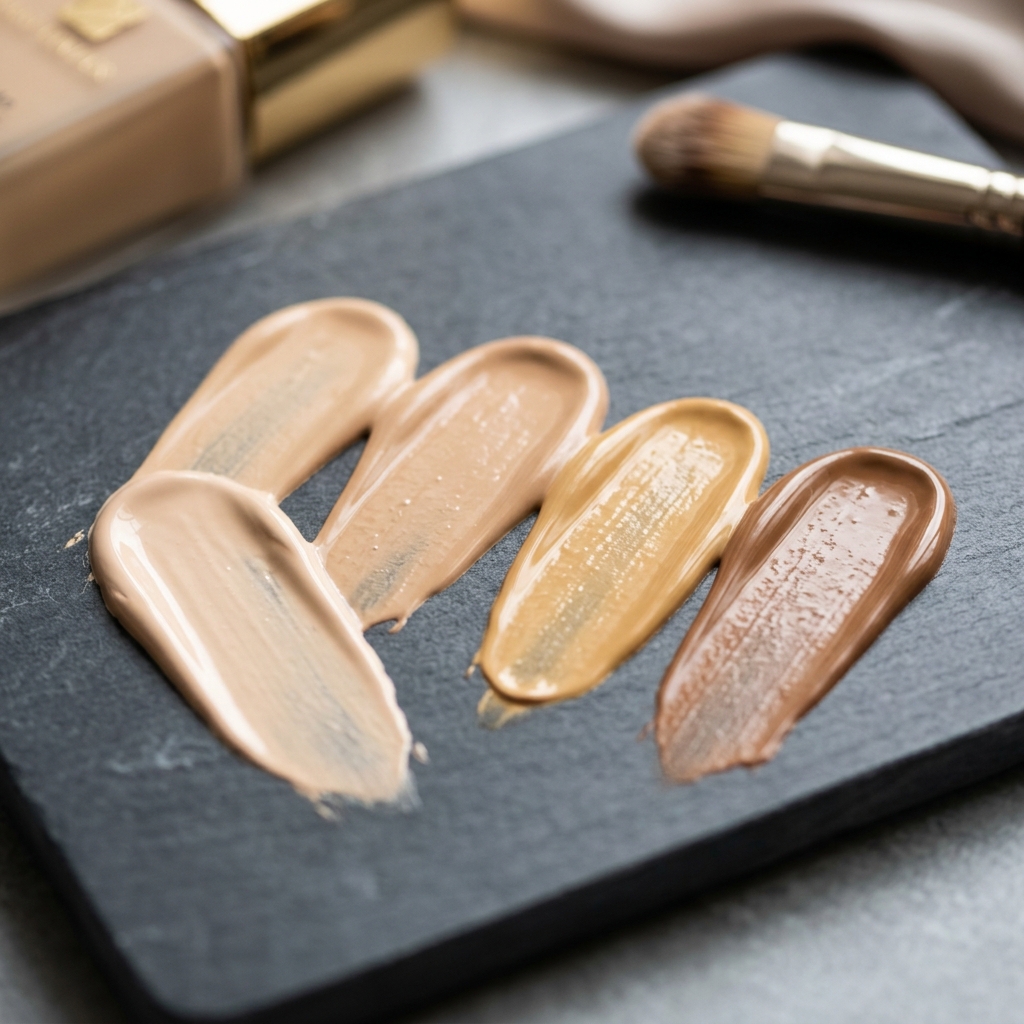
You apply your foundation in the morning and the shade looks right. Three hours later you glance in a mirror and your face is noticeably darker, more orange, or oddly mismatched with your neck.
This is commonly called foundation oxidation, and it is one of the most frequently searched makeup frustrations. It is also a term that gets applied to several different problems with different causes — which is why the standard advice often does not work.
This guide explains what actually happens chemically, what gets misdiagnosed as oxidation, and the specific fixes for each underlying cause.
The Golden Rule
If your foundation looks wrong immediately, it’s a shade mismatch. If it changes colour progressively over several hours, that is oxidation or sebum breakdown.
What to do
- Prep skin properly: Use an oil-free primer to create a barrier.
- Set your makeup: Use a translucent setting powder.
- Blot excess oil: Use blotting papers throughout the day.
- Color match smartly: Consider buying half a shade lighter.
What to avoid
- Heavy facial oils: Avoid applying them right before makeup.
- Touching your face: This transfers oils that cause oxidation.
- Expired foundation: Older formulas are much more likely to oxidize.
What Oxidation Actually Means
In chemistry, oxidation describes a reaction where a substance loses electrons, typically through exposure to oxygen. In cosmetics, the relevant version involves pigments and other formula components reacting with air, skin oils, and skin chemistry after application.
The pigments most commonly involved are iron oxides — the red, yellow, and black pigments that create foundation shades. When these interact with sebum and air over several hours, the apparent shade can shift, usually toward warmer, more orange or darker tones.
Genuine oxidation is real, but it accounts for fewer cases than the term’s popularity suggests. Several other phenomena produce a very similar visible result.
What Is Often Mistaken for Oxidation
Getting the diagnosis right matters, because the fixes differ substantially.
1. Wrong shade match under different lighting
This is probably the most common misdiagnosis.
Foundation matched under store lighting — usually cool-toned fluorescent or bright LED — frequently looks different in daylight. Your foundation did not change; the light did.
How to tell: if the foundation looks wrong immediately in natural light, but does not continue changing throughout the day, this is a shade-matching problem, not oxidation.
The fix: always check a swatch in natural daylight before buying. Test along the jawline, not the hand or wrist, and let it sit for at least ten minutes.
2. Sebum breaking down the formula
Your skin’s natural oils dissolve and disperse foundation over time. As the formula thins and pigment concentrates unevenly, the shade can appear deeper and warmer.
How to tell: the change is worse in oily areas — typically the T-zone — and correlates with how oily your skin gets during the day.
The fix: oil control, which we cover below.
3. Sheer application appearing darker as it settles
Foundations often apply sheer and then appear more pigmented as they dry down and set. What looks like darkening is actually the product reaching its true opacity.
How to tell: the change happens within the first ten to twenty minutes, then stabilizes.
The fix: wait five to ten minutes after applying before assessing the shade, and before deciding to add more product.
4. Undertone mismatch becoming visible
A foundation slightly too warm or too golden for your undertone can look acceptable initially and increasingly wrong as it settles and your skin’s own tone shows through.
How to tell: the foundation looks orange or yellow rather than simply darker.
The fix: this is an undertone problem, not an oxidation problem. Look for a neutral or cool-leaning shade in the same depth.
5. Product interaction
Certain skincare ingredients can genuinely alter foundation appearance. Benzoyl peroxide can cause discolouration. Some sunscreens interact with pigments. Silicone-based primers under water-based foundations can cause separation that looks like patchy darkening.
How to tell: the problem appeared after you changed a skincare product.
The fix: identify and separate the conflicting products.
Why Genuine Oxidation Happens
When it is actually oxidation, several factors are usually involved.
Skin pH
Skin surface pH sits naturally around 4.7 to 5.5, and it varies between individuals and across the day. More acidic skin can accelerate pigment shift in some formulations.
This is largely why the same foundation oxidizes noticeably on one person and not at all on another — it is not the product alone, but the interaction between the product and that specific skin.
Sebum production
Higher sebum output means more oil interacting with pigments, and faster formula breakdown. This is why oxidation is disproportionately reported by people with oily skin.
Formula type
Water-based and oil-free foundations, particularly those with high pigment loads, tend to be more prone to visible shifting than silicone-heavy or long-wear formulations.
Air exposure
Foundation left uncovered in an open jar or with a loose cap oxidizes in the container itself. A foundation that has changed colour in the bottle will apply in that changed shade.
Heat and humidity
Both accelerate sebum production and formula breakdown, which is why oxidation complaints spike in summer.
How to Prevent Foundation Oxidation
Prep the skin properly
Use a lightweight, oil-free moisturizer and let it absorb fully — five to ten minutes — before applying anything else. Applying foundation over unabsorbed moisturizer causes patchiness and faster breakdown.
Consider a mattifying or oil-control primer if you have oily skin. Look for silica, dimethicone, or clay-based formulations.
Do not skip moisturizer entirely. Dehydrated skin frequently overproduces oil in response, which makes the problem worse.
Choose your foundation strategically
If your foundation reliably oxidizes: buy half a shade lighter, or a shade with a cooler or more neutral undertone. This works because you are compensating for a predictable shift.
Look for long-wear or transfer-resistant formulations. These are typically more stable, though often less comfortable for dry skin.
Silicone-based foundations tend to be more resistant to sebum breakdown than water-based ones.
Mineral and powder foundations oxidize less because there is less liquid emulsion to break down.
Apply in thin layers
Heavy application does not improve coverage proportionally, and thick layers break down more visibly. Apply a thin layer, let it set, then build only where needed.
Set with powder
Setting powder absorbs surface oil before it can interact with foundation pigments. Focus on the T-zone and anywhere you get oily.
Translucent powder works for most people. Loose powder generally provides better oil absorption than pressed.
Control oil throughout the day
Blotting papers remove surface oil without disturbing makeup. Press rather than rub.
Avoid touching your face. This is a genuinely underrated factor — hands transfer oil and disturb the foundation film.
Store it properly
Keep the cap tightly closed, store away from heat and direct sunlight, and prefer pump packaging over open jars. If your foundation has visibly changed colour in the bottle, it has oxidized in the container and should be replaced.
Skincare Ingredients That Can Cause Problems
Benzoyl peroxide can cause discolouration and bleaching effects on both makeup and fabric. If you use it, apply at night and cleanse thoroughly in the morning.
High-concentration vitamin C — particularly if it has oxidized itself — can contribute to a warm cast under foundation. Check whether your serum has turned orange.
Certain chemical sunscreen filters can interact with some foundation formulas, causing pilling or shade shift. Allowing sunscreen to set fully before applying foundation usually resolves this.
Silicone primers under water-based foundation frequently separate, producing patchiness that reads as uneven darkening. Match your primer base to your foundation base — silicone with silicone, water with water.
Heavy facial oils applied before makeup break down foundation quickly. If you use them, apply at night rather than in the morning.
Pro Tip
Always match your shade in natural daylight. Store lighting is usually cool-toned and can make warm-toned foundations look completely different until you walk outside.
Shade Matching Properly
Since mismatched shade is so frequently mistaken for oxidation, it is worth covering the method properly.
Test on the jawline, blending down toward the neck. Hand and wrist skin is a different tone from facial skin.
Test at least three shades — your suspected match plus one lighter and one deeper.
Wait ten to fifteen minutes before evaluating. Foundations settle and change appearance during this period.
Check in natural daylight. Walk outside or stand by a window. Store lighting is unreliable.
Match to your neck and chest, not your face. Facial skin is often slightly different in tone, and matching the neck avoids an obvious line at the jaw.
Consider seasonal variation. Most people’s skin tone shifts across the year. Many people need two shades, or a lighter shade mixed with a deeper one.
Understanding undertone
Cool — pink, red, or bluish undertones Warm — yellow, golden, or peachy undertones Neutral — a balance of both Olive — a green-grey undertone, frequently mismatched because many ranges lack genuinely olive shades
A quick check: in natural light, look at the veins on your inner wrist. Bluish or purple suggests cool, greenish suggests warm, a mix suggests neutral. This is a rough guide rather than a definitive test.
If your foundation looks orange rather than simply darker, the issue is almost certainly undertone rather than oxidation. Look for a neutral or cool version in the same depth.
Troubleshooting by Symptom
| What you observe | Likely cause | What to try |
|---|---|---|
| Darker within 10-20 min, then stable | Normal dry-down | Wait before assessing shade |
| Progressively darker over hours | Genuine oxidation or sebum breakdown | Lighter shade, primer, setting powder |
| Orange rather than dark | Undertone mismatch | Neutral or cool shade, same depth |
| Only in T-zone | Sebum breakdown | Oil control, mattifying primer, powder |
| Patchy and uneven | Product incompatibility | Match primer and foundation bases |
| Wrong from the moment applied | Shade mismatch | Rematch in natural daylight |
| Changed colour in the bottle | Product oxidized in container | Replace; store sealed and cool |
| Worse in summer only | Heat and humidity | Lighter formulation seasonally |
Common Mistake
Going more than half a shade lighter to compensate for oxidation usually produces a visible mismatch with your neck for the first several hours, which is a worse outcome than the original problem.
What Does Not Work
Applying a much lighter shade to compensate. Going more than half a shade lighter usually produces a visible mismatch with your neck for the first several hours, which is a worse outcome than the original problem.
Layering more foundation. Thicker application breaks down faster and more visibly.
Skipping moisturizer to reduce oil. Dehydrated skin often produces more oil in compensation.
Setting spray alone. Setting sprays improve wear and reduce powderiness but do not meaningfully prevent oxidation. Powder is more effective for oil absorption.
Blaming the brand exclusively. Oxidation is an interaction between formula and skin chemistry. The same product genuinely behaves differently on different people, which is why reviews are so inconsistent on this specific issue.
Application Technique Matters More Than Most People Realize
How you apply foundation affects how it wears, and some habits accelerate breakdown considerably.
Tools
Damp beauty sponge — sheers out the formula and presses it into the skin, which generally improves longevity. The damp application also dilutes slightly, so the initial shade may look lighter than it will settle to. Squeeze out thoroughly; a soaking sponge causes patchiness.
Synthetic brush — provides more coverage and control. Buff in circular motions rather than dragging, which streaks the formula.
Fingers — warmth helps blend, but hands transfer oil onto the skin, which is counterproductive if oxidation is your concern. Use fingers for spot application rather than the full face.
Whatever you use, keep it clean. Sponges and brushes accumulate oil and bacteria. A dirty applicator reintroduces oil onto freshly cleansed skin, and sponges in particular should be washed after every few uses.
Sequence and timing
The order and timing of your morning routine affects foundation wear noticeably:
- Moisturizer — wait five to ten minutes for full absorption
- Sunscreen — wait a further five minutes for it to set into a film
- Primer — a thin layer, focused where you need it rather than all over
- Foundation — thin layer, allow thirty seconds to a minute to set
- Build only where coverage is needed
- Powder — press rather than sweep, focusing on oily areas
Rushing these steps is one of the more common causes of pilling, patchiness, and rapid breakdown. The waiting is genuinely functional rather than fussy.
The under-application principle
Most people apply more foundation than they need. Thin layers set properly, look more like skin, and break down less visibly. Heavy application creates a film that separates as sebum accumulates beneath it.
If you need more coverage in specific areas, build there rather than increasing the amount across your whole face.
Choosing a Formula for Oxidation-Prone Skin
| Formula type | Oxidation risk | Best for |
|---|---|---|
| Powder / mineral | Very low | Oily skin, hot climates |
| Silicone-based long-wear | Low | Oily skin, long days |
| Cream / stick | Moderate | Dry to normal skin |
| Water-based liquid | Moderate to high | Dry skin, sheer coverage |
| Oil-based / hydrating | Higher | Very dry skin, short wear |
| Tinted moisturizer | Moderate | Minimal coverage days |
If oxidation is a recurring problem for you, the practical order to try is: powder or mineral foundation first, then a silicone-based long-wear liquid, then a cream formulation. Water-based and hydrating formulas are the most likely to shift, particularly on oily skin in warm conditions.
A caveat worth stating: long-wear and mattifying formulations are often less comfortable on dry or mature skin, where they can emphasize texture and fine lines. The trade-off between oxidation resistance and comfort is real, and worth weighing rather than optimizing for one factor alone.
Oxidation by Skin Type
The same fixes do not suit everyone, because the underlying cause differs by skin type.
Oily skin. Sebum is almost always the dominant factor here rather than true pigment oxidation. Prioritize oil control: a mattifying primer, a silicone-based or powder foundation, generous setting powder through the T-zone, and blotting papers during the day. Do not skip moisturizer — use a lightweight gel formulation instead.
Dry skin. Genuine oxidation is less common, and apparent darkening more often reflects foundation clinging to dry patches and concentrating unevenly. The fix is hydration rather than oil control: exfoliate gently once or twice weekly, moisturize well, and avoid mattifying formulas that emphasize dryness. Powder should be used sparingly and only where needed.
Combination skin. Zone-specific treatment works better than a single approach. Mattifying primer and powder on the T-zone, hydrating products on the cheeks. This is more effort than a uniform routine but resolves the mismatch most combination-skin users experience.
Sensitive skin. Be cautious about layering primers, long-wear foundations, and heavy powders, which can collectively cause irritation. Mineral foundation is often the best option — it oxidizes minimally and tends to be well tolerated.
Mature skin. Long-wear and mattifying formulas frequently settle into fine lines. A lighter application of a hydrating foundation, set only where oil appears, usually looks better than optimizing purely for oxidation resistance.
Acne-prone skin. Look for non-comedogenic formulations, and be mindful that benzoyl peroxide in your routine can cause genuine discolouration. Apply acne treatments at night and cleanse thoroughly before morning makeup.
Frequently Asked Questions
Why does my foundation turn orange after a few hours? An orange cast usually indicates an undertone mismatch rather than true oxidation. If the foundation is too warm or golden for your skin, that warmth becomes more visible as it settles and interacts with your skin’s own tone.
Does foundation oxidation damage my skin? No. It is a cosmetic appearance issue, not a skin health concern. However, foundation that has oxidized in the bottle may also have degraded preservatives, so replacing old products is sensible.
Should I buy a lighter shade if my foundation oxidizes? Half a shade lighter is a reasonable adjustment if the shift is consistent and predictable. Going significantly lighter creates a mismatch for the first several hours.
Do all foundations oxidize? No. Powder and mineral foundations are considerably less prone to it. Silicone-based and long-wear formulations tend to be more stable than water-based ones.
Does primer stop oxidation? An oil-control primer helps by reducing sebum contact with foundation pigments. It does not prevent pigment-air interaction, but for most people sebum is the larger factor.
Why does the same foundation oxidize on me but not on my friend? Skin pH, sebum production, and skincare routines all vary. Foundation performance is an interaction between formula and individual skin chemistry, not a fixed property of the product.
Can my skincare cause foundation to change colour? Yes. Benzoyl peroxide, oxidized vitamin C, some sunscreen filters, and incompatible primer bases can all affect foundation appearance.
How do I know if my foundation has expired? Check for colour change in the bottle, separation that does not resolve when shaken, a changed smell, or altered texture. Most liquid foundations last six to twelve months after opening.
Is oxidation worse in summer? Generally yes. Heat and humidity increase sebum production and accelerate formula breakdown. Many people find a lighter or more mattifying formulation works better in warm months.
The Expert-Approved Minimalist Skincare Routine
How to build an effective three-step skincare routine that covers all your bases.
Read More →The Bottom Line
Foundation oxidation is real, but the term has become a catch-all for several distinct problems — shade mismatch, sebum breakdown, undertone error, product interaction, and normal dry-down among them.
How to work out which one you have:
- Wrong immediately ? shade mismatch
- Darker in 10-20 minutes, then stable ? normal dry-down
- Progressively darker over hours ? oxidation or sebum breakdown
- Orange rather than dark ? undertone mismatch
- Only in the T-zone ? sebum
- Started after a skincare change ? product interaction
The fixes that help most:
- Match shade in natural daylight, on the jawline, after ten minutes
- Let skincare absorb fully before applying foundation
- Use an oil-control primer if you have oily skin
- Apply thin layers and build only where needed
- Set with translucent powder, particularly through the T-zone
- Store foundation sealed, cool, and out of direct light
And if a foundation consistently misbehaves on your skin despite all of this, it may simply not suit your skin chemistry. That is not a failure of technique — some formulas and some skin do not get along, and finding a better-matched product is a legitimate solution.
This article is for informational purposes only. If you experience irritation, breakouts, or a reaction to any cosmetic product, discontinue use and consult a skincare professional.
Was this article helpful?

Anam Ahsan
Skincare Enthusiast & BloggerHi, I'm Anam! I'm a beauty and skincare enthusiast who loves testing new products and sharing honest, personal reviews. I document my skincare journey and share what works for my skin so you can make better choices for your routine.



Comments (24)
Hannah W.
2 days agoThis guide saved me so much money — went with the budget pick and honestly can't tell the difference from serums twice the price!
Anam Ahsan Author
1 day agoSo glad it worked out for you, Hannah! That's exactly the kind of result we hoped readers would see.