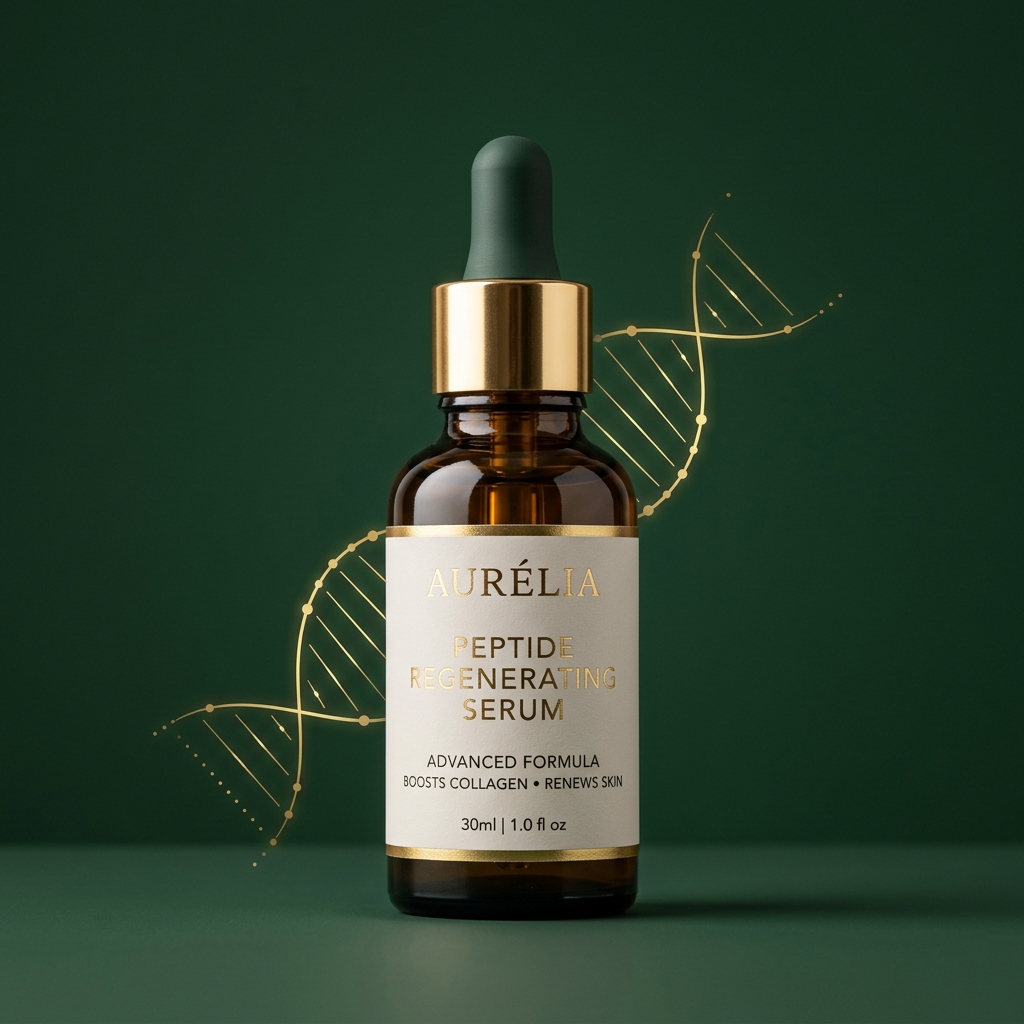
Peptides have become one of the most heavily marketed categories in skincare. They appear in serums, creams, eye products, and increasingly in products positioned around “skin longevity.” The language surrounding them tends toward the technical — signal peptides, matrix support, cellular communication — which lends an impression of scientific authority.
The reality is more nuanced than either the marketing or the skepticism suggests.
Peptides are not a scam. The underlying biology is real, and some have reasonable supporting research. But they are also not a retinol replacement, the evidence base is considerably thinner than for established actives, and a meaningful proportion of peptide marketing rests on plausibility rather than proof.
This guide covers what peptides actually are, what the different types do, what the evidence supports, and whether they deserve a place in your routine.
Key Takeaway
Peptides are genuinely useful supporting ingredients — not magic anti-aging solutions. They work best alongside proven actives like retinoids and sunscreen, not as replacements for them.
What Peptides Actually Are
A peptide is a short chain of amino acids — the same building blocks that make up proteins, just in much shorter sequences.
The relationship is straightforward: amino acids link together to form peptides. Longer chains of peptides form proteins. Collagen, elastin, and keratin — the structural proteins in your skin — are all built from amino acids.
Why this matters for skincare: when collagen breaks down, it fragments into peptides. Your skin can interpret the presence of certain peptide fragments as a signal that damage has occurred — and respond by producing more collagen.
This is the central premise of peptide skincare: applying specific peptides topically may signal the skin to behave as though repair is needed, prompting collagen production without actual damage having occurred.
It is a genuinely elegant idea. The question is how well it translates from laboratory to bathroom shelf.
What to do
- Layer peptides under moisturizer: They penetrate best on cleansed skin before occlusive layers.
- Combine with retinoids: Peptides can help offset dryness and irritation from retinoid use.
- Look for multi-peptide formulas: Different peptide types address different concerns simultaneously.
What to avoid
- Using peptides instead of retinoids: Peptides support skin — they do not replicate retinoid results.
- Mixing with strong acids: AHAs can break down peptide bonds; use in separate routines.
- Expecting dramatic short-term change: Peptide benefits build over months, not days.
The Four Types of Peptides
Peptides in skincare are typically grouped by mechanism.
1. Signal peptides
What they do: communicate with fibroblasts, the cells that produce collagen and elastin, prompting increased production.
Common examples: palmitoyl pentapeptide-4 (often marketed as Matrixyl), palmitoyl tripeptide-1, palmitoyl tripeptide-5.
Evidence: this is the most-studied category, with several studies suggesting improvements in fine lines and skin firmness. Study sizes are generally small, and many are funded by ingredient manufacturers — which does not invalidate them, but does warrant a degree of caution.
Honest assessment: the most promising peptide category, with effects that appear real but modest.
2. Carrier peptides
What they do: deliver trace elements — most commonly copper — to the skin, where they participate in enzymatic processes involved in wound healing and collagen synthesis.
Common example: GHK-Cu, widely known as copper peptide.
Evidence: copper peptides have research support in wound healing contexts, which is where much of the original work was done. Cosmetic anti-aging evidence is less robust but not absent.
Honest assessment: genuinely interesting, with a plausible mechanism and some supporting data. Frequently overhyped in marketing relative to what the evidence establishes.
3. Neurotransmitter-inhibiting peptides
What they do: aim to reduce muscle contraction at the surface level, softening the appearance of expression lines. Marketing frequently describes these as “Botox-like.”
Common example: acetyl hexapeptide-8, widely marketed as Argireline.
Evidence: some studies report reductions in wrinkle depth. However, the comparison to botulinum toxin is misleading — injectable treatments act directly on the neuromuscular junction, while topical peptides must cross the stratum corneum and reach muscle tissue, which is a substantially harder proposition.
Honest assessment: the most oversold peptide category. Effects, where present, are subtle and not comparable to injectables despite the marketing framing.
4. Enzyme-inhibiting peptides
What they do: inhibit matrix metalloproteinases — enzymes that break down collagen — thereby slowing collagen degradation rather than increasing production.
Common examples: soy peptides, rice peptides, various plant-derived sequences.
Evidence: the least studied of the four categories in cosmetic contexts.
Honest assessment: plausible mechanism, limited proof.
The Delivery Problem
This is the question that determines whether peptide skincare works, and it is the one marketing consistently avoids.
For a peptide to influence collagen production, it must reach the dermis — the layer beneath the epidermis where fibroblasts live.
The stratum corneum is designed to prevent exactly that. It is a barrier evolved to keep external substances out.
Molecular size is the constraint. A widely cited rule of thumb in skincare science holds that molecules above roughly 500 daltons penetrate the skin poorly. Many peptides used in skincare exceed this — some considerably.
How formulators address this:
- Palmitoyl attachment — adding a fatty acid chain, which is why so many peptide names begin with “palmitoyl.” This improves lipid solubility and penetration.
- Shorter sequences — tripeptides and pentapeptides are smaller than longer chains.
- Delivery systems — liposomes, encapsulation, and penetration enhancers.
- Supporting formulation — some ingredients temporarily increase permeability.
Where this leaves things: peptides can penetrate to some degree, particularly when formulated thoughtfully. Whether enough reaches the dermis in a biologically meaningful quantity is where evidence becomes thin and confident marketing claims outrun the data.
What the Evidence Actually Supports
Being clear about the tiers of confidence is more useful than a single verdict.
Reasonably well supported
- Modest improvement in fine lines with sustained use of signal peptides
- Improved skin hydration and surface smoothness — though this may reflect the formulation base as much as the peptides
- Wound healing support from copper peptides, in clinical rather than cosmetic contexts
- Excellent tolerability — peptides are among the gentlest actives available
Plausible but not established
- Meaningful increases in dermal collagen from topical application
- Long-term structural change to skin architecture
- Comparable results to retinoids
Not supported
- Effects comparable to injectable treatments
- Reversal of established deep wrinkles
- Dramatic firming or lifting from topical application alone
The fair summary: peptides likely produce real but modest improvements, primarily in surface appearance and fine lines, with excellent tolerability. They do not match retinoids for structural change, and marketing that implies otherwise is overreaching.
Peptides vs. Established Actives
| Peptides | Retinoids | Vitamin C | Niacinamide | |
|---|---|---|---|---|
| Evidence strength | Emerging | Extensive | Strong | Strong |
| Collagen support | Plausible, modest | Well established | Well established | Minimal |
| Irritation risk | Very low | Moderate to high | Moderate | Very low |
| Time to results | 12+ weeks | 12+ weeks | 8-12 weeks | 8-12 weeks |
| Pigmentation | Minimal | Good | Very good | Good |
| Cost | Often high | Wide range | Wide range | Low |
| Pregnancy | Generally considered suitable | Avoided | Generally suitable | Generally suitable |
The practical conclusion: if your goal is anti-aging and your skin tolerates a retinoid, a retinoid should be your foundation. Peptides are a reasonable addition, or a reasonable primary option for those who cannot tolerate retinoids.
Who Peptides Actually Suit
Sensitive skin that cannot tolerate retinoids. This is the strongest case. Peptides deliver some collagen-related benefit with essentially no irritation.
Anyone already using a retinoid. Peptides layer well and may complement retinoid action without adding irritation.
During pregnancy. Generally considered suitable when retinoids are off the table, though as always it is best to exercise caution.
Post-procedure recovery. Copper peptides in particular have wound-healing research behind them, and gentle formulations suit recovering skin.
Those prioritizing prevention over correction. Peptides suit a maintenance approach rather than an interventional one.
Around the eyes. The gentleness matters more here, where skin is thin and reactive.
Who Can Skip Them
Anyone whose main concern is acne or pigmentation. Peptides do very little for either. Salicylic acid, azelaic acid, and niacinamide are far more relevant.
Anyone on a tight budget who does not yet use sunscreen and a retinoid. Those two do more for aging than any peptide product, at lower cost.
Anyone expecting dramatic results. If your expectation is set by marketing language, disappointment is likely.
Anyone with deep, established wrinkles. Topical peptides will not address these. That territory belongs to procedures.
How to Use Peptides
Where in your routine: after cleansing and any water-based treatments, before moisturizer. Peptide serums are typically lightweight.
Frequency: once or twice daily. Peptides are gentle enough for both.
Layering:
- With hyaluronic acid and niacinamide — no conflict, commonly formulated together
- With retinoids — compatible, and peptides may help offset retinoid irritation
- With vitamin C — a longstanding claim holds that low-pH vitamin C destabilizes copper peptides specifically. Evidence is limited, but separating them by time of day is a simple precaution if you use both
- With exfoliating acids — separate by time of day, mainly because low pH may affect peptide stability
Timeline: twelve weeks minimum. Peptide effects are gradual and subtle, and evaluating at four weeks will tell you nothing.
How to Evaluate a Peptide Product
This category has an unusually large gap between marketing and substance, so a few checks help.
Look for the peptide high in the ingredient list. Peptides are expensive, and a product marketing them prominently while listing them after the preservatives contains a token amount.
Look for named peptides rather than vague claims. “Palmitoyl tripeptide-1” tells you something. “Peptide complex” tells you nothing.
Check for a palmitoyl prefix or similar modification, which indicates the formulator considered penetration.
Be skeptical of long peptide lists. A product listing eight peptides is more likely to contain trace amounts of each than meaningful concentrations of all.
Be skeptical of injectable comparisons. Any product implying results comparable to botulinum toxin is overstating what topical application can achieve.
Consider what else is in the formula. Many peptide products are effective largely because they are well-formulated moisturizers with good humectants and emollients. That is not a criticism — but you may be paying a peptide premium for hydration you could get more cheaply.
Price is a poor guide. Peptide products span an enormous price range without a corresponding difference in evidence.
The Copper Peptide Question
Copper peptides deserve separate treatment because they generate the most enthusiasm and the most confusion.
What they are: GHK-Cu is a tripeptide bound to a copper ion, naturally present in human plasma at levels that decline with age.
What the research supports: wound healing, tissue remodelling, and some antioxidant activity. Much of the foundational work was done in laboratory rather than cosmetic contexts.
Where cosmetic claims outrun evidence: dramatic anti-aging effects, skin firming, and reversal of established damage from topical application.
Practical considerations:
- Copper peptides give products a characteristic blue tint — a genuine indicator of the ingredient’s presence
- The vitamin C interaction concern is commonly repeated but not strongly evidenced; separating them is an easy precaution
- Some people report irritation at higher concentrations, despite peptides generally being gentle
- Quality and concentration vary considerably between products
Honest assessment: among the more interesting peptides, with a real research foundation. Also among the most aggressively marketed relative to what cosmetic evidence establishes.
Where Peptides Fit in a Real Routine
Rather than treating peptides as a standalone decision, it helps to see where they sit relative to everything else.
If you are building a routine from scratch
Do not start here. The order that produces the most benefit per pound spent is:
- Sunscreen — prevents more aging than any product corrects
- A moisturizer that suits your skin — barrier function underpins everything
- A gentle cleanser
- One targeted active for your main concern
- Peptides, if budget and interest remain
Peptides are a refinement, not a foundation. A peptide serum layered over an unprotected, unmoisturized routine is money poorly allocated.
If you already have a routine and tolerate a retinoid
Peptides are a reasonable addition. They layer without conflict, add no irritation, and may modestly complement what the retinoid is doing.
A practical arrangement: peptide serum in the morning under sunscreen, retinoid at night. This keeps them separate without requiring any real effort.
If retinoids have never worked for you
This is where peptides become genuinely valuable rather than optional. Combined with azelaic acid or niacinamide, a peptide serum forms a reasonable anti-aging routine for skin that cannot tolerate stronger actives.
A practical arrangement: peptide serum morning and evening, azelaic acid in the evening if pigmentation or redness is also a concern, sunscreen every morning.
If you are focused on the eye area
Peptides suit this area well. The skin is thin and reactive, retinoids frequently irritate it, and the gentleness of peptides is a real advantage.
A realistic expectation: modest softening of fine lines. Peptides will not address dark circles caused by underlying vasculature or bone structure, which is what most under-eye darkness actually reflects.
If you are post-procedure
Copper peptides have the strongest case here, given their wound-healing research foundation. Follow your practitioner’s guidance on timing, since even gentle actives are usually paused immediately after treatments.
Common Misconceptions Worth Clearing Up
“Peptides are the same as collagen.” They are not. Collagen is a large protein; peptides are short amino acid chains. Notably, applying collagen itself topically does very little — the molecule is far too large to penetrate. Peptides are interesting precisely because they are small enough to have a chance.
“More peptides in a formula means a better product.” Usually the opposite. Peptides are expensive ingredients. A product listing eight of them is more likely to contain trace amounts of each than meaningful concentrations of all.
“Peptides work like Botox.” No topical product replicates an injectable that acts directly on nerve signalling. Neurotransmitter-inhibiting peptides may soften expression lines subtly, but the comparison is a marketing device rather than a description of comparable effect.
“Natural or plant-derived peptides are better.” Origin does not determine efficacy. What matters is the specific sequence, the concentration, and whether the formulation supports penetration.
“You will see results in a few weeks.” Peptide effects are among the slowest in skincare. Twelve weeks is a realistic minimum, and the changes are subtle even then.
“Peptides can replace sunscreen for anti-aging.” Nothing replaces sunscreen. UV exposure degrades collagen faster than any topical ingredient can rebuild it, which makes sun protection the actual foundation of any anti-aging approach.
Frequently Asked Questions
What do peptides do for skin? Signal the skin to produce more collagen, deliver trace minerals, inhibit collagen-degrading enzymes, or reduce the appearance of expression lines, depending on the type. Effects appear real but modest, and the evidence is less established than for retinoids or vitamin C.
Are peptides better than retinol? No. Retinoids have substantially stronger evidence for collagen production and skin renewal. Peptides are gentler, which makes them valuable for people who cannot tolerate retinoids, but they are not a superior alternative.
Can I use peptides with retinol? Yes. They layer well, and peptides may help offset retinoid-related irritation. Apply the peptide serum before your moisturizer, and the retinoid according to your usual routine.
Do peptides really boost collagen? The mechanism is plausible and some research supports it, but whether enough peptide reaches the dermis to meaningfully increase collagen is where evidence becomes uncertain. Improvements in fine lines are more consistently reported than confirmed structural change.
How long do peptides take to work? At least twelve weeks of consistent use. Effects are gradual and subtle. Evaluating earlier will not give you useful information.
Are copper peptides safe? Generally yes, and they are well tolerated by most people. Some report irritation at higher concentrations. As with any new active, patch test first.
Can I use peptides and vitamin C together? Probably, though a longstanding claim suggests low-pH vitamin C may destabilize copper peptides specifically. Evidence is limited, but using vitamin C in the morning and peptides in the evening is a simple way to avoid the question.
Are expensive peptide products better? Not reliably. Price varies enormously without corresponding evidence differences. Ingredient list position and named peptides tell you more than the price does.
Are peptides safe during pregnancy? Peptides are generally considered suitable when retinoids are avoided, but it is always best to be cautious rather than relying on general guidance.
Do peptide eye creams work? The same evidence applies as for face products — modest improvements in fine lines, good tolerability. Peptides suit the eye area well because of their gentleness, but they will not address dark circles caused by underlying structure or pigmentation.
The Bottom Line
Peptides occupy an awkward middle ground: better supported than skeptics allow, considerably less proven than marketing implies.
What is fair to say:
- The biology is genuine, and signal peptides have the most supporting research
- Effects are modest and gradual — improvements in fine lines and surface smoothness rather than structural transformation
- Tolerability is excellent, which is a real advantage
- Delivery to the dermis remains the open question that determines how much they can achieve
- Marketing consistently outruns evidence, particularly for “Botox-like” claims
Where they earn a place:
If you cannot tolerate retinoids, peptides are a sensible primary anti-aging active. If you already use a retinoid, they layer well without adding irritation. If you are pregnant, they are among the options generally considered suitable.
Where your money goes further:
Daily sunscreen and a retinoid you tolerate will do more for skin aging than any peptide product, usually at lower cost. Build those first. Peptides are a reasonable addition to a solid routine — not a foundation to build one on.
Was this article helpful?

Anam Ahsan
Skincare Enthusiast & BloggerHi, I'm Anam! I'm a beauty and skincare enthusiast who loves testing new products and sharing honest, personal reviews. I document my skincare journey and share what works for my skin so you can make better choices for your routine.



Comments (24)
Hannah W.
2 days agoThis guide saved me so much money — went with the budget pick and honestly can't tell the difference from serums twice the price!
Anam Ahsan Author
1 day agoSo glad it worked out for you, Hannah! That's exactly the kind of result we hoped readers would see.