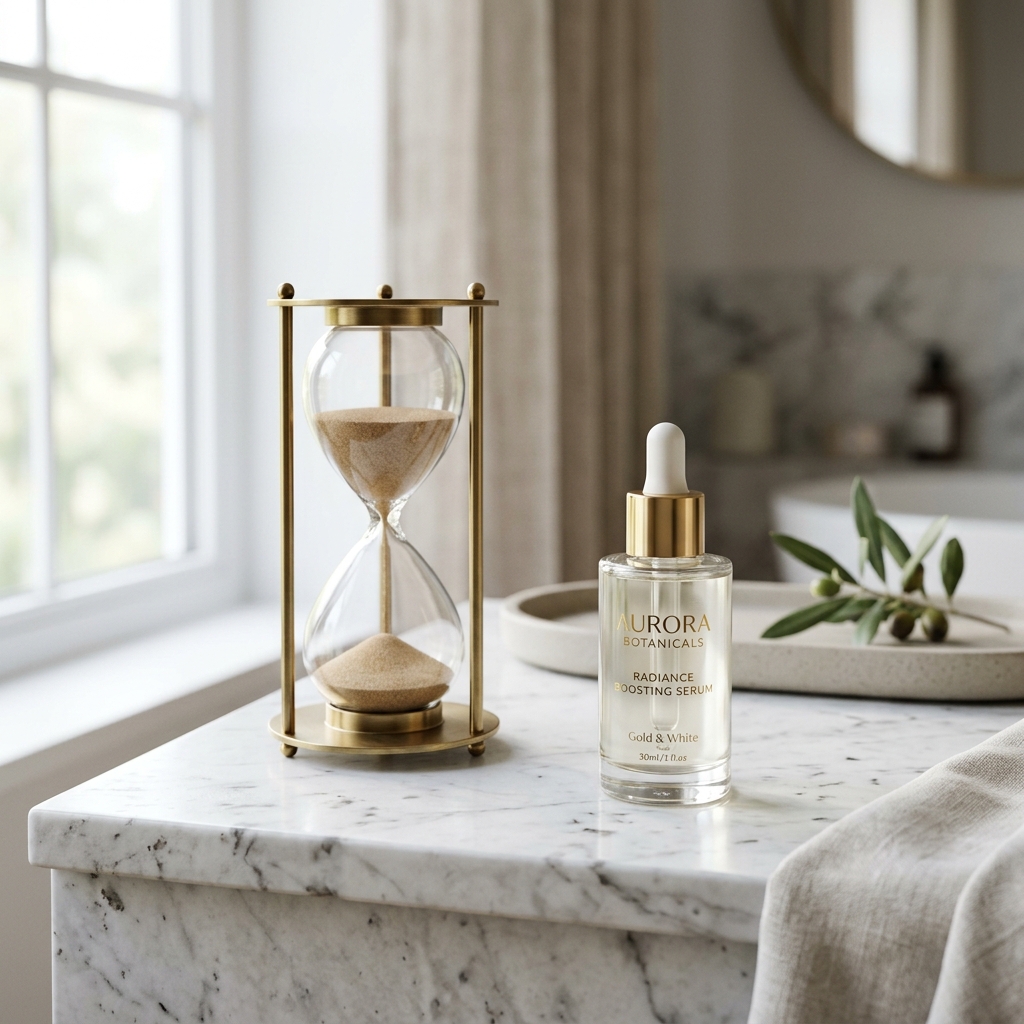
Most people have at least one skincare product they have owned longer than they can remember. It looks fine, so it presumably still works.
Sometimes that assumption holds. Often it does not.
Skincare degrades in two distinct ways — the active ingredients lose potency, and the preservative system weakens, allowing microbial growth. These happen on different timelines, and a product can be past its useful life while still looking and smelling perfectly normal.
This guide covers how to read the dating information on your products, which ingredients degrade fastest, what the warning signs actually look like, and when using something past its prime is merely pointless versus genuinely risky.
Key Takeaway
A product can lose its active ingredient potency long before it looks, smells, or feels different. Vitamin C that has oxidised is not just useless — it can cause oxidative stress on the skin.
Understanding the Two Types of Dating
Skincare products carry two different kinds of dating information, and confusing them is common.
Period After Opening (PAO)
The small open-jar symbol with a number — 6M, 12M, 24M — indicates how many months the product remains stable after you first open it.
This is the more relevant figure for most products, because opening introduces air, light, and bacteria from your fingers.
Common PAO periods:
| PAO | Typical products |
|---|---|
| 3M | Vitamin C serums, some natural formulations |
| 6M | Serums, eye creams, foundations |
| 12M | Most moisturizers, cleansers, treatments |
| 24M | Stable formulations, powders, some cleansers |
| 36M | Highly stable products, some powders |
A caveat: PAO assumes reasonable storage. A product kept in a hot bathroom or a car degrades faster than the symbol suggests.
Expiration Date
A hard expiration date is required for products making therapeutic claims — sunscreen in many markets, targeted treatments, and some acne products.
For sunscreen specifically, this matters more than for most skincare, since expired UV filters may not provide the protection stated on the label.
If a product has both a PAO and an expiration date, the earlier one applies.
Batch Codes
Products without a printed date usually carry a batch code — a short alphanumeric string stamped or printed on the packaging.
Batch codes encode the manufacturing date in brand-specific formats. Several free online batch code checkers can decode these for major brands, which is useful for products bought from third-party sellers where you cannot verify age.
Why this matters: a product that has sat in a warehouse for two years before you bought it has already used a significant portion of its shelf life.
What to do
- Check the PAO symbol: The open jar icon with a number tells you months after opening.
- Store correctly: Cool, dark, dry conditions significantly extend product life.
- Use an airless pump: Minimises oxidation and contamination from repeated opening.
What to avoid
- Using fingers to scoop: Introduces bacteria into jar products every single time.
- Storing in the bathroom: Heat and humidity speed up preservative breakdown.
- Ignoring texture changes: Separation, graininess, or changed smell are real warning signs.
Which Ingredients Degrade Fastest
Not all products age at the same rate. These are the ones to watch.
Vitamin C (L-ascorbic acid) — fastest
L-ascorbic acid oxidizes readily on exposure to air, light, and heat. It converts to dehydroascorbic acid, which has little of the original benefit.
Realistic lifespan: 3-6 months after opening, sometimes less in poor packaging.
The visual tell: fresh serum is clear to pale yellow. Darkening to deep yellow, orange, or brown indicates oxidation.
Vitamin C derivatives — sodium ascorbyl phosphate, magnesium ascorbyl phosphate, tetrahexyldecyl ascorbate — are considerably more stable and last longer.
Retinoids — moderate
Retinol degrades with light and air exposure. Encapsulated formulations and opaque, airless packaging significantly extend usable life.
Realistic lifespan: 6-12 months after opening.
The tell: yellowing or darkening, and a change in texture or smell.
Benzoyl peroxide — moderate
Benzoyl peroxide loses potency over time, particularly with heat exposure.
Realistic lifespan: typically carries a firm expiration date. Respect it — degraded benzoyl peroxide is simply less effective for acne.
Sunscreen — variable but important
UV filters degrade, and this is one case where degradation has real consequences rather than just wasted money.
Realistic lifespan: follow the printed expiration date. Heat exposure — a car glovebox, a beach bag in summer — accelerates degradation considerably beyond what the date suggests.
A practical note: if you are using sunscreen in adequate quantity daily, you should finish a bottle well within its lifespan. A sunscreen lasting you two years is a sign of under-application, not thrift.
Products containing plant oils — moderate
Unsaturated plant oils undergo lipid peroxidation, becoming rancid. Some oils are more prone to this than others.
The tell: a distinctive stale, crayon-like, or “old nuts” smell. This is often the clearest degradation signal in skincare.
Peptides and probiotics — variable
These are sensitive to temperature and can lose activity without visible change, which makes them harder to assess.
More stable products
Cleansers, most moisturizers, niacinamide, hyaluronic acid, glycerin-based products, and mineral sunscreens are relatively stable and generally last the full PAO period.
Anhydrous products — balms, oils, and powders containing no water — resist microbial growth well, though oils can still go rancid.
The Warning Signs
Changes in colour
Vitamin C darkening to orange or brown — oxidized. White products yellowing — often oxidation or degradation. Any noticeable colour shift from how the product looked when new.
Changes in smell
This is frequently the most reliable indicator.
Rancid, stale, or crayon-like — oil degradation. Sour or fermented — possible microbial contamination. Loss of original fragrance, or a fragrance that smells “off” — degradation of the fragrance compounds and possibly the formula.
Changes in texture
Separation — an emulsion splitting into water and oil layers indicates the emulsifier system has failed. Thickening or thinning noticeably from the original. Graininess in a previously smooth product. Stickiness or tackiness that was not present before.
Visible contamination
Any visible mould — discard immediately, without exception. Cloudiness in a previously clear product. Discolouration in patches rather than uniformly.
Performance change
A product that suddenly stings when it never did. Loss of effectiveness — a vitamin C serum that no longer brightens, a sunscreen that seems less protective. Increased irritation with no other routine changes.
What Actually Happens If You Use Expired Skincare
The honest answer varies considerably by product type, and the risks are frequently overstated in one direction and understated in another.
Usually just ineffective
For most degraded products, the outcome is wasted money rather than harm. An oxidized vitamin C serum will not brighten your skin, but it is unlikely to damage it. Degraded retinol simply does less.
Genuinely risky
Expired sunscreen is the most consequential. If UV filters have degraded, you may believe you are protected when you are not — leading to burning and cumulative damage.
Contaminated products, particularly those used around the eyes, can cause infection. Staphylococcus aureus and Pseudomonas aeruginosa are the organisms of most concern in cosmetics.
Products used on broken or compromised skin carry higher infection risk if contaminated.
Rancid oils may generate compounds that promote oxidative stress and irritation.
Higher-risk categories
- Eye products — proximity to mucous membranes
- Anything applied to broken skin
- Jar-packaged products — repeated finger contact introduces bacteria
- Products for infants or immunocompromised individuals
How to Extend Product Life
Store away from heat and light. Bathrooms are among the worst places to keep skincare — humidity and temperature swings from showers accelerate degradation. A bedroom drawer is considerably better.
Keep lids closed tightly. Air exposure drives oxidation.
Do not use fingers in jars. Use a clean spatula, or choose airless pump packaging where possible.
Do not decant into other containers unless necessary. Transferring introduces air and potential contamination.
Refrigerate selectively. Vitamin C serums and some natural formulations benefit. Most products do not need it, and some emulsions separate when cold.
Buy appropriate sizes. A large bottle of vitamin C is poor value if it oxidizes before you finish it.
Note the opening date. A small label with the month you opened it removes all guesswork later.
Keep sunscreen out of hot cars. Heat exposure is the most common cause of premature sunscreen degradation.
When to Discard Regardless of Date
Any visible mould. No exceptions.
Products that came into contact with an infection — for example, a jar used while you had a skin infection or an eye product used during conjunctivitis.
Anything that has separated and does not recombine with gentle shaking.
Products with a significantly changed smell.
Sunscreen past its expiration date, given the consequences of reduced protection.
Anything you cannot date and have owned for an unclear length of time, particularly if it is in a jar.
Products People Keep Too Long
Sunscreen from last summer. If it spent time in a beach bag or car, degradation is likely.
Sheet masks. These often have shorter shelf lives than people assume, and the essence can degrade.
Vitamin C serums bought during a sale. Buying several at once means later bottles begin degrading before you open them.
Special-occasion products used infrequently — an expensive serum saved for particular events may be past its useful life by the time you finish it.
Sample sizes and travel kits accumulated over years.
Prescription treatments kept after the course finished.
Products That Last Longer Than You Might Think
Balance matters — not everything needs discarding at the first anniversary.
Powders contain no water and resist microbial growth well. Well-stored powders often remain usable for years, though pressed powders with binders eventually degrade.
Cleansers are simple, well-preserved, and rinsed off quickly. Most last their full PAO comfortably.
Petrolatum-based occlusives are extremely stable, containing nothing that oxidizes or supports microbial growth.
Niacinamide and hyaluronic acid serums are among the more stable actives.
Mineral sunscreens — the filters themselves do not degrade the way chemical filters can, though the emulsion carrying them still ages.
Why Packaging Determines Shelf Life
Two products with identical formulas can have very different usable lifespans depending entirely on how they are packaged.
Jars are the least favourable option for unstable ingredients. Every use exposes the entire contents to air, and fingers introduce bacteria directly into the product. A vitamin C or retinol product in an open jar begins degrading from the first use.
Dropper bottles are better than jars but still problematic. The dropper draws air into the bottle on each use, and the pipette itself can carry bacteria if it touches skin.
Tubes are considerably better. They limit air exposure and prevent finger contact with the reservoir.
Airless pumps are the strongest option for unstable actives. The mechanism prevents air from entering the container entirely, and the product is dispensed without exposing the remaining contents.
Opaque or amber containers protect light-sensitive ingredients. Clear glass looks appealing on a shelf but offers no protection for vitamin C, retinol, or many plant extracts.
The practical implication: when comparing two products with similar formulas, packaging is a legitimate tiebreaker — particularly for vitamin C, retinoids, and peptides. A well-packaged affordable serum frequently outperforms an expensive one in a clear dropper bottle, simply because more of the active is still active when you use it.
Understanding Preservative Systems
Preservatives have an unfortunate reputation, but they exist for a genuinely important reason.
Any product containing water can support microbial growth. Without adequate preservation, bacteria, yeast, and mould colonize a product — often before any visible sign appears.
Common preservatives include phenoxyethanol, potassium sorbate, sodium benzoate, benzyl alcohol, ethylhexylglycerin, and various parabens. Each has been assessed for safety at cosmetic use concentrations by regulatory bodies in major markets.
“Preservative-free” products fall into a few categories. Some are anhydrous — oils, balms, powders — and genuinely do not need preservation because they contain no water. Others use alternative systems like high alcohol content or airless packaging. And some are simply under-preserved, with correspondingly short shelf lives and higher contamination risk.
A reasonable perspective: preservatives at cosmetic concentrations are among the more thoroughly studied ingredients in skincare, and the risk from an unpreserved contaminated product is more concrete than the risk from a well-preserved one. If you prefer to avoid particular preservatives, that is a reasonable personal choice — but favouring genuinely unpreserved water-based products means accepting shorter shelf life and more careful handling.
How to Audit What You Already Own
Rather than wondering product by product, a single audit resolves most uncertainty. It takes about twenty minutes.
Step 1: Gather everything
Collect every skincare and makeup product from wherever they have accumulated — bathroom cabinet, handbag, travel bag, bedside drawer. Most people are surprised by the total.
Step 2: Sort into three piles
Definitely keep: products you use regularly, opened within a reasonable timeframe, showing no signs of change.
Definitely discard: anything with visible mould, a significantly changed smell, separation that will not recombine, expired sunscreen, or eye products you cannot date.
Uncertain: everything else.
Step 3: Assess the uncertain pile
For each item, check in this order:
- Is there a printed expiration date? If it has passed, discard.
- Is there a PAO symbol, and do you know roughly when you opened it? If you have exceeded the period substantially, discard.
- Can you find a batch code? Decode it online to estimate manufacturing date.
- Check colour, smell, and texture against how you remember it when new.
- Consider the packaging. Jar-packaged actives degrade faster than the same formula in an airless pump.
Step 4: Label what remains
Write the current date on anything you have just opened, and an estimated opening date on anything you are keeping. A permanent marker on the bottom of the container takes seconds.
Step 5: Be honest about what you will actually use
Products you have owned for a year and used twice are unlikely to become part of your routine now. Keeping them means they will expire unused, occupying space and creating the same uncertainty next year.
A worthwhile reflection: if the audit reveals a large number of barely-used products, that is useful information about buying habits. Most people get better results from four products used consistently than from twenty used sporadically — and the four-product approach means nothing expires unused.
Frequently Asked Questions
How do I know when my skincare expires? Look for the open-jar PAO symbol showing months after opening, and any printed expiration date. If neither is present, decode the batch code using an online checker to find the manufacturing date.
Does skincare expire if unopened? Yes, though more slowly. Unopened products typically last two to three years from manufacture when stored properly, but ingredients still degrade gradually.
Can I use expired sunscreen? It is not advisable. Degraded UV filters may provide less protection than the label states, and you have no way to know how much. This is the one category where the expiration date genuinely matters.
What happens if I use expired skincare? Most often nothing beyond reduced effectiveness. The genuine risks are contaminated products causing infection — particularly around the eyes — and expired sunscreen providing inadequate protection.
Why did my vitamin C serum turn orange? Oxidation. L-ascorbic acid converts to dehydroascorbic acid on exposure to air and light, losing most of its benefit. Replace it.
Should I refrigerate my skincare? Only selectively. Vitamin C serums and some preservative-light formulations benefit. Most products do not need refrigeration, and some emulsions separate when chilled.
How long does an opened moisturizer last? Typically 12 months, or as indicated by the PAO symbol. Jar-packaged products may have a shorter practical life due to repeated finger contact.
Is it safe to use a product that has separated? If gentle shaking recombines it, it may be fine — some formulations separate naturally. If it does not recombine, the emulsifier system has failed and it should be discarded.
Do natural or preservative-free products expire faster? Generally yes. Preservatives exist to prevent microbial growth. Products with minimal preservation typically have shorter PAO periods and are more vulnerable to contamination.
The Bottom Line
Most skincare does not become dangerous when it ages. It becomes ineffective — which is a waste of money rather than a health concern.
The exceptions worth taking seriously:
- Sunscreen past its expiration date, where reduced protection has real consequences
- Anything visibly contaminated, particularly eye products
- Rancid oils, which can cause irritation
Practical habits that solve most of this:
- Write the opening date on products when you start them
- Store away from heat and light — not in the bathroom
- Buy sizes you will actually finish within the PAO period
- Trust your senses — colour change, smell change, and texture change are reliable signals
- Use airless packaging for unstable actives where possible
And a useful reframe: if products are consistently expiring before you finish them, you likely own more skincare than you need. A smaller routine used consistently produces better results than a large collection used occasionally — and it costs less, since nothing gets thrown away half-used.
Was this article helpful?

Anam Ahsan
Skincare Enthusiast & BloggerHi, I'm Anam! I'm a beauty and skincare enthusiast who loves testing new products and sharing honest, personal reviews. I document my skincare journey and share what works for my skin so you can make better choices for your routine.


Comments (24)
Hannah W.
2 days agoThis guide saved me so much money — went with the budget pick and honestly can't tell the difference from serums twice the price!
Anam Ahsan Author
1 day agoSo glad it worked out for you, Hannah! That's exactly the kind of result we hoped readers would see.