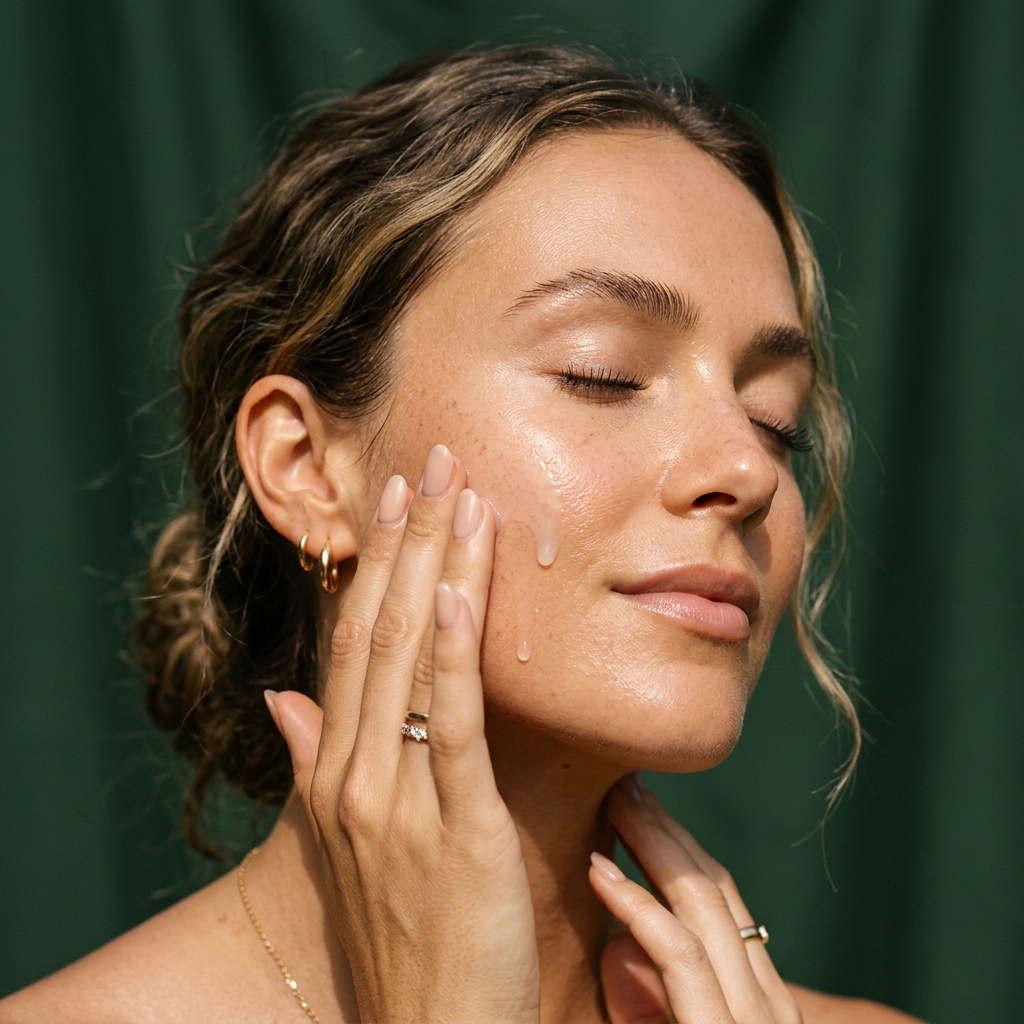
If you have been reading ingredient lists lately, you may have started noticing beta-glucan appearing in barrier creams, soothing serums, and products aimed at sensitive skin. It is one of the faster-growing ingredients in skincare searches, and it is beginning to show up in formulations where hyaluronic acid used to sit alone.
It is also one of the rare trending ingredients with a reasonable evidence base rather than just an appealing story.
Beta-glucan is not new to skincare science — it has been studied in various contexts for decades. What is new is its arrival in mainstream skincare, and the marketing that has come with it.
This guide covers what beta-glucan actually does, what the research supports, how it genuinely compares to hyaluronic acid, and whether it deserves space in your routine.
Key Takeaway
Beta-glucan is not a replacement for hyaluronic acid — it is a complement to it. HA pulls water in; beta-glucan holds it there and calms inflammation simultaneously. Sensitive and barrier-compromised skin benefits most.
What Beta-Glucan Is
Beta-glucan is a polysaccharide — a chain of glucose molecules linked in a specific configuration. It occurs naturally in the cell walls of yeast, fungi, algae, and certain grains.
The sources used in skincare differ meaningfully:
Oat beta-glucan is derived from oats and is the most common in cosmetic formulations. It is well tolerated, has good hydrating properties, and connects to the long history of oat-based products for irritated skin.
Yeast beta-glucan, typically from Saccharomyces cerevisiae, has the most long-standing research behind it. It has a different molecular structure than oat-derived versions.
Mushroom and algae beta-glucans appear less frequently but are used in some formulations.
Why the source matters: the molecular structure differs between them, which affects both how they behave on skin and which research applies. A product using oat beta-glucan is not necessarily supported by studies conducted on yeast beta-glucan, though marketing rarely makes this distinction.
What to do
- Use beta-glucan after actives: Its calming properties help offset irritation from retinoids and acids.
- Layer under moisturizer: Apply on damp skin like a serum, then seal with your moisturizer.
- Combine with hyaluronic acid: They work through different pathways and complement each other well.
What to avoid
- Expecting it to replace retinoids for anti-aging: Beta-glucan supports the barrier — it does not replicate retinoid results.
- Applying on dry skin: Like hyaluronic acid, it works best with some moisture present.
- Overlooking it for sensitive skin: It is one of the most well-tolerated hydrating ingredients available.
What It Actually Does
Beta-glucan operates through several mechanisms, which is part of why it is interesting.
Hydration and moisture retention
Beta-glucan is a humectant — it binds water and holds it in the skin. It also has film-forming properties, meaning it creates a light layer on the skin surface that slows water loss.
This combination is genuinely useful. Most humectants draw water in but do nothing to keep it there, which is why hyaluronic acid requires a sealing moisturizer. Beta-glucan does a portion of both jobs.
Barrier support
Research suggests beta-glucan supports barrier function and reduces transepidermal water loss — the measure of how much moisture escapes through the skin.
This is relevant for anyone with compromised skin, whether from over-exfoliation, harsh cleansers, environmental stress, or other skin-stressing factors.
Soothing Properties
This is where beta-glucan differs most from other hydrating ingredients.
Beta-glucan has a calming effect on the skin.
In cosmetic terms, this translates to soothing properties — reduced redness and irritation — that a simple humectant does not provide.
Visible Plumpness and Collagen
Some research indicates stimulation of fibroblast activity and collagen production, giving the appearance of plumper skin.
An important caveat: Extrapolating from isolated studies to cosmetic anti-aging claims is a longer leap than marketing usually acknowledges.
What the Evidence Supports
Sorting this into tiers is more useful than a single verdict.
Well supported
-
Hydration and moisture retention — consistent findings across studies
-
Reduced transepidermal water loss — measurable barrier improvement
-
Soothing and reduced irritation — reasonable support, particularly for reactive skin
-
Excellent tolerability — very low irritation potential
Plausible but less established
- Meaningful collagen stimulation from cosmetic-level topical application
- Anti-aging effects on fine lines and firmness
- Long-term structural change to the skin
Not established
- Superiority over hyaluronic acid as a general claim
- Dramatic transformation of skin texture or appearance
- Replacement for established actives
The fair summary: beta-glucan is a genuinely good hydrating and soothing ingredient with real barrier benefits and unusually good tolerability. The anti-aging claims are where marketing outruns the cosmetic evidence.
Beta-Glucan vs. Hyaluronic Acid
This comparison appears constantly, usually framed as beta-glucan being superior. The reality is more interesting than that.
| Beta-glucan | Hyaluronic acid | |
|---|---|---|
| Primary function | Humectant + film-forming | Humectant |
| Holds moisture in | Yes, partially | No, requires sealing |
| Soothing properties | Yes | Minimal |
| Barrier support | Yes | Indirect |
| Behaviour in dry air | More stable | Can draw from deeper skin | | Immediate plumping | Moderate | Strong | | Cost | Higher | Low | | Availability | Growing | Ubiquitous |
Where beta-glucan has genuine advantages:
It is less prone to the dry-climate problem. Hyaluronic acid in low humidity, applied to dry skin without sealing, can draw moisture from deeper skin layers and allow it to evaporate. Beta-glucan’s film-forming property reduces this risk.
It soothes. Hyaluronic acid hydrates but does nothing for inflammation or redness.
It supports the barrier more directly.
Where hyaluronic acid still wins:
Immediate plumping. High molecular weight hyaluronic acid produces a more noticeable instant effect.
Cost and availability. Hyaluronic acid is a commodity ingredient available in countless affordable products.
The honest conclusion: they are not competitors. Beta-glucan does more, but hyaluronic acid does its narrower job well and cheaply. Many good formulations contain both.
How It Compares to Other Soothing Ingredients
| Ingredient | Soothing | Hydrating | Barrier repair | Evidence |
|---|---|---|---|---|
| Beta-glucan | Good | Very good | Good | Moderate to good |
| Centella asiatica | Very good | Moderate | Good | Good |
| Panthenol | Good | Good | Good | Good |
| Niacinamide | Good | Moderate | Very good | Strong |
| Ceramides | Minimal | Moderate | Very good | Strong |
| Colloidal oatmeal | Very good | Good | Good | Good |
What this shows: beta-glucan is a strong all-rounder rather than a category leader. Niacinamide and ceramides have stronger evidence for barrier repair specifically. Centella and colloidal oatmeal have comparable or better soothing credentials.
Its distinguishing feature is combining hydration, film-forming, and soothing in one ingredient — which makes it efficient rather than uniquely powerful.
Who Benefits Most
Sensitive and reactive skin. The combination of hydration, soothing, and very low irritation potential makes it well suited here.
Compromised barriers. Over-exfoliation, harsh cleansers, or a period of using too many actives — beta-glucan supports recovery.
Anyone in a dry climate. Its film-forming property makes it more reliable than hyaluronic acid alone when ambient humidity is low.
Skin recovering from procedures. The unrelated research contexts is most relevant here, though follow your practitioner’s post-procedure guidance.
Eczema or dermatitis-prone skin. The soothing and barrier support are relevant, though this warrants a dermatologist rather than self-treatment.
Anyone using strong actives. Beta-glucan on recovery nights, or layered under a retinoid routine, helps offset irritation.
During pregnancy. Generally considered suitable, though as with anything during pregnancy, confirm with your doctor.
Who Can Skip It
Anyone whose main concern is acne, pigmentation, or wrinkles. Beta-glucan does very little for any of these directly. Salicylic acid, azelaic acid, and retinoids are the relevant ingredients.
Anyone already using a well-formulated barrier moisturizer. If ceramides, niacinamide, and glycerin are keeping your skin comfortable, beta-glucan adds refinement rather than a missing piece.
Anyone on a tight budget. Glycerin and niacinamide deliver much of the same benefit at a fraction of the cost.
Anyone expecting anti-aging results. This is not where its strengths lie.
How to Use It
Where in your routine: after cleansing, before moisturizer. Beta-glucan serums are typically lightweight and water-based.
Frequency: once or twice daily. It is gentle enough for both.
Concentration: research often uses concentrations in the low single digits. Many products do not disclose theirs, which is a common limitation with this ingredient.
Layering:
- With hyaluronic acid — complementary, and frequently formulated together
- With niacinamide — an excellent barrier-supporting pairing
- With ceramides — beta-glucan hydrates, ceramides rebuild; a strong combination
- With retinoids — helpful for offsetting irritation. Apply the retinoid to dry skin first
- With exfoliating acids — useful afterward to soothe
- With vitamin C — no conflict
Timeline: hydration and comfort improve within days. Barrier improvements develop over two to four weeks. There is no long anti-aging timeline to wait for, because that is not primarily what it does.
How to Evaluate a Product
Check the source if disclosed. Oat and yeast beta-glucan differ structurally, and research applies differently to each. Products stating the source are more transparent than those simply listing “beta-glucan.”
Check the ingredient list position. Beta-glucan is more expensive than most humectants. If it appears after the preservatives, the amount is likely token.
Look at what accompanies it. Beta-glucan works well alongside ceramides, niacinamide, panthenol, and glycerin. A product combining several barrier-supporting ingredients is generally more useful than one relying on beta-glucan alone.
Be cautious of anti-aging framing. Products positioning beta-glucan primarily as a wrinkle treatment are leaning on unrelated research contexts in a way the cosmetic evidence does not clearly support.
Consider whether you need a dedicated serum. Beta-glucan in a well-formulated moisturizer may serve you better than a separate serum, particularly since it works partly by forming a film — which benefits from being in a leave-on product with occlusive support.
Price is a weak signal. As with most ingredients, formulation quality matters more than what the product costs.
Understanding Why Barrier Ingredients Matter
Beta-glucan belongs to a category that gets less attention than actives, and that imbalance is worth addressing — because barrier health determines whether your actives work at all.
Your skin barrier is the outermost layer, made of skin cells held together by a lipid matrix of ceramides, cholesterol, and fatty acids. When it functions properly, it keeps water in and irritants out.
When it is compromised, several things follow:
- Water escapes faster, leaving skin dehydrated regardless of how much you moisturize
- Substances that should stay on the surface penetrate deeper, causing stinging and reactions
- Inflammation increases, which can trigger pigmentation and worsen acne
- Products that were previously fine begin causing irritation
The practical consequence: a compromised barrier makes every active in your routine harder to tolerate and less effective. People frequently respond by adding more products, which deepens the problem.
This is why barrier ingredients are not the boring part of skincare. They are the foundation that determines how much your retinoid, vitamin C, or exfoliant can actually accomplish.
Beta-glucan fits here — alongside ceramides, niacinamide, panthenol, and glycerin — as part of the supporting infrastructure rather than the headline act.
Practical Routines Using Beta-Glucan
For a compromised barrier
Morning: Water rinse or very gentle cleanser → beta-glucan serum → barrier moisturizer with ceramides → mineral sunscreen
Evening: Gentle cleanser → beta-glucan serum → barrier moisturizer
No actives until your skin feels comfortable again — typically two to four weeks.
Alongside an active routine
Morning: Cleanser → vitamin C → beta-glucan → moisturizer → sunscreen
Evening: Cleanser → retinoid on dry skin → beta-glucan → moisturizer
The beta-glucan layer here functions as a buffer, offsetting some of the irritation the actives cause.
On skin cycling recovery nights
Recovery night: Cleanser → beta-glucan serum → moisturizer with ceramides
This is arguably where beta-glucan fits best — recovery nights exist specifically to support the barrier, and beta-glucan is well matched to that job.
For dry climates
Morning: Cleanser → beta-glucan on damp skin → richer moisturizer → sunscreen
Evening: Cleanser → beta-glucan → rich moisturizer → optional occlusive layer
In low humidity, beta-glucan’s film-forming property gives it a genuine advantage over hyaluronic acid alone.
Why You Are Only Hearing About It Now
Beta-glucan has been researched for decades, which raises a reasonable question: why is it suddenly appearing everywhere?
Several factors converged.
The barrier-first shift in skincare. For years the conversation centred on actives — retinoids, acids, vitamin C. More recently, awareness has grown that over-exfoliation and barrier damage are extremely common, and that the fix is supportive ingredients rather than more actives. Beta-glucan fits that shift precisely.
Sensitive skin as a mainstream category. Products aimed at reactive skin used to be a niche. As more people recognized that their “skin problems” were often irritation from their own routines, demand for genuinely gentle ingredients grew.
Ingredient fatigue with hyaluronic acid. Hyaluronic acid became so ubiquitous that it stopped being interesting to market. Brands look for the next ingredient with a story, and beta-glucan offered one supported by real research rather than invention.
Cost accessibility improved. Beta-glucan was historically expensive to produce at cosmetic quality. Improvements in production made it viable for more formulations.
None of this makes it a fad. The research predates the trend by decades. But it does explain why an ingredient that has existed all along is suddenly on the front of bottles.
Misconceptions Worth Correcting
“Beta-glucan is a replacement for hyaluronic acid.” It does more, but they work differently and many good formulations contain both. Framing it as a replacement oversimplifies.
“It builds collagen like retinol.” The collagen research comes from isolated contexts with different delivery. Cosmetic evidence for meaningful collagen building is not established.
“Natural sources mean it is safer.” Beta-glucan is well tolerated, but that reflects its molecular properties rather than its natural origin. Plenty of natural ingredients irritate skin.
“More beta-glucan means a better product.” Concentration matters, but formulation matters more. A well-built product with moderate beta-glucan alongside ceramides and niacinamide will typically outperform a high-concentration serum with nothing supporting it.
“It will fix my sensitive skin.” It supports and soothes. If your skin is sensitive because of an underlying condition, or because your routine is too aggressive, beta-glucan helps but does not address the cause.
Frequently Asked Questions
What does beta-glucan do for skin? It hydrates, forms a light film that reduces water loss, supports barrier function, and soothes irritation. It is primarily a hydrating and calming ingredient rather than a corrective one.
Is beta-glucan better than hyaluronic acid? It does more — hydrating, film-forming, and soothing rather than hydrating alone — and is less prone to drawing moisture from deeper skin in dry conditions. But hyaluronic acid produces stronger immediate plumping and costs far less. They complement each other rather than competing.
Is beta-glucan good for sensitive skin? Yes, this is one of its strongest applications. It has very low irritation potential and genuine soothing properties.
Does beta-glucan help with acne? Not directly. It may help soothe inflammation and support the barrier alongside acne treatments, but it does not address the causes of acne.
Can beta-glucan replace my moisturizer? No. A beta-glucan serum is not a moisturizer — it lacks the lipids and occlusives that support barrier function. Use it before a moisturizer, not instead of one.
How long does beta-glucan take to work? Hydration and comfort improve within days. Barrier improvements develop over two to four weeks.
Is beta-glucan safe during pregnancy? It is generally considered suitable, but confirm with your obstetrician or dermatologist as you would with any product.
Does beta-glucan build collagen? Some studies suggest fibroblast stimulation, but extrapolating that to cosmetic anti-aging results is a longer leap than the evidence supports. Treat collagen claims with caution.
Can I use beta-glucan with retinol? Yes, and it is a useful pairing. Apply the retinoid to dry skin first, then beta-glucan, then moisturizer. The soothing properties help offset retinoid irritation.
Is oat or yeast beta-glucan better? Yeast beta-glucan has more research behind it, particularly in laboratory research. Oat beta-glucan is more common in cosmetics and well tolerated. Neither is clearly superior for general skincare use.
The Bottom Line
Beta-glucan is one of the better trending ingredients — genuinely useful, well tolerated, and supported by more than an appealing narrative.
What it does well:
- Hydrates and, unusually for a humectant, helps hold that hydration in place
- Soothes irritation and redness
- Supports barrier function and reduces water loss
- Suits sensitive and compromised skin with essentially no irritation risk
- Performs more reliably than hyaluronic acid in dry conditions
What to keep in perspective:
- It does not treat acne, pigmentation, or wrinkles
- Anti-aging claims rest on unrelated research contexts rather than cosmetic evidence
- Niacinamide and ceramides have stronger evidence for barrier repair specifically
- Glycerin delivers much of the hydration benefit at a fraction of the cost
Where it earns a place:
If your skin is sensitive, reactive, or recovering from too many actives — or if you live somewhere dry and hyaluronic acid has never quite worked for you — beta-glucan is a genuinely sensible addition.
If your concerns are acne, pigmentation, or fine lines, it belongs somewhere lower on your list than the actives that address those directly.
Was this article helpful?

Anam Ahsan
Skincare Enthusiast & BloggerHi, I'm Anam! I'm a beauty and skincare enthusiast who loves testing new products and sharing honest, personal reviews. I document my skincare journey and share what works for my skin so you can make better choices for your routine.


Comments (24)
Hannah W.
2 days agoThis guide saved me so much money — went with the budget pick and honestly can't tell the difference from serums twice the price!
Anam Ahsan Author
1 day agoSo glad it worked out for you, Hannah! That's exactly the kind of result we hoped readers would see.