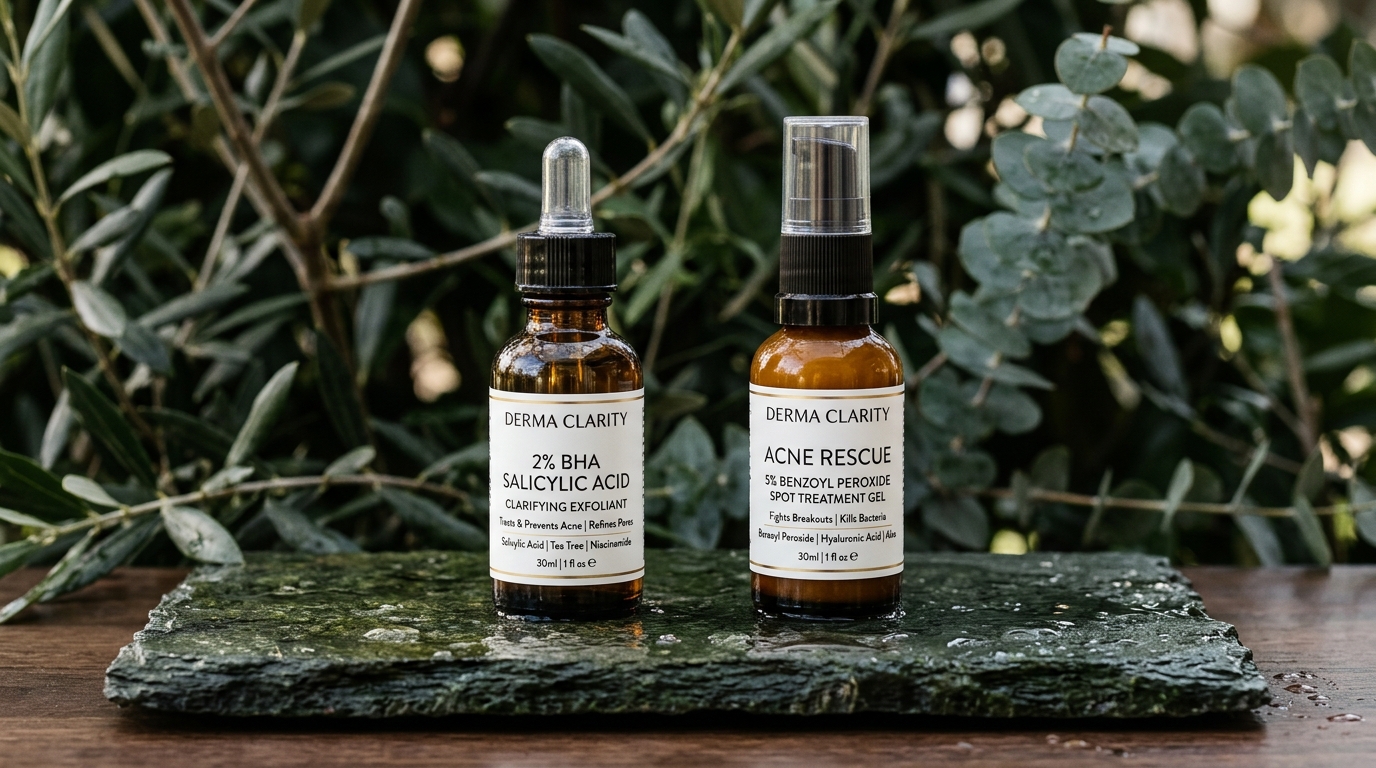
Salicylic acid and benzoyl peroxide are the two most widely available over-the-counter acne treatments, and they are frequently treated as interchangeable. They are not.
They work through completely different mechanisms and address different types of acne. Using the wrong one for your breakouts is one of the more common reasons people conclude that over-the-counter acne treatment does not work for them.
This guide covers how each actually works, which type of acne each suits, whether you can use both, and how to avoid the mistakes that make either one ineffective or irritating.
Key Takeaway
Salicylic acid unclogs pores by exfoliating deep inside them, making it best for blackheads and whiteheads. Benzoyl peroxide kills acne-causing bacteria and reduces inflammation, making it best for angry, red pimples and cysts.
The Short Answer
Salicylic acid clears blocked pores. Use it for blackheads, whiteheads, and congestion.
Benzoyl peroxide kills acne bacteria. Use it for red, inflamed spots and pustules.
If you have both types — which most people do — a combination approach often works better than either alone.
Now the detail, because how you use them matters as much as which you choose.
How Salicylic Acid Works
Salicylic acid is a beta hydroxy acid, and one property distinguishes it from every other common exfoliating acid.
It is oil-soluble
This is the key point. Alpha hydroxy acids like glycolic and lactic acid are water-soluble, so they work on the skin surface. Salicylic acid is lipophilic — it dissolves in oil.
Practically, this means it can penetrate into the sebum-filled follicle and work inside the pore rather than just on top of it.
That is why salicylic acid is the standard recommendation for congestion specifically, while other acids are better for surface texture and tone.
What it does inside the pore
Keratolytic action. It loosens the bonds between dead skin cells, allowing the plug that blocks the pore to break down and clear.
Reduces new blockage formation. By normalizing shedding within the follicle, it helps prevent new comedones forming.
Anti-inflammatory. Salicylic acid has mild soothing properties, which helps with the redness around spots.
What it does not do
It is not primarily antibacterial. It has some mild activity, but it does not meaningfully reduce Cutibacterium acnes populations the way benzoyl peroxide does.
This is why it underperforms on inflammatory acne. If your spots are red, raised, and pus-filled, the bacteria driving that inflammation are largely untouched.
How Benzoyl Peroxide Works
Benzoyl peroxide operates on an entirely different principle.
It releases oxygen into the follicle
The mechanism: benzoyl peroxide breaks down on the skin, releasing free radical oxygen species into the follicle.
Cutibacterium acnes is an anaerobic bacterium — it thrives in the low-oxygen environment inside a blocked pore. Introducing oxygen is directly hostile to it.
The result: substantial reduction in bacterial populations within the follicle, which reduces the inflammation those bacteria drive.
A significant additional advantage
Bacteria do not develop resistance to benzoyl peroxide.
Benzoyl peroxide’s mechanism is oxidative, so effectiveness remains consistent over time.
Mild keratolytic action
Benzoyl peroxide has some effect on shedding within the follicle, but this is secondary. Its primary value is antibacterial.
What to do
- Use BHA for congestion: Perfect for blackheads and texture.
- Use BP for inflamed breakouts: Great for cystic acne or angry red bumps.
- Consider short-contact therapy: Wash-off BP products are effective and less irritating.
What to avoid
- Layering them together: Using both at the same time is a fast track to a damaged skin barrier.
- Using high percentage BP: 2.5% benzoyl peroxide is just as effective as 10% but far less irritating.
- Forgetting they cause sun sensitivity: Always wear SPF when using these actives.
Matching the Treatment to Your Acne
This is the practical part.
If you have comedonal acne
What it looks like: blackheads (open comedones), whiteheads and closed comedones (small flesh-coloured bumps under the surface), general congestion and rough texture. Minimal redness or inflammation.
Use salicylic acid. The blockage is the problem, and salicylic acid addresses it directly.
Also consider: a retinoid such as adapalene, which is arguably more effective for comedonal acne over the long term.
Benzoyl peroxide will disappoint here — there is little bacterial involvement to target.
If you have inflammatory acne
What it looks like: red, raised papules and pustules. Tender. Comes to a head.
Use benzoyl peroxide. Bacterial proliferation is driving the inflammation.
Salicylic acid alone will help somewhat through its anti-inflammatory action and by clearing blockages, but it will underperform.
If you have both
Most people do. A reasonable approach:
- Salicylic acid in the morning, or as a cleanser
- Benzoyl peroxide in the evening as a leave-on treatment
Or use each on alternate days if your skin is sensitive.
If you have deep, painful cystic acne
Neither is likely to be sufficient. Nodular and cystic acne generally requires professional treatment, which makes seeking expert advice a sensible choice.
Direct Comparison
| Salicylic acid | Benzoyl peroxide | |
|---|---|---|
| Mechanism | Keratolytic, oil-soluble | Antibacterial, oxidative |
| Best for | Blackheads, congestion | Inflamed spots, pustules |
| Enters the pore | Yes | Partially |
| Antibacterial | Minimal | Strong |
| Anti-inflammatory | Mild | Indirect |
| Bacterial resistance | Not applicable | Does not develop |
| Typical strength | 0.5-2% | 2.5-10% |
| Irritation | Moderate | Moderate to high |
| Bleaches fabric | No | Yes |
| Dryness | Moderate | Often significant |
| Speed | 4-8 weeks | 2-4 weeks for inflammation |
Concentrations: More Is Not Better
This applies to both, and it is one of the more useful things to know.
Benzoyl peroxide
Research has repeatedly found 2.5% to be roughly as effective as 5% and 10% for reducing inflammatory lesions — but considerably less irritating and drying.
Practical implication: starting at 2.5% is sensible. Higher concentrations increase dryness, peeling, and redness without a proportional increase in benefit.
Where higher strengths have a place: body acne, where thicker skin tolerates more, and as a short-contact wash.
Salicylic acid
Over-the-counter products typically range from 0.5% to 2%. Two percent is the usual maximum for leave-on facial products in most markets.
Higher concentrations exist in professional peels, but these are a different context requiring supervision.
In cleansers, contact time limits effectiveness. A salicylic acid cleanser is on your skin for under a minute. It has a role, but a leave-on product does considerably more.
How to Use Each Properly
Salicylic acid
Frequency: start two to three times weekly, building to daily if tolerated.
Format: leave-on serums, lotions, and toners are more effective than cleansers due to contact time.
Application: to clean, dry skin. Follow with moisturizer.
Timeline: four to eight weeks for meaningful change in congestion.
Do not layer with other exfoliating acids in the same routine.
Benzoyl peroxide
Frequency: start every other day, building to daily.
Format: leave-on gels and creams for facial acne; washes for the body or for those who find leave-on too drying.
Contact time for washes: leave on for two to three minutes before rinsing. Applying and immediately rinsing does very little.
Application: a thin layer to affected areas, or across the whole area if breakouts are widespread. More product does not work faster.
Timeline: two to four weeks for inflammatory lesions.
The fabric warning: benzoyl peroxide bleaches textiles permanently. Towels, pillowcases, clothing, and bedding will all be affected. Use white towels and old pillowcases, and be careful with what your face touches after application.
Can You Use Them Together?
Yes, with some care.
They are complementary — one clears blockages, the other addresses bacteria. Combining them covers more of the acne process than either alone.
The problem is cumulative irritation. Both are drying, and stacking them in the same routine frequently compromises the skin barrier.
Practical approaches
Separate by time of day:
- Salicylic acid in the morning
- Benzoyl peroxide in the evening
Alternate days:
- Benzoyl peroxide on odd days, salicylic acid on even days
Separate by area:
- Salicylic acid on congested areas, benzoyl peroxide on inflamed spots
Use one as a wash:
- A salicylic acid or benzoyl peroxide cleanser, plus the other as a leave-on treatment
What to avoid: layering both as leave-on products in the same routine, particularly when starting out.
Combining With Other Actives
With retinoids: benzoyl peroxide can degrade some retinoids if applied at the same time. Tretinoin in particular is affected, though adapalene is more stable. Use them at different times of day to be safe — benzoyl peroxide in the morning, retinoid at night.
With azelaic acid: compatible, and a reasonable combination. Azelaic acid addresses inflammation and pigmentation while the others handle blockages and bacteria.
With niacinamide: compatible and helpful, since niacinamide supports the barrier while drying actives work.
With AHAs: avoid combining salicylic acid with glycolic or lactic acid in the same routine. This is over-exfoliation.
With vitamin C: benzoyl peroxide can oxidize vitamin C. Separate them by time of day.
Side Effects and Managing Them
Common with both
Dryness and flaking. Expected initially. Moisturize consistently and reduce frequency if severe.
Redness and irritation. Should settle within a few weeks. Persistent worsening indicates the concentration or frequency is too high.
Increased sun sensitivity. Both can increase photosensitivity somewhat. Daily sunscreen is necessary regardless, but particularly here.
Specific to benzoyl peroxide
Fabric bleaching — permanent and frequently underestimated.
Allergic contact dermatitis — uncommon but occurs. Presents as itching, swelling, and rash rather than simple dryness. Stop if this happens.
Significant peeling at higher concentrations.
Managing irritation from either
- Reduce frequency and build back slowly
- Apply moisturizer before the treatment as a buffer
- Use a lower concentration
- Stop other actives while adjusting
- Do not add more products to fix irritation caused by products
Choosing the Right Product Format
Format affects results more than most people expect, because contact time and coverage vary considerably.
Salicylic acid formats
Leave-on serums and lotions deliver the most benefit. The acid stays on the skin and works continuously.
Toners and pads are convenient and effective, though pads can encourage over-application to areas that do not need treatment.
Cleansers have limited contact time. They are a reasonable supporting step but should not be your only salicylic acid product if congestion is your main concern.
Spot treatments are useful for individual blockages but do not prevent new ones forming across the area.
Masks provide brief high-concentration contact. Occasionally useful, not a substitute for consistent treatment.
Benzoyl peroxide formats
Leave-on gels and creams are the most effective for facial acne. Thin layer, applied to affected areas.
Washes suit body acne particularly well, and also work for people who find leave-on products too drying. Contact time is essential — two to three minutes before rinsing.
Spot treatments work for individual inflamed lesions but do not prevent new ones.
A practical note on washes versus leave-on: a wash removes most of the product when you rinse, which reduces both efficacy and irritation. For mild acne or sensitive skin, this trade-off is often worthwhile. For persistent inflammatory acne, a leave-on product does more.
A Sensible Starting Protocol
Rather than beginning at full strength daily, this sequence substantially reduces the chance of irritation derailing you.
Weeks 1-2: Introduce one product only, at low frequency.
- Salicylic acid: two to three times weekly
- Benzoyl peroxide 2.5%: every other day
Moisturize consistently. Do not add anything else.
Weeks 3-4: If tolerated, increase frequency.
- Salicylic acid: every other day, building toward daily
- Benzoyl peroxide: daily
If you are experiencing dryness or peeling, hold at the current frequency rather than pushing forward.
Weeks 5-8: Consider adding the second product if your acne includes both types.
Introduce it at low frequency, on alternate days or at the opposite time of day. Do not stack both as leave-on products immediately.
Weeks 8-12: Assess honestly.
Take photographs under consistent lighting at week zero and week twelve. Day-to-day perception is unreliable, and this is the only way to see the actual trend.
At twelve weeks: if there has been little meaningful improvement despite consistent use, that is information. The type of acne likely needs a different approach, such as professional advice.
What not to do during this period: switch products every three weeks, add multiple actives simultaneously, or escalate concentration in response to slow progress. All three are common and all three make things worse.
If Neither Suits You
Both are drying, and some people simply do not tolerate them well. There are alternatives worth knowing.
Azelaic acid addresses inflammation, congestion, and post-inflammatory pigmentation with considerably less irritation than either. For sensitive skin with acne, it is frequently the better first choice.
Adapalene is a retinoid available over the counter in many markets. It works on comedone formation more effectively than salicylic acid over the long term, though it requires a longer adjustment period.
Niacinamide regulates sebum modestly and reduces inflammation. It is not a primary acne treatment, but it is well tolerated and supports whatever else you are using.
Mandelic acid is a gentler alternative for congestion, particularly for deeper skin tones where irritation carries higher pigmentation risk.
Sulfur has a long history in acne treatment, is mild, and suits some people who react to other options. The smell is the main drawback.
A reasonable sequence if you have sensitive skin: start with azelaic acid or niacinamide, establish tolerance, and only then consider whether you need salicylic acid or benzoyl peroxide on top.
Frequently Asked Questions
Which is better, salicylic acid or benzoyl peroxide? Neither is universally better. Salicylic acid suits blackheads and congestion; benzoyl peroxide suits red, inflamed spots. Match the treatment to your acne type.
Can I use them together? Yes, but not stacked as leave-on products in the same routine when starting out. Separate them by time of day or alternate days to limit cumulative dryness.
Is 10% benzoyl peroxide better than 2.5%? Research suggests 2.5% is roughly as effective for inflammatory lesions with considerably less irritation. Starting low is sensible.
Does benzoyl peroxide really bleach fabric? Yes, permanently. Towels, pillowcases, and clothing are all affected. Use white towels and old bedding.
How long does each take to work? Benzoyl peroxide typically improves inflammatory lesions within two to four weeks. Salicylic acid takes four to eight weeks for congestion. Both need twelve weeks for a fair assessment.
Can I use salicylic acid every day? Many people can, but build up gradually. Start two to three times weekly and increase if your skin tolerates it.
Does salicylic acid help with blackheads? Yes — it is one of the better options, because it is oil-soluble and can work inside the pore where the blockage sits.
Can I use benzoyl peroxide with retinol? Use them at different times of day. Benzoyl peroxide can degrade some retinoids when applied simultaneously, though adapalene is more stable than tretinoin.
Why is my skin peeling from benzoyl peroxide? It is drying, particularly at higher concentrations. Reduce frequency, lower the concentration, and moisturize consistently.
The Bottom Line
The most useful thing to understand here is that these two treat different problems.
Salicylic acid is oil-soluble, gets inside the pore, and clears blockages. Use it for blackheads, whiteheads, and congestion.
Benzoyl peroxide introduces oxygen into the follicle and kills the anaerobic bacteria driving inflammation. Use it for red, inflamed spots.
Practical guidance:
- Start benzoyl peroxide at 2.5% — higher is not more effective, only more irritating
- Leave washes on for two to three minutes before rinsing, or they do very little
- Use leave-on products over cleansers where possible, since contact time matters
- Separate the two by time of day or alternate days rather than stacking them
- Expect twelve weeks before judging either
- Moisturize — both are drying, and a damaged barrier worsens acne
And know when to stop experimenting. If you have deep, painful lesions, cosmetic products are not the right tool. Seeking professional advice early is often a wise decision.
Related reading:
- Hormonal Acne: Why It’s Different and What Actually Works
- Azelaic Acid: The Underrated Multi-Tasker Most Routines Are Missing
- Purging vs. Breaking Out: How to Tell the Difference
- Body Acne: Why It Happens and How to Actually Treat It
- Why Does My Face Sting After Applying Skincare?
Was this article helpful?

Anam Ahsan
Skincare Enthusiast & BloggerHi, I'm Anam! I'm a beauty and skincare enthusiast who loves testing new products and sharing honest, personal reviews. I document my skincare journey and share what works for my skin so you can make better choices for your routine.



Comments (24)
Hannah W.
2 days agoThis guide saved me so much money — went with the budget pick and honestly can't tell the difference from serums twice the price!
Anam Ahsan Author
1 day agoSo glad it worked out for you, Hannah! That's exactly the kind of result we hoped readers would see.