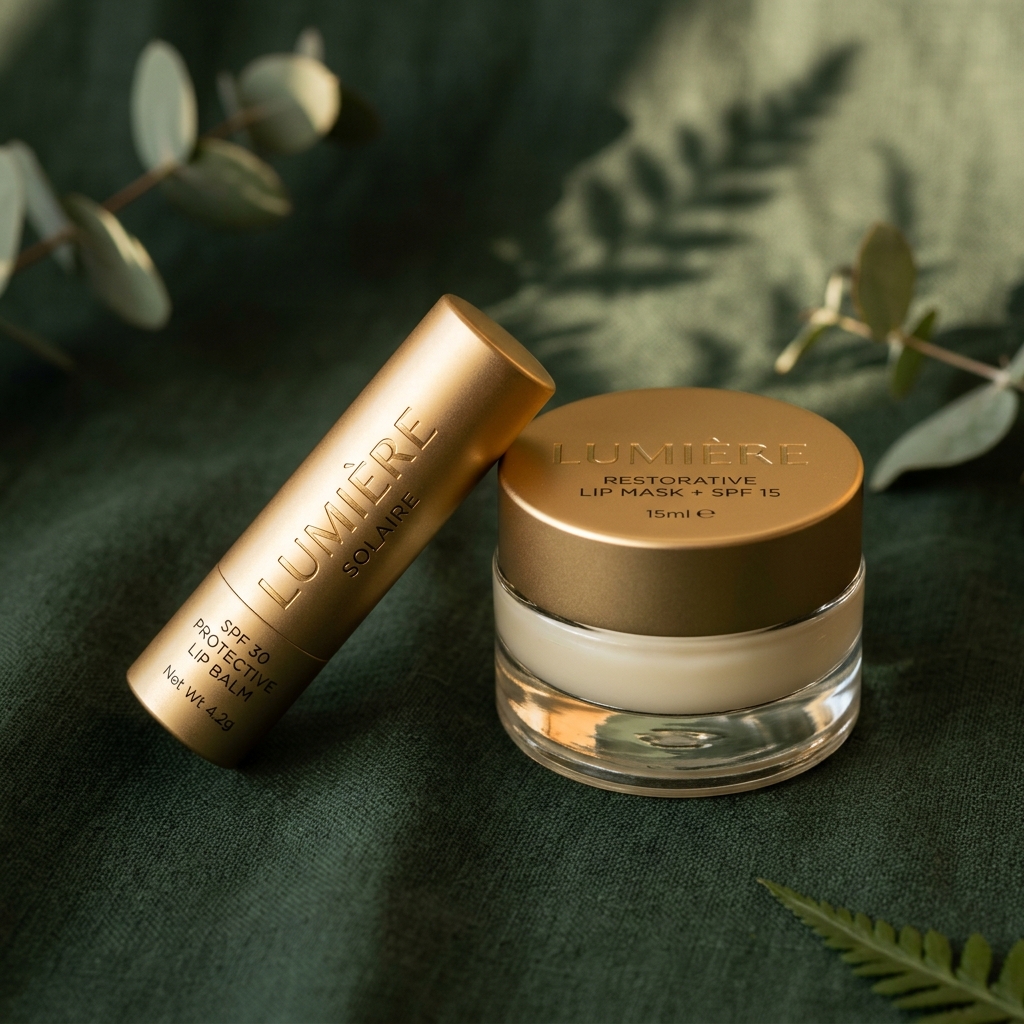
Most people apply sunscreen carefully to their face and stop at the edge of their lips. Lip balm goes on for comfort, usually without SPF, and frequently gets eaten, licked, or wiped away within an hour.
This is a genuine gap, and it matters more than most people realize.
Lips are structurally among the most UV-vulnerable areas of the body. They burn faster than facial skin and show sun damage readily.
This guide covers why lips are so vulnerable, what UV damage actually does to them, what to look for in a lip SPF, and how to make it work in practice — since the biggest challenge with lip sunscreen is not choosing one but keeping it on.
Why Lips Are Uniquely Vulnerable
Several structural differences combine, and each one compounds the others.
A much thinner protective layer
The vermilion — the coloured part of your lip — has a considerably thinner stratum corneum than facial skin. There is simply less physical barrier between UV radiation and the living cells beneath.
Minimal melanin
Melanin provides baseline UV protection, and lips contain far less of it than surrounding skin. The pink or red colour comes from blood vessels showing through thin tissue, not from pigment.
This is why lips burn faster than the face even when both receive the same exposure.
No sebaceous glands
Lips have no oil glands. They cannot self-moisturize, which is why they dry out so readily and why balm needs constant reapplication.
The relevance to sun protection: dry, cracked lips have a further compromised barrier, making UV damage more likely.
Constant exposure
Lips are almost never covered. Hats provide some shade for the face but little for the lower lip. Clothing never covers them.
The lower lip receives more UV than the upper, because of its angle relative to overhead sunlight.
Constantly disturbed
Eating, drinking, talking, licking, and wiping all remove whatever you have applied. No other area of skin has product removed as frequently.
What UV Damage Does to Lips
Sunburn
Lips burn readily and painfully. Repeated burning contributes to cumulative damage.
Pigmentation and darkening
UV exposure can cause the lip and the vermilion border to darken unevenly. This is a common cosmetic concern and is frequently mistaken for something else.
Loss of definition
The vermilion border — the line where lip meets facial skin — becomes less defined with cumulative sun damage. This contributes to the appearance of ageing around the mouth.
Fine lines around the mouth
Perioral lines are driven substantially by photoageing, alongside repeated muscle movement.
Why Most Lip Products Do Not Solve This
Most balms have no SPF at all
The majority of lip balms are purely occlusive — petrolatum, beeswax, lanolin, shea butter. These are genuinely good for comfort and moisture retention, and offer essentially no UV protection.
SPF balms are frequently applied too thinly
SPF testing uses a standardized quantity per area. Most people apply a fraction of that with a balm stick.
Practical implication: actual protection is meaningfully lower than the stated SPF.
It comes off constantly
Eating, drinking, licking, and wiping remove lip products faster than anything applied to facial skin.
Reapplication is not optional here — it is the entire game.
Some ingredients make things worse
Menthol, camphor, and phenol produce a cooling or tingling sensation frequently marketed as soothing. They are irritants, and they contribute to a cycle where the balm creates the dryness it appears to relieve.
Flavours and fragrances encourage licking, which removes the product and further dries the lips through saliva evaporation.
Salicylic acid appears in some lip exfoliating products and is unnecessarily harsh on already-compromised lips.
A useful test: if you find yourself reapplying a balm every twenty minutes, the balm may be part of the problem rather than the solution.
What to Look For in a Lip SPF
SPF 30 minimum, and broad-spectrum. The same standards as facial sunscreen apply.
Mineral filters — zinc oxide and titanium dioxide — are often preferable for lips. They are less likely to sting, less likely to cause reactions on a permeable surface, and there is no concern about ingesting chemical filters, which some people prefer to avoid given how much lip product is inevitably swallowed.
Occlusive base ingredients — petrolatum, lanolin, beeswax, or castor oil — so the product both protects and moisturizes.
Fragrance-free and flavour-free where possible, to reduce licking and irritation.
No menthol, camphor, or phenol.
A tinted option is worth considering. Iron oxides provide some visible light protection and, practically, a tinted product is one you may be more inclined to reapply because it serves a cosmetic purpose too.
Water resistance if you are swimming or sweating, though reapplication remains necessary.
How to Actually Use It
The challenge is not application. It is persistence.
Apply generously. A thin swipe is inadequate. Cover the full vermilion and slightly beyond onto the surrounding skin.
Include the vermilion border. The line where lip meets skin is frequently missed.
Do not forget the lower lip specifically. It receives more UV. If you are applying quickly, prioritize it.
Reapply after eating or drinking. Every time. This is the single most important habit.
Reapply every two hours outdoors, as with any sunscreen.
Keep one accessible. A balm in your pocket, bag, car, and desk removes the friction that prevents reapplication. This is a practical detail that determines whether the habit sticks.
Apply it in winter too. UVA is constant year-round, and snow reflects UV substantially. Winter sports are a high-exposure situation for lips specifically.
Use it under lipstick, or choose a lipstick with SPF as a supplementary layer. Most lipsticks offer no UV protection, though opaque formulations provide some physical blocking.
Addressing Chapped Lips Properly
Since dryness and sun protection are linked, this is worth covering.
What causes chronic chapped lips
Licking. Saliva evaporates and takes moisture with it, and digestive enzymes irritate the surface. This is the most common cause of a persistent cycle.
Mouth breathing, particularly overnight or during congestion.
Dehydration, though this is less of a factor than commonly assumed.
Dry environments — cold weather, indoor heating, air conditioning.
Irritating balm ingredients — menthol, camphor, phenol, flavours, and some fragrances.
Certain medications that cause significant lip dryness as an expected side effect.
Sun damage, which is the connection back to this article.
What actually helps
A plain occlusive balm, applied frequently. Petrolatum-based products are among the most effective and least likely to irritate.
Applying before bed, when you cannot lick them and cannot eat.
Stopping the licking. Difficult, but this is often the entire problem.
A humidifier in dry indoor conditions.
Avoiding exfoliation of damaged lips. Scrubs on cracked lips cause further damage.
What does not help
Repeated application of tingling balms. The sensation is irritation.
Lip scrubs on already-damaged lips.
Waiting it out. Chronic chapping does not self-resolve while the cause persists.
The Eye Area: A Related Gap
Since we are on commonly missed areas, the eye area deserves a brief mention.
Eyelid skin is the thinnest on the body, and is constantly exposed to the sun.
Most people stop applying sunscreen at the orbital bone, leaving the eyelids and under-eye area unprotected.
Why people avoid it: many sunscreens sting the eyes. Chemical filters are the more common culprit.
What works better: mineral sunscreens with zinc oxide and titanium dioxide are generally better tolerated around the eyes. Stick formats allow precise application without migration.
Sunglasses provide genuine protection for both the eyes themselves and the surrounding skin, and are the simplest solution.
Practical approach: a mineral sunscreen stick applied along the orbital bone and onto the lids, plus sunglasses outdoors.
Situations Where Lip Protection Matters Most
Some circumstances carry considerably higher exposure than a normal day, and are worth planning for specifically.
Snow sports. This is the highest-risk situation for lips. Snow reflects a substantial proportion of UV upward — directly onto the underside of the lower lip, which normally sits in shadow. Combined with altitude, exposure increases significantly. Reapply frequently and choose a water-resistant formulation, since you will be sweating under gear.
Water activities. Water also reflects UV, and swimming removes lip products quickly. A water-resistant SPF balm, reapplied after every swim, is the practical approach.
Outdoor occupations. Anyone working outdoors accumulates exposure that dwarfs recreational sun. Consistent daily lip protection matters considerably more here than for someone indoors.
Beach and boating. Sand and water both reflect, and a hat brim provides less lip protection than people assume.
High altitude generally. UV intensity increases with elevation, whether you are skiing, hiking, or simply living somewhere high.
Cycling and running. Extended outdoor exercise combines sustained exposure with sweat removing product. Carrying a balm and reapplying at intervals is worth the minor inconvenience.
Driving. Side windows transmit UVA, and the lower face receives exposure on long drives. Less intense than direct sun, but cumulative for people who drive frequently.
After procedures. Lasers, peels, and certain treatments increase photosensitivity. If you have had anything done around the mouth, protection matters more temporarily.
Building the Habit
The hardest part of lip SPF is not choosing a product. It is reapplication, and most people fail at that rather than at the initial application.
Place products where you will use them. One in your bag, one in your coat pocket, one in the car, one at your desk. The main barrier to reapplication is not having anything to hand.
Attach it to an existing habit. Reapplying after lunch, or whenever you finish a coffee, is easier to sustain than remembering a two-hour interval.
Choose something you like using. A balm with an unpleasant texture or taste will not get reapplied, regardless of its SPF rating. This is the same principle as facial sunscreen — the best product is the one you actually use.
Consider a tinted option. For some people, a product that serves a cosmetic purpose gets reapplied far more often than a plain one. That is a legitimate reason to choose it.
Prioritize the lower lip if you are rushing. It receives more exposure.
Do not rely on remembering during activity. If you are skiing, hiking, or at the beach, set a reminder. Sustained outdoor exposure is when it matters most and when people are least likely to think about it.
A realistic standard: applying in the morning and reapplying after meals covers most of a typical day. Perfect adherence is not necessary — consistent adequate protection outperforms occasional careful protection.
Lip Product Ingredients: A Quick Reference
Reading a lip balm label is simpler than a facial product, but a few ingredients are worth recognizing.
Worth looking for:
Petrolatum — the most effective occlusive available, inert, and unlikely to irritate. The benchmark for lip protection.
Lanolin — highly effective at holding moisture, derived from wool. A relatively common allergen, so patch test if you have not used it before.
Beeswax — a reasonable occlusive, common in natural formulations.
Shea butter and cocoa butter — emollient and comforting, though less occlusive than petrolatum.
Zinc oxide and titanium dioxide — the mineral UV filters, generally better tolerated on lips than chemical filters.
Ceramides — increasingly included and genuinely useful for barrier support.
Dimethicone — a lighter occlusive, non-greasy feel.
Worth avoiding:
Menthol, camphor, phenol — produce a cooling or tingling sensation that is irritation rather than relief. These create the reapplication cycle.
Salicylic acid — unnecessarily harsh on compromised lips.
Flavourings — encourage licking, which removes the product and dries the lips further.
Fragrance — a common sensitizer, and lips are a permeable surface.
Alcohol denat in significant amounts — drying.
A note on “natural” balms: plant-based does not mean gentle. Essential oils including peppermint, citrus, and cinnamon are common in natural lip products and are frequent irritants. Read the ingredient list rather than the front label.
A note on SPF stability: lip products are frequently carried in pockets and bags where they encounter heat. Heat degrades UV filters faster than the printed expiry date suggests. If a balm has spent a summer in a hot car, replacing it is sensible.
Frequently Asked Questions
Do lips really need sunscreen? Yes. Lips have a thinner protective layer and minimal melanin, so they burn faster than facial skin.
What SPF should lip balm be? SPF 30 minimum, broad-spectrum. The same standards as facial sunscreen.
Is mineral or chemical better for lips? Mineral filters are often preferable — less likely to sting, and no concern about ingesting chemical filters, which is unavoidable with lip products.
How often should I reapply lip SPF? After every meal and drink, and every two hours during sun exposure. Lip products come off faster than anything else you apply.
Does lipstick protect my lips from the sun? Most lipsticks offer no meaningful UV protection. Opaque formulations provide some physical blocking, but this is incidental rather than reliable. Use a dedicated SPF underneath.
Why are my lips always chapped despite using balm? Common causes include licking, irritating ingredients such as menthol or camphor, mouth breathing, and dry environments. If a balm requires reapplication every twenty minutes, it may be contributing to the problem.
Can I use my face sunscreen on my lips? You can, though many taste unpleasant and are not formulated for a mucosal surface. A dedicated lip SPF with an occlusive base is more practical and more likely to be reapplied.
Do I need lip SPF in winter? Yes. UVA is constant year-round, snow reflects UV substantially, and winter sports combine high altitude with reflection.
Does sun exposure trigger cold sores? It is a recognized trigger for some people. If you are prone to recurrent cold sores, consistent lip SPF may reduce the frequency.
The Bottom Line
Lips are the most commonly unprotected area on the body, and they are structurally among the most vulnerable — thin, low in melanin, never covered, and constantly disturbed.
Why it matters:
- Lips burn faster than facial skin
- Cumulative damage causes pigmentation, loss of definition, and perioral lines
What to do:
- Use a broad-spectrum SPF 30+ lip product, ideally with mineral filters
- Apply generously, including the vermilion border and slightly beyond
- Reapply after every meal and drink — this is the habit that matters most
- Keep one accessible in your bag, car, and desk
- Avoid menthol, camphor, and phenol, which irritate rather than soothe
And extend the same thinking to your eyelids, another area where sunscreen application routinely stops short.
The effort involved is small. Applying a balm you would use anyway, but choosing one with SPF, covers most of it.
Related reading:
- Sunscreen Myths Dermatologists Wish You’d Stop Believing
- Chemical vs. Mineral Sunscreen: Which Is Actually Better?
- Winter Skincare: What to Actually Change When It Gets Cold
- Why Do I Have Dark Circles? (And What Actually Helps)
Was this article helpful?

Anam Ahsan
Skincare Enthusiast & BloggerHi, I'm Anam! I'm a beauty and skincare enthusiast who loves testing new products and sharing honest, personal reviews. I document my skincare journey and share what works for my skin so you can make better choices for your routine.


Comments (24)
Hannah W.
2 days agoThis guide saved me so much money — went with the budget pick and honestly can't tell the difference from serums twice the price!
Anam Ahsan Author
1 day agoSo glad it worked out for you, Hannah! That's exactly the kind of result we hoped readers would see.