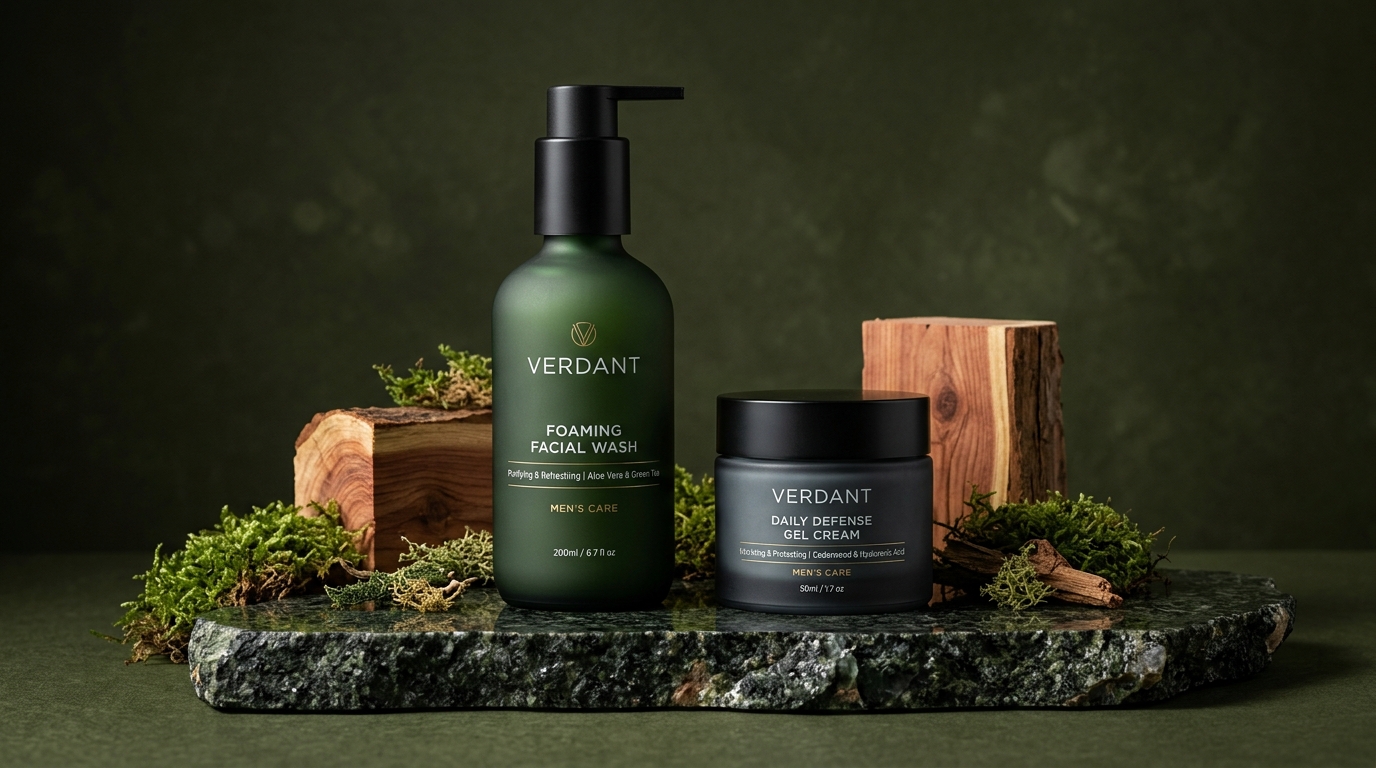
Most skincare content assumes a level of interest that plenty of people simply do not have. Ten steps, layering charts, ingredient deep-dives — it is a lot to engage with if what you actually want is skin that does not look tired, break out, or hurt after shaving.
This article is for that. A minimum viable routine, the small number of things that genuinely differ about male skin, what shaving actually does, and an honest assessment of which products marketed to men are worth buying.
If you want depth on any specific ingredient, other articles cover that. This one is deliberately practical.
Key Takeaway
Skincare has no gender, but men’s skin does tend to be thicker, oilier, and subjected to daily shaving. A solid routine only needs three steps: cleanse, moisturize, and protect with SPF.
What Is Actually Different About Male Skin
Some differences are real and worth knowing. Others are marketing.
The real differences
Thicker skin. Male skin is on average around 20-25% thicker than female skin, largely due to higher collagen density driven by androgens. Practically, this means slightly better tolerance for active ingredients and slightly slower penetration.
More sebum. Androgens stimulate sebaceous glands, so male skin typically produces more oil. Larger pores and more visible congestion follow from this.
Collagen declines differently. Male skin loses collagen more gradually but starts from a higher baseline. Visible ageing tends to appear later but then progress more noticeably.
Facial hair changes everything. This is the largest practical difference. Shaving is a mechanical exfoliation happening several times weekly, whether you think of it that way or not.
Higher baseline hydration, but greater water loss when the barrier is compromised. Shaving disrupts the barrier regularly, which is why post-shave irritation is so common.
What is not different
Skin does not need “men’s” products. Sunscreen, moisturizer, and active ingredients work identically regardless of who applies them. The differences above affect what suits you, not what category of product you should buy.
Most products marketed to men differ mainly in packaging and fragrance. Dark bottles, “energising” branding, and a heavy scent are marketing decisions, not formulation ones. Frequently they are also more alcohol-heavy, which is a genuine drawback.
“Multi-purpose” is not automatically good. A single product claiming to cleanse, moisturize, and treat everything typically does none of them particularly well.
The Minimum Routine
Three products. Two minutes total across the day.
Morning:
- Rinse with water, or a gentle cleanser if your skin is oily
- Moisturizer
- Sunscreen
Evening:
- Gentle cleanser
- Moisturizer
That is the entire routine, and it covers the fundamentals better than most elaborate routines used inconsistently.
Why each step is there
Cleanser removes sweat, sebum, sunscreen, and environmental debris. Use one that does not leave your skin feeling tight — that tightness means you have stripped the barrier, not cleaned it properly.
Bar soap is generally a poor choice for the face. It is typically alkaline and disrupts the skin’s slightly acidic surface. A gentle facial cleanser is not a luxury purchase; it is a functional one.
Moisturizer supports the barrier and reduces water loss. Even oily skin needs it — stripping without replacing moisture can prompt more oil production, not less.
Sunscreen is the single highest-return product available. UV exposure accounts for the substantial majority of visible skin ageing.
Shaving: What It Actually Does
This is where most male-specific skin problems originate.
The mechanics
A razor blade removes hair at or slightly below the skin surface. It also removes a layer of the stratum corneum — the outermost skin layer — every time.
This is exfoliation. If you shave four times a week, you are exfoliating four times a week, which is more than most dermatologists would recommend chemically.
The consequences: a regularly disrupted barrier, increased sensitivity, and greater water loss. This is why post-shave products exist, and why alcohol-heavy aftershaves are a poor idea — they compound the disruption rather than addressing it.
Razor burn
What it is: irritation from friction, dull blades, dry shaving, or shaving against the grain.
How to reduce it:
- Shave after a warm shower, when hair is softened
- Use a lubricating shave cream or gel, not soap
- Replace blades regularly — dull blades require more pressure and more passes
- Shave with the grain, particularly on the neck
- Use light pressure and let the blade do the work
- Rinse the blade frequently
- Finish with cool water
What to apply afterward: a fragrance-free moisturizer, or a product containing niacinamide or panthenol. Not an alcohol-based aftershave — the sting is barrier disruption, not disinfection.
Ingrown hairs and razor bumps
This deserves specific attention because it disproportionately affects people with coarse or curly facial hair.
What it is: hair that curves back and re-enters the skin, or grows sideways beneath the surface, causing inflamed bumps. In coarse curly hair, the hair’s natural curl makes this considerably more likely.
Why it matters: persistent ingrown hairs can cause post-inflammatory hyperpigmentation.
What helps:
Do not shave too closely. Cutting hair below the skin surface is what allows it to grow back into the skin. An electric trimmer leaving slight stubble frequently resolves the problem entirely.
Shave with the grain, always. Against-the-grain shaving cuts below the surface.
Single-blade razors cut less aggressively than multi-blade cartridges, which lift and cut hair below skin level.
Chemical exfoliation — salicylic or glycolic acid — helps prevent hair becoming trapped under dead skin.
Do not dig out ingrown hairs. This causes inflammation, pigmentation, and potential scarring.
Consider growing a beard, at least temporarily. For severe cases this is frequently the most effective intervention.
Beard care
If you have facial hair, a few things change.
The skin underneath still needs attention. Cleanser and moisturizer should reach the skin, not just sit on the hair.
Beard dandruff is usually a scalp condition, not just dryness. If you have flaking with redness and itching under a beard, a dandruff shampoo used on the beard addresses it far better than beard oil.
Beard oil is for hair and comfort, not for skin health. It has a role, but it does not replace moisturizer or address underlying skin conditions.
Wash your beard. Sebum, food, and product accumulate. A gentle cleanser or beard wash a few times weekly is reasonable.
What to do
- Cleanse twice daily: Especially if you have oily skin or work out often.
- Use a dedicated facial moisturizer: Body lotion is too heavy and will clog facial pores.
- Wear sunscreen daily: It is the absolute best anti-aging product available.
What to avoid
- Using 3-in-1 washes for your face: These are incredibly stripping and damage the skin barrier.
- Skipping moisturizer if you're oily: Stripping the skin makes it overproduce oil to compensate.
- Overcomplicating the routine: Stick to the basics before adding serums and toners.
The Sunscreen Problem
Men use sunscreen at meaningfully lower rates than women, and the reasons are consistent and addressable.
“It feels greasy.” Modern sunscreen formulations have improved substantially. Fluid, gel, and matte-finish sunscreens exist and feel nothing like the thick lotions people remember.
“I don’t burn.” Burning is a UVB effect. UVA — which drives collagen breakdown, pigmentation, and photoageing — does not cause burning and passes through cloud and glass. Not burning tells you almost nothing about your exposure.
“I’m indoors all day.” If you sit near a window or drive during daylight, you are receiving UVA exposure.
“It’s winter.” UVA is relatively constant year-round.
The practical fix: buy a sunscreen with a texture you do not mind. A fluid or gel SPF 50 that you actually apply every morning does far more than an expensive one you avoid.
One realistic note: if you have facial hair, application takes slightly more effort. Sprays and fluid textures work better through a beard than thick creams.
Adding One Active, If You Want To
The three-product routine covers the fundamentals. If you want to address a specific concern, add one thing — not four.
For acne or congestion: salicylic acid, benzoyl peroxide, or adapalene. Adapalene is available over the counter in many markets and is well studied.
For oiliness and enlarged pores: niacinamide at 4-5%.
For ageing and texture: a retinoid. Start at low concentration, twice weekly, and build up.
For redness or post-shave irritation: azelaic acid, which is gentle and addresses inflammation.
For dark marks left behind by spots: azelaic acid or niacinamide, plus sunscreen without exception.
The rule: one at a time, twelve weeks before judging, and do not stack them while your skin adjusts.
Products Marketed to Men That Are Worth It
Fragrance-free moisturizer — genuinely useful, particularly post-shave.
A decent razor and shave cream — this affects your skin more than most skincare products do.
Sunscreen with a texture you like — the highest-value purchase available.
A gentle facial cleanser — replacing bar soap or body wash on the face is a meaningful upgrade.
Dandruff shampoo — if you have dandruff or beard flaking, this addresses the actual cause.
Products That Are Mostly Marketing
Alcohol-heavy aftershave. The sting is not evidence of cleaning. It is barrier disruption on skin you have just exfoliated with a blade.
“Face scrubs” with harsh particles. If you shave, you are already exfoliating. Adding an abrasive scrub is excessive and causes irritation.
Three-in-one wash for hair, face, and body. Facial skin, scalp, and body skin have different requirements. A single product optimized for none of them is a convenience purchase, not a skincare one.
Anything promising to “energise” or “detoxify.” Neither term has a defined meaning in skincare.
Eye creams, for most people. A facial moisturizer extended to the eye area works. Buy one only if you have a specific concern it addresses.
Products differentiated only by masculine packaging. Compare ingredient lists. Frequently a “men’s” moisturizer is a standard formulation with added fragrance and a darker bottle, sometimes at a higher price.
Common Situations
“My skin gets oily by midday.” Use a gentle cleanser rather than a stripping one, moisturize with a lightweight gel, and consider niacinamide. Aggressive cleansing frequently makes this worse.
“I get spots on my jawline and neck.” Often shaving-related — either irritation or ingrown hairs. Review your shaving technique before adding acne products. If it persists, adapalene or azelaic acid helps.
“My face stings after shaving.” Barrier disruption. Switch to a fragrance-free, alcohol-free post-shave moisturizer, replace your blade more often, and shave with the grain.
“I have flaking around my nose and eyebrows.” Likely dandruff-related rather than dry skin. A dandruff shampoo used on the affected areas, left briefly then rinsed, usually helps.
“My skin looks tired and dull.” Usually a combination of dehydration, lack of sleep, and no sun protection. The three-product routine plus adequate sleep addresses more of this than any serum.
Adjusting by Age
The three-product foundation stays the same. What changes is what you might add on top.
Teens and early twenties
Primary concerns: oiliness and acne, often driven by androgens.
What to add: salicylic acid or adapalene for congestion. Niacinamide for oil control.
What to avoid: aggressive cleansing and scrubbing, which is the most common mistake at this age and frequently makes acne worse rather than better.
Sunscreen matters most here, even though it feels least urgent. Cumulative UV damage begins early, and habits formed now are the ones that persist.
Late twenties and thirties
Primary concerns: early texture changes, uneven tone, and acne that has not resolved.
What to add: a retinoid, introduced slowly. This is the point where starting one pays the most dividends, since it is preventive rather than corrective.
Worth noting: adult acne is common and not something you grow out of automatically. If it persists, it is worth treating rather than waiting.
Forties and beyond
Primary concerns: collagen loss becoming visible, pigmentation from accumulated sun exposure, and increasing dryness.
What to add: a retinoid if you have not already, vitamin C for pigmentation and antioxidant support, and a richer moisturizer as barrier function declines.
What matters more: consistency and sun protection. Male skin loses collagen more gradually but visibly, and protecting what remains outperforms trying to rebuild it.
Lifestyle Factors Worth Knowing
Sleep affects skin appearance more visibly than most people expect. Poor sleep shows as dullness, under-eye shadowing, and slower healing.
Smoking measurably accelerates skin ageing through collagen degradation and reduced blood flow. This is one of the clearer lifestyle-to-skin relationships.
Alcohol dehydrates and dilates blood vessels, contributing to redness and puffiness. Occasional is fine; sustained heavy use shows.
Exercise improves circulation and is generally beneficial. Shower promptly afterward — sweat left on the skin under clothing contributes to body breakouts.
Sun exposure during sport or outdoor work is the largest single factor in male photoageing. Hats, shade, and sunscreen on exposed areas matter more than any product applied afterward.
Stress influences skin and can worsen breakouts.
Diet has a modest and individual relationship with skin. Extreme restriction is not supported; general nutritional adequacy is.
Shaving Methods Compared
Since shaving affects your skin more than most skincare products do, the method is worth considering.
Multi-blade cartridge razors lift the hair and cut it below the skin surface, which produces the closest shave. That is precisely why they cause the most ingrown hairs in coarse or curly hair — the cut hair retracts beneath the surface and can grow sideways.
Single-blade safety razors cut at the skin surface rather than below it. They require more technique and are less forgiving of pressure, but for anyone prone to ingrown hairs they are frequently a substantial improvement.
Electric rotary and foil shavers do not cut as closely, which is a disadvantage if you want a completely smooth finish and an advantage if you get razor bumps. For ingrown hairs specifically, an electric shaver leaving very slight stubble is often the practical solution.
Trimmers leaving short stubble avoid the problem entirely, since the hair never retracts below the surface.
Depilatory creams dissolve hair chemically rather than cutting it. They avoid ingrown hairs but frequently irritate facial skin and have a strong odour. Patch test before using on the face.
A practical suggestion: if you get persistent razor bumps with a cartridge razor, trying a single blade or an electric shaver for a month is a cheaper experiment than any skincare product, and it addresses the cause rather than the symptom.
Frequently Asked Questions
Do men actually need skincare? Everyone benefits from cleansing, moisturizing, and sun protection. Beyond that, it depends on your concerns. Sunscreen in particular is not optional if you want to avoid preventable skin ageing.
Is men’s skincare different from women’s? The products are not. Male skin is thicker and produces more sebum on average, and shaving creates specific issues — but sunscreen, moisturizer, and active ingredients work the same regardless of who uses them.
Can I use my body wash on my face? Not ideally. Body washes are typically formulated more aggressively than facial cleansers and can strip the skin barrier, particularly on skin you shave regularly.
How do I stop razor burn? Shave after a warm shower, use a lubricating cream, replace blades regularly, shave with the grain, use light pressure, and finish with a fragrance-free moisturizer rather than alcohol-based aftershave.
What causes ingrown hairs? Hair curving back into the skin, most common with coarse or curly hair and made worse by close shaving. Not shaving too closely, shaving with the grain, and gentle chemical exfoliation all help.
Should I use aftershave? Not the traditional alcohol-based type. Your skin has just been exfoliated by a blade — it needs barrier support, not alcohol. A fragrance-free moisturizer serves better.
Do I need sunscreen if I work indoors? If you sit near a window or drive during daylight, yes. UVA penetrates glass and drives photoageing without causing burning.
Is beard oil good for skin? It conditions hair and improves comfort. It does not replace moisturizer. Flaking under a beard is usually dandruff, which needs a targeted shampoo, not oil.
How long until I see results? Hydration and comfort improve within days. Texture and tone changes take eight to twelve weeks. Sunscreen benefits are preventive and invisible, which does not make them less real.
Is expensive skincare better? Rarely. Effective cleansers and moisturizers are inexpensive. Sunscreen is the one category where paying more for a texture you will actually use daily is defensible.
The Bottom Line
Good skin does not require interest in skincare. It requires three products and consistency.
The routine:
- Morning: rinse or gentle cleanse → moisturizer → sunscreen
- Evening: gentle cleanse → moisturizer
The shaving adjustments that matter most:
- Shave after a warm shower, with the grain, using a fresh blade
- Do not shave closer than necessary if you get ingrown hairs
- Skip alcohol-based aftershave; use a plain moisturizer instead
The single highest-value change: daily sunscreen. Nothing else you buy comes close in terms of preventing visible ageing.
And if you only change one thing about your current routine: stop using bar soap or body wash on your face, and stop using alcohol-based aftershave on skin you have just shaved. Those two changes alone resolve a surprising proportion of male skin complaints.
Related reading:
- Sunscreen Myths Dermatologists Wish You’d Stop Believing
- The Minimalist 4-Step Skincare Routine for Beginners
- Azelaic Acid: The Underrated Multi-Tasker Most Routines Are Missing
- Why Does My Face Sting After Applying Skincare?
- Body Acne: Why It Happens and How to Actually Treat It
Was this article helpful?

Anam Ahsan
Skincare Enthusiast & BloggerHi, I'm Anam! I'm a beauty and skincare enthusiast who loves testing new products and sharing honest, personal reviews. I document my skincare journey and share what works for my skin so you can make better choices for your routine.


Comments (24)
Hannah W.
2 days agoThis guide saved me so much money — went with the budget pick and honestly can't tell the difference from serums twice the price!
Anam Ahsan Author
1 day agoSo glad it worked out for you, Hannah! That's exactly the kind of result we hoped readers would see.